- Pieza única
- Envío Nacional Gratuito
- Entrega en 24/48 horas
- Aceptamos Bizum, Transferencia y Paypal
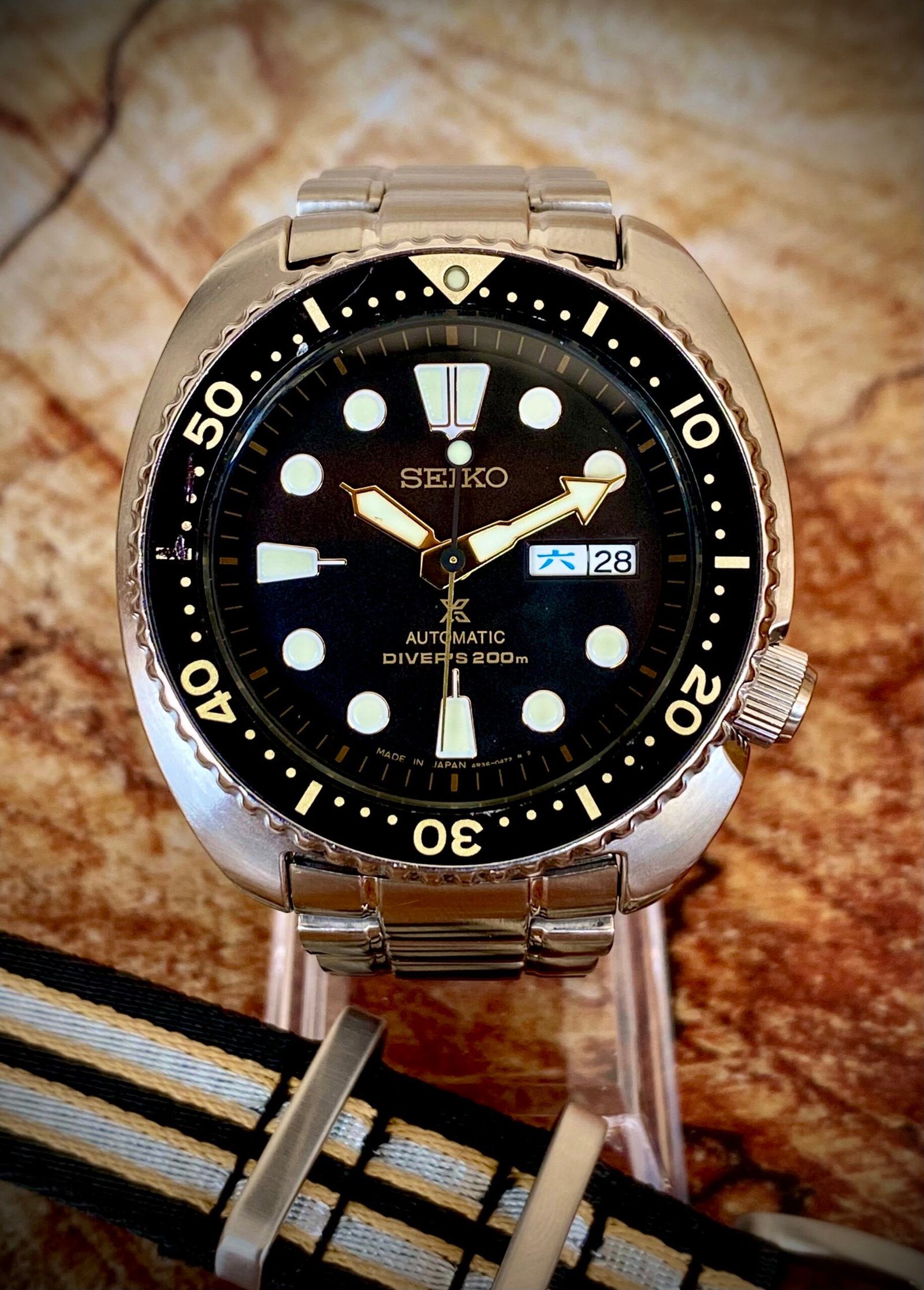
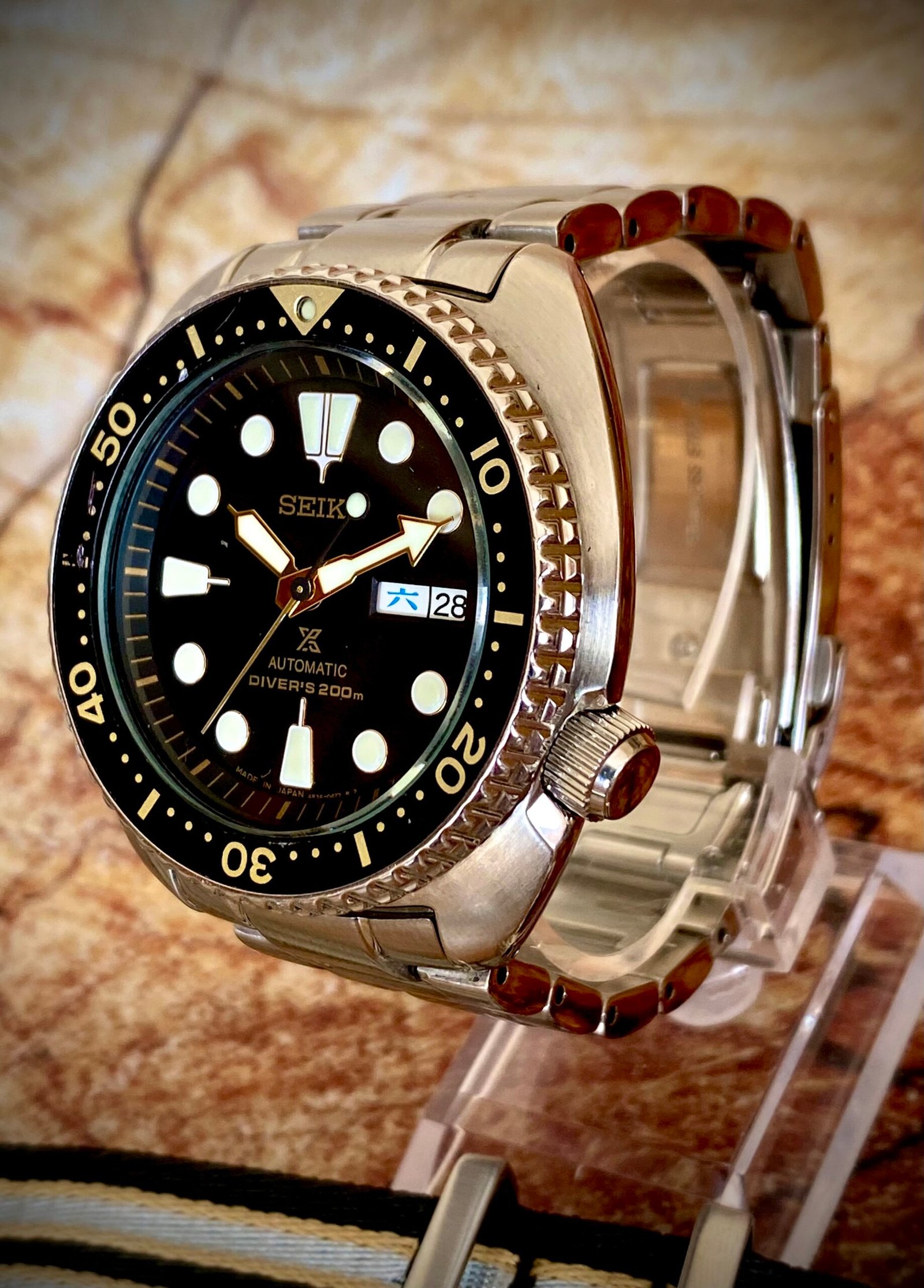
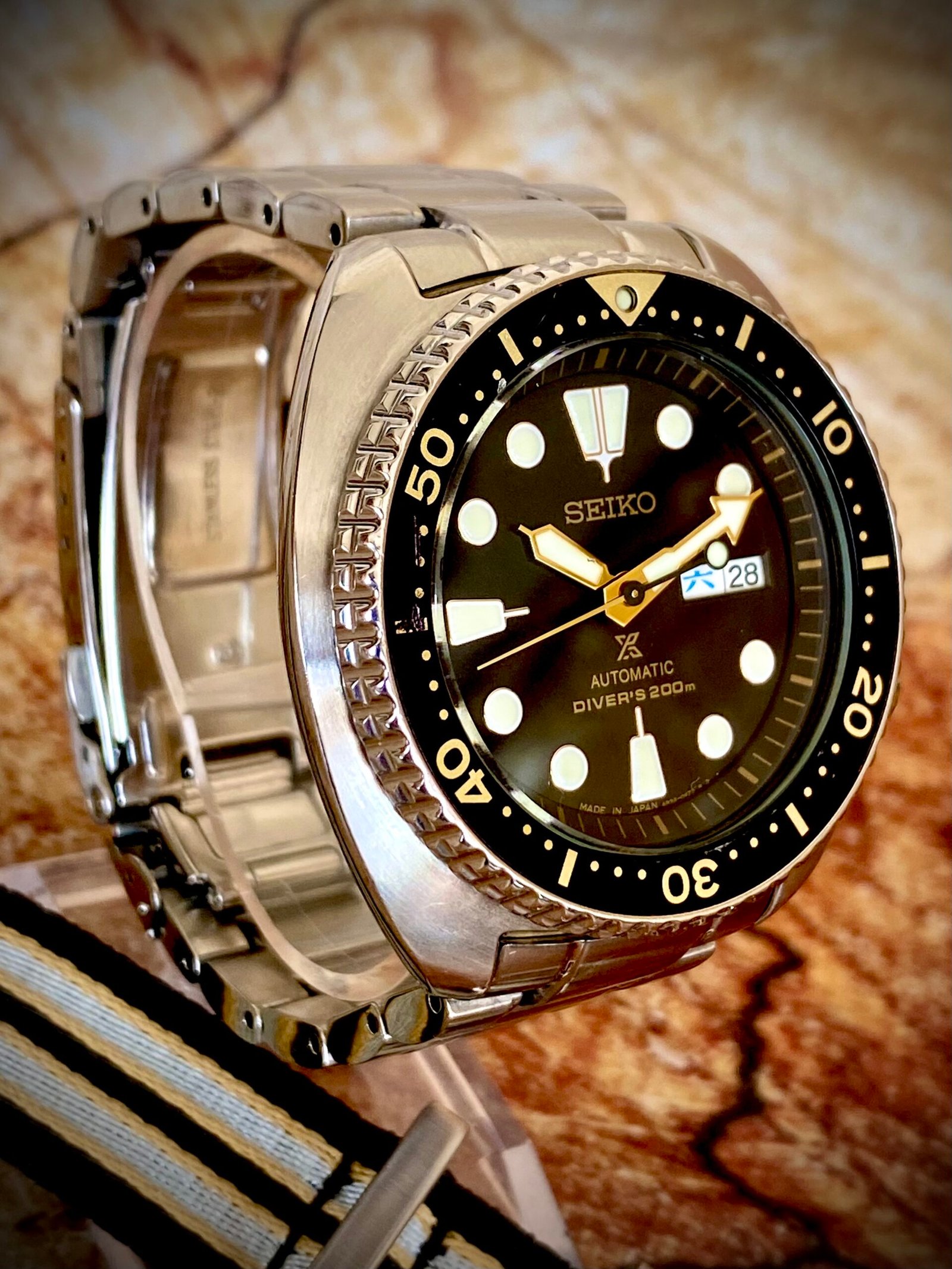
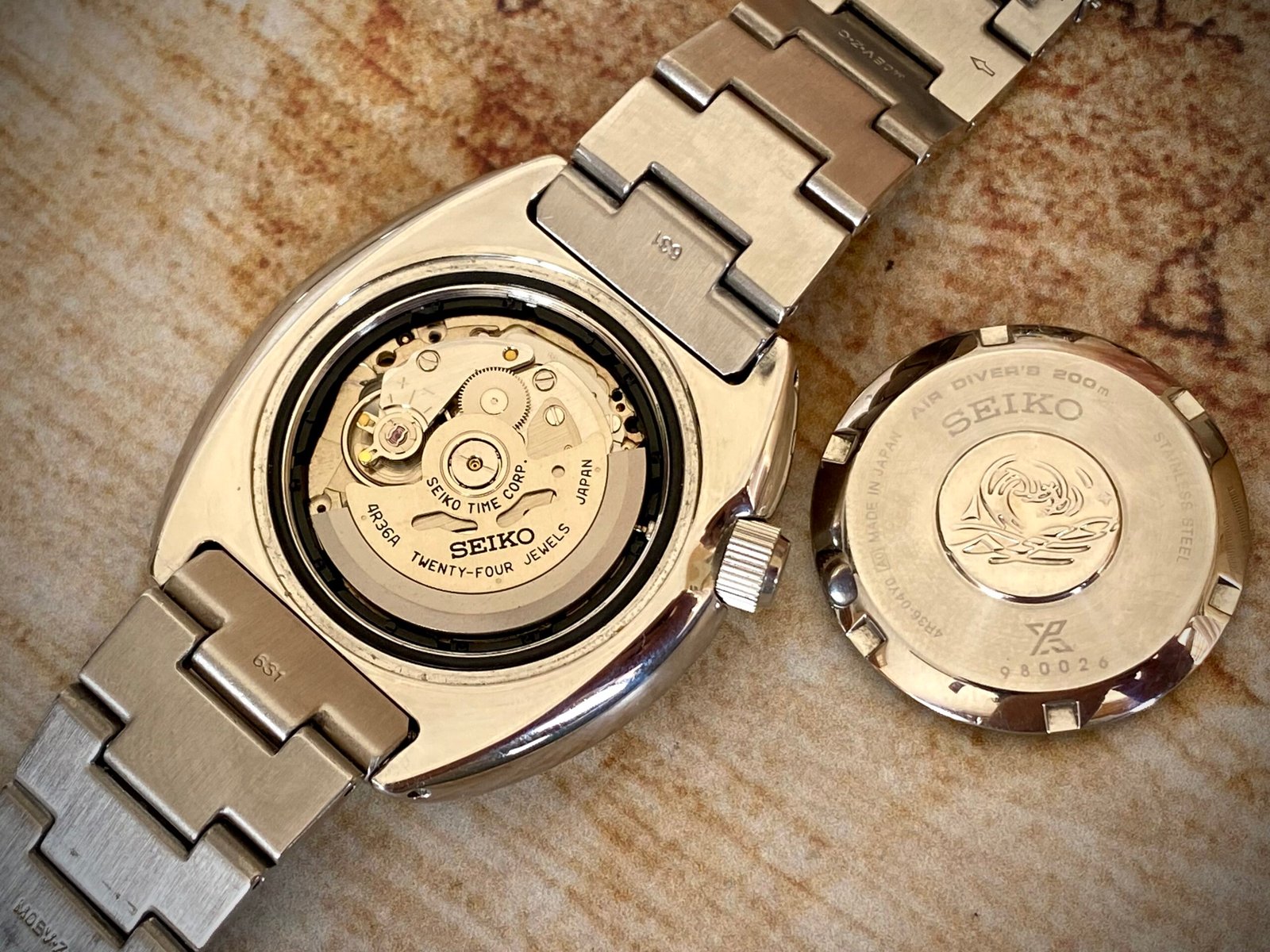
SEIKO SRPE91J “TORTUGA”, AUTOMATIC DIVER
| Marca | Seiko |
|---|---|
| Modelo | SRPE91J |
| Género | Man |
| País de origen | Japan |
| Década | Current. |
| Año de fabricación | 2020 |
| Nº de serie | 980026 |
| Movimiento | Automatic |
| Calibre | Seiko 4R36 |
| Cristal | Sapphire |
| Esfera | Black |
| Bisel | Unidirectional swivel. |
| Corona | Original SEIKO Steel, at 4時 |
| Material de la caja | Stainless steel |
| Diámetro sin corona | 44 mm |
| Diámetro con corona | 46 mm |
| Longitud entre asas | 48 mm |
| Grosor | 15 mm |
| Anchura de la correa | 20 mm |
| Material de la correa | Stainless steel , Textile |
| Color de la correa | Steel |
| Cierre/hebilla | Steel type clasp, original signed SEIKO. |
| Estado del reloj | Very good, with slight signs of aging. |
| Caja/Estuche | Yes, generic. |
| Documentación | Free Certificate of Authenticity available on request |
Origins and Historical Context
The Seiko Tortuga was born in 1976 with the model 6309-7040, designed as an accessible successor to the iconic 6105 “Captain Willard” used by U.S. soldiers in Vietnam. Its nickname among collectors derived from its shell-shaped case, resembling a turtle’s silhouette as seen from above. This diver’s watch, with a water resistance of 150 meters and a bidirectional 60-click bezel, became an essential tool for recreational divers and special forces due to its robustness and affordable price (1/3 of the cost of a Tudor Submariner of the time) 369.
Modern Reinvention: The Prospex Era
In 2016, Seiko relaunched the Tortuga within its Prospex line, merging retro design with updated technology. The new models, such as the SRP777 (black) and SRP779 “Pepsi,” maintained the 44-45 mm steel case and 4 o’clock crown but incorporated key improvements:
-
Automatic caliber 4R36 movement with hacking seconds and 41-hour power reserve.
-
ISO 6425 certification for professional diving (200 meters water resistance).
-
Unidirectional 120-click bezel and scratch-resistant Hardlex crystal 3810.
This relaunch responded to the demand for “affordable vintage reissues,” capitalizing on the retro trend in watchmaking 7.
Iconic Collections and Special Editions
The success of the relaunch led to limited editions that are now collectible icons:
-
PADI (2016): Tribute to the diving association, featuring a blue “sunburst” dial and red-blue “Pepsi” bezel. Part of the sales proceeds support ocean conservation 78.
-
Save The Ocean: Includes models like the SRPE39 “Manta Ray” (2020), with a blue gradient dial simulating swimming mantas, and the SRPD21 “Great White Shark” (2019), featuring details reminiscent of scales 68.
-
King Turtle: 45mm version with premium materials, such as the SLA033 (caliber 8L35 and “Super Hard” coating), limited to 2,500 units 8.
Technical and Cultural Legacy
More than just a watch, the Tortuga embodies Seiko’s philosophy of uncompromising accessibility. Its ergonomic design—with short lugs for enhanced comfort—and reliability in extreme environments (used in Antarctic expeditions and by special forces) established it as a professional tool 34. Today, vintage models like the 6309-7040 fetch €500-€800 at auctions, while reissues serve as platforms for customizers to personalize dials, bezels, and hands 9. Its evolution reflects six decades of Japanese dive watch innovation, maintaining a unique balance of heritage, performance, and value.
TEMPPUS. All rights reserved.
Información adicional
Reloj completamente revisado. Garantizado para su uso diario.
- Pieza única
- Envío Nacional Gratuito
- Entrega en 24/48 horas
- Aceptamos Bizum, Transferencia y Paypal
Relojes relacionados
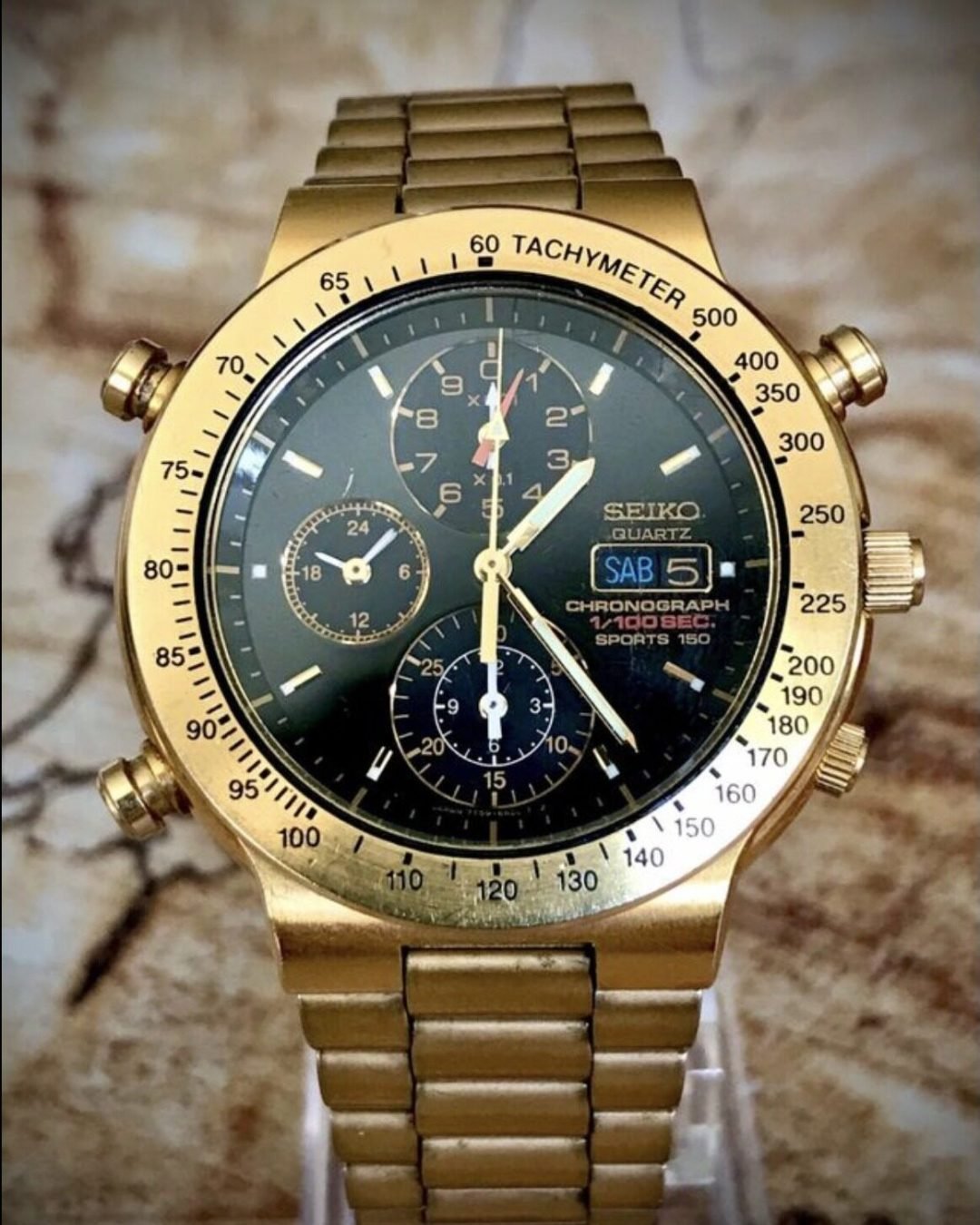
SEIKO SPORTS 150 CHRONOGRAPH, ALARM QUARTZ 7T59
INFORMACIÓN
| Marca | Seiko |
|---|---|
| Modelo | SPORTS 150 CHRONOGRAPH |
| Género | Man |
| País de origen | Japan |
| Década | 1990s |
| Año de fabricación | 1991 |
| Nº de serie | 102001 |
| Código de caja | 6A00 A6 |
| Movimiento | Quartz |
| Calibre | Seiko 7T59 |
| Cristal | Mineral |
| Esfera | Black, with three subdials and calendar at 3 o'clock. |
| Bisel | Gold-plated with tachymeter. |
| Corona | Original, firmada Seiko |
| Material de la caja | Gold-plated with 20 microns |
| Diámetro sin corona | 40.5 mm |
| Diámetro con corona | 42.5 mm |
| Longitud entre asas | 44.4 mm |
| Grosor | 11,5 mm |
| Anchura de la correa | 20 mm |
| Material de la correa | Gold-plated steel |
| Color de la correa | Gold |
| Cierre/hebilla | Pin type, original signed Seiko |
| Estado del reloj | Excellent, like new! |
| Caja/Estuche | Yes, generic. |
| Documentación | Free Certificate of Authenticity available on request |
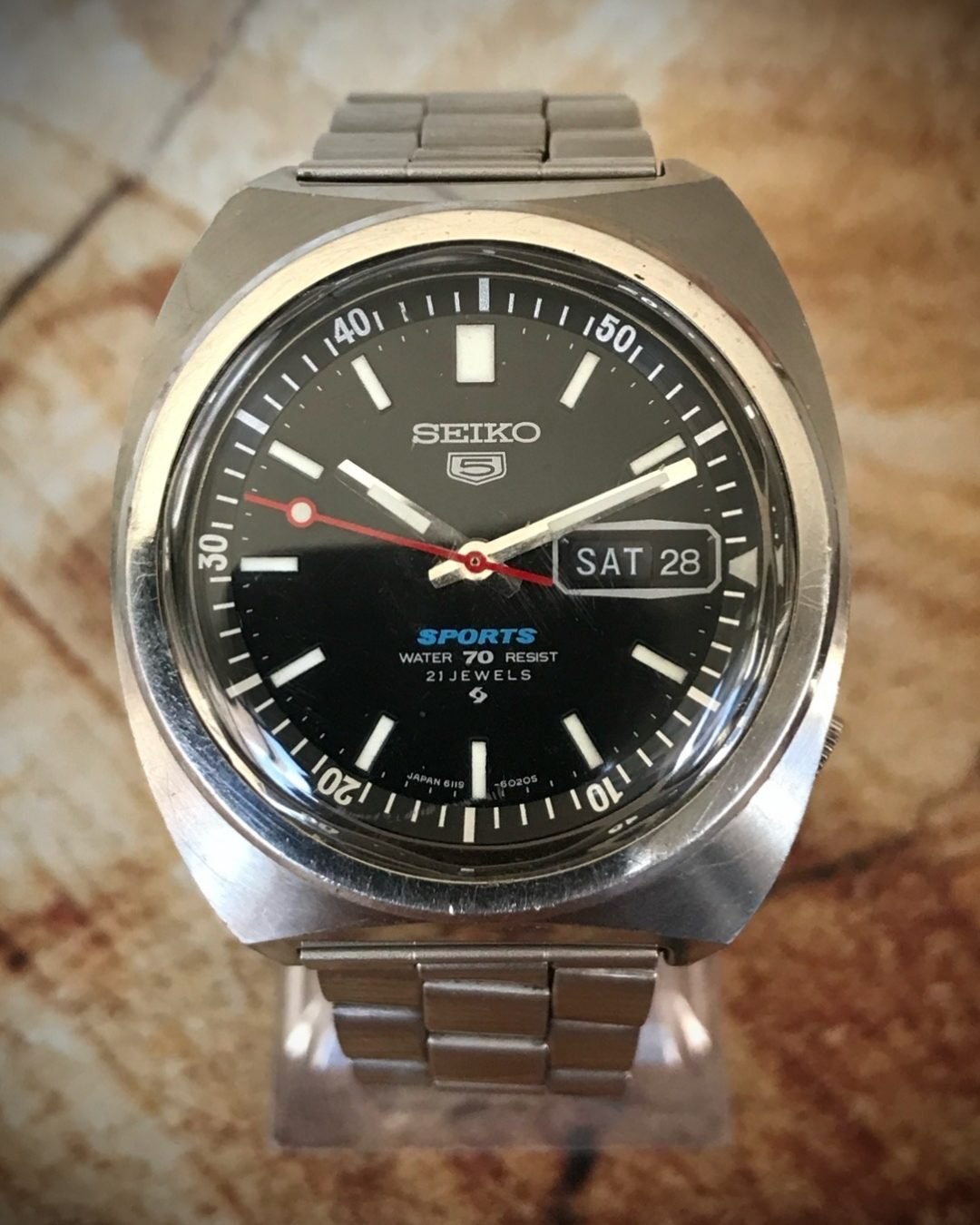
SEIKO 5 SPORTS 6119/6023 AUTOMATIC, VINTAGE YEAR 1972
INFORMACIÓN
| Marca | Seiko |
|---|---|
| Modelo | 5 Sports 6119-6023 |
| Género | Man |
| País de origen | Japan |
| Década | 1970s |
| Año de fabricación | 1972 |
| Nº de serie | 211321 |
| Código de caja | 6023: Stainless Steel |
| Movimiento | Automatic |
| Cristal | Original PLexiglás |
| Esfera | Black, with double date function at 3 o'clock. |
| Corona | Original SEIKO Steel, at 4時 |
| Material de la caja | Stainless steel |
| Diámetro sin corona | 37.2 mm |
| Diámetro con corona | 37,2 mm |
| Longitud entre asas | 40 mm |
| Grosor | 12 mm |
| Anchura de la correa | 19 mm |
| Material de la correa | Stainless steel |
| Color de la correa | Steel |
| Cierre/hebilla | Steel type clasp, original signed SEIKO. |
| Estado del reloj | Very good, with slight signs of aging. |
| Caja/Estuche | Yes, generic. |
| Documentación | Free Certificate of Authenticity available on request |
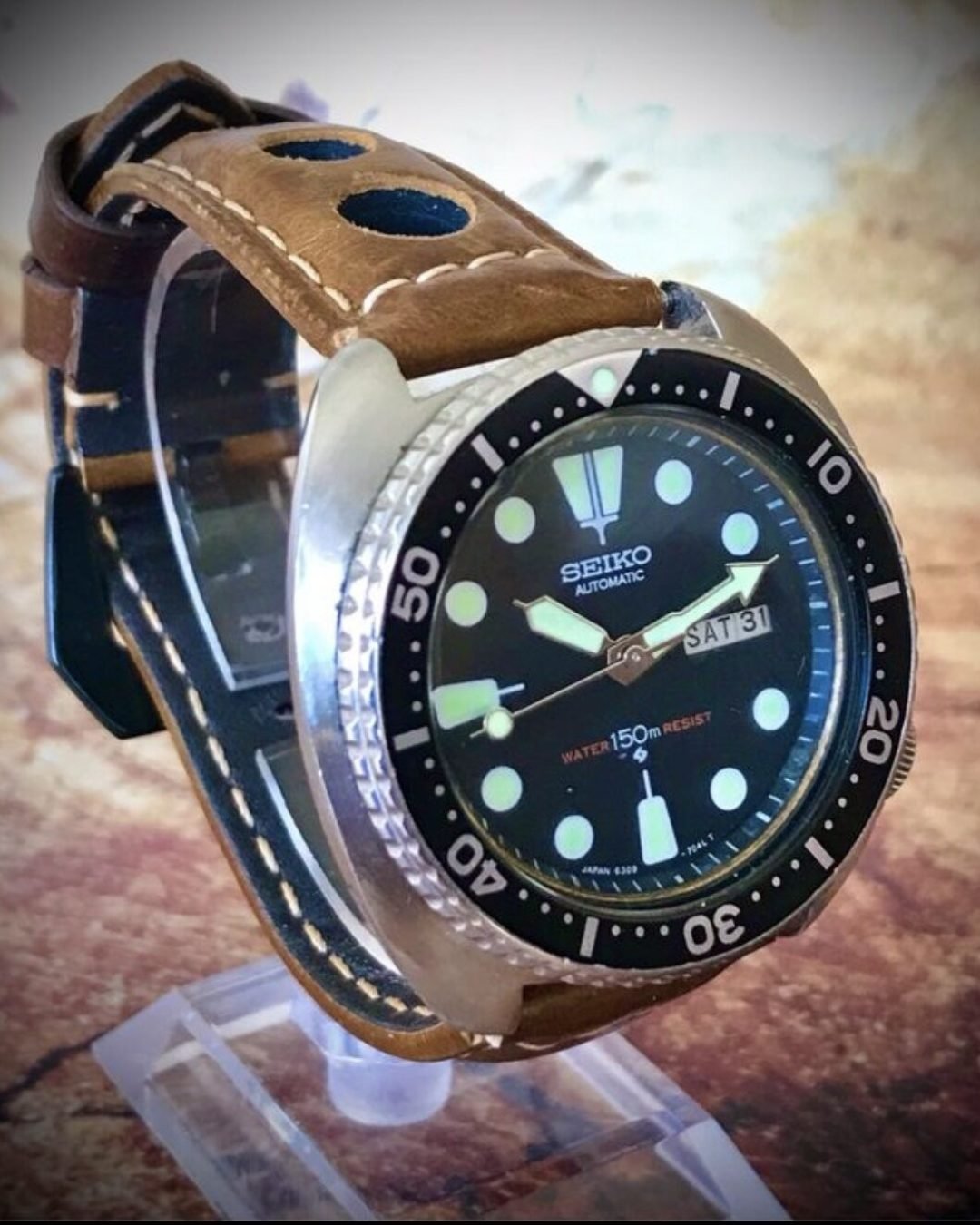
SEIKO 6309/7040 “TORTUGA”, VINTAGE DIVER YEAR 1981
INFORMACIÓN
| Marca | Seiko |
|---|---|
| Modelo | 6309-7040 |
| Género | Man |
| País de origen | Japan |
| Década | 1980s |
| Año de fabricación | 1981 |
| Nº de serie | 170167 |
| Código de caja | 7040 |
| Movimiento | Automatic |
| Cristal | Hardlex Seiko |
| Esfera | Black with double date display at 3 o'clock. |
| Bisel | Bi-directional swivel. |
| Corona | Steel, original SEIKO, at 4. |
| Material de la caja | Stainless steel |
| Diámetro sin corona | 43 mm |
| Diámetro con corona | 46 mm |
| Longitud entre asas | 44.2 mm |
| Grosor | 12.5 mm |
| Anchura de la correa | 18 mm |
| Material de la correa | Top quality genuine leather |
| Color de la correa | Brown, Retro Racing Style |
| Cierre/hebilla | Stainless steel |
| Estado del reloj | Very good, with slight signs of aging. |
| Caja/Estuche | Yes, generic. |
| Documentación | Free Certificate of Authenticity available on request |
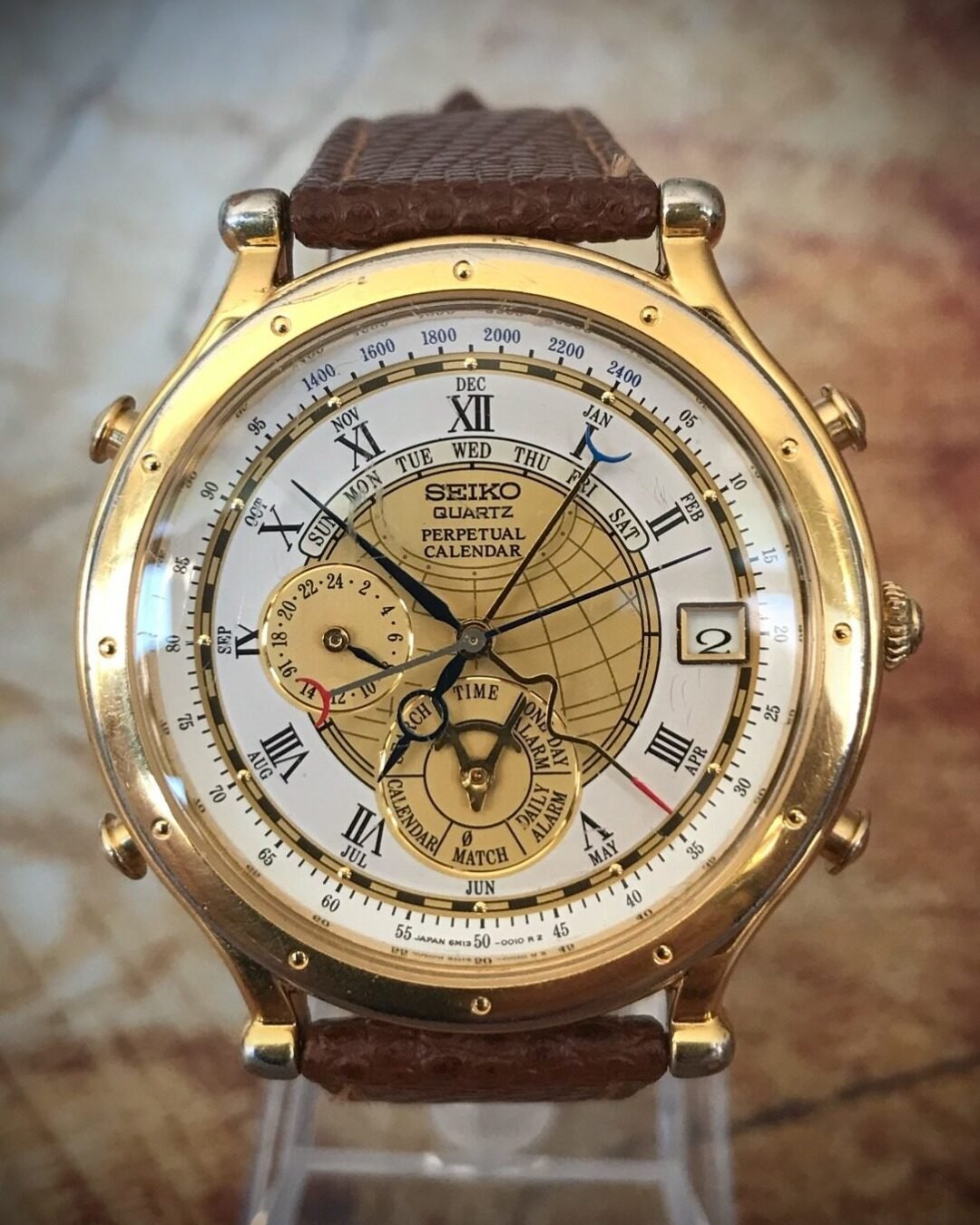
SEIKO PERPETUAL CALENDAR, QUARTZ, VINTAGE
INFORMACIÓN
| Marca | Seiko |
|---|---|
| Modelo | Perpetual Calendar |
| Género | Man |
| Movimiento | Quartz |
| Cristal | Hardlex Seiko |
| Esfera | Two-tone with tachymeter, two subdials and date display at 3 o'clock. |
| Bisel | Interior con taquímetro |
| Corona | Seiko Corona |
| Material de la caja | Gold-plated steel |
| Diámetro sin corona | 39.8 mm |
| Diámetro con corona | 40.3 mm |
| Longitud entre asas | 45 mm |
| Grosor | 10 mm |
| Anchura de la correa | 18 mm |
| Material de la correa | Top quality genuine leather |
| Color de la correa | Brown |
| Cierre/hebilla | Closure/buckle |
| Estado del reloj | Excellent, like new! |
| Caja/Estuche | Yes, generic. |
| Documentación | Free Certificate of Authenticity available on request |
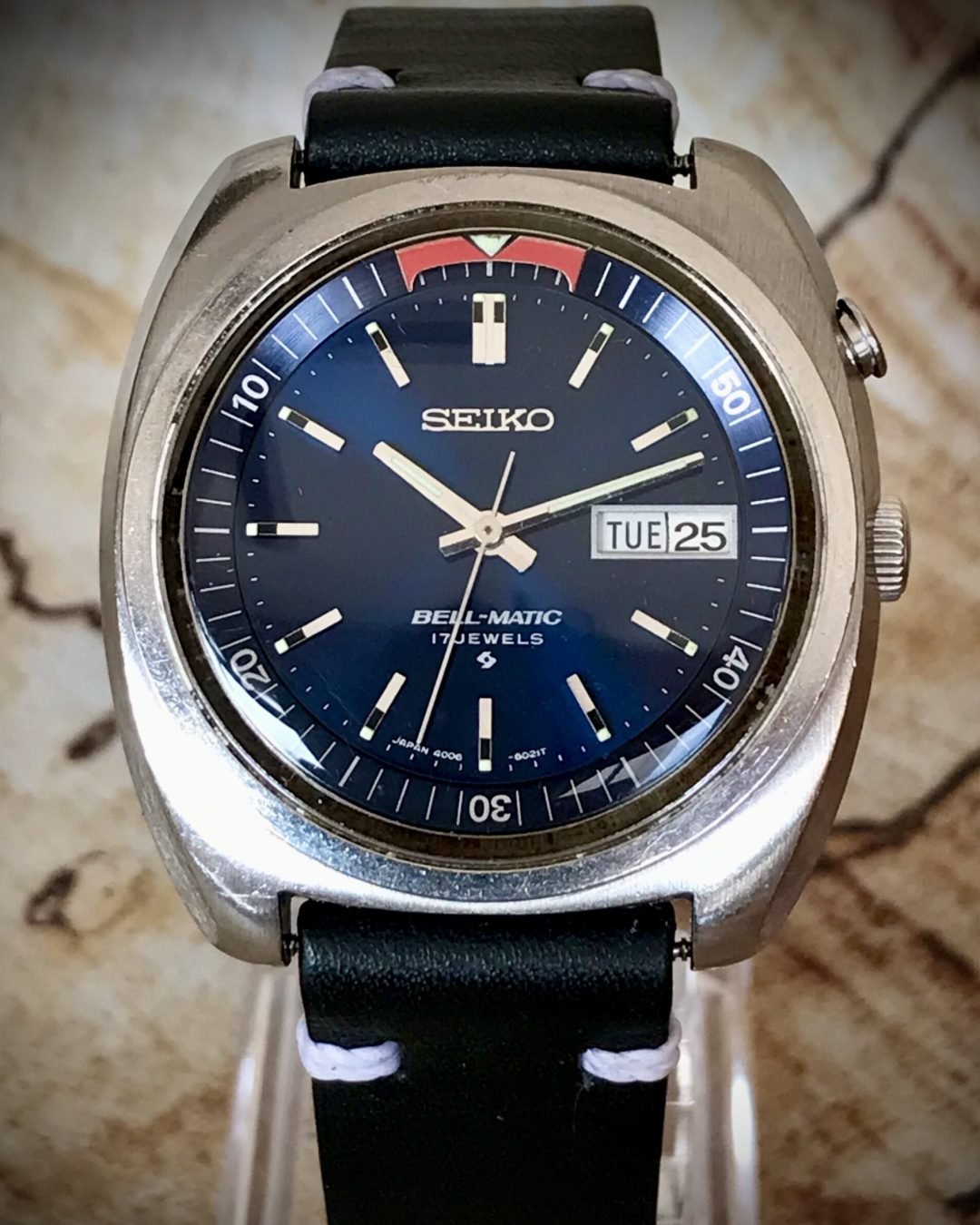
SEIKO BELL-MATIC AUTOMATIC, VINTAGE YEAR 1974
INFORMACIÓN
| Marca | Seiko |
|---|---|
| Modelo | BELL-MATIC |
| Género | Man |
| Década | 1970s |
| Año de fabricación | 1974 |
| Nº de serie | 423607 |
| Código de caja | 6031 |
| Movimiento | Automatic |
| Calibre | 4006 A |
| Cristal | Original Plexiglass, flawless |
| Esfera | Blue, with double date indicator at 3 o'clock. |
| Bisel | Interior, bidirectional rotating |
| Corona | Original Seiko, de acero |
| Material de la caja | Steel |
| Diámetro sin corona | 39.4 mm |
| Diámetro con corona | 40.6 mm |
| Longitud entre asas | 42 mm |
| Grosor | 11 mm |
| Anchura de la correa | 18 mm |
| Material de la correa | Genuine leather vaccine |
| Color de la correa | Black |
| Cierre/hebilla | Snap-type, steel |
| Estado del reloj | Very good, with slight signs of aging. |
| Caja/Estuche | Yes, generic. |
| Documentación | Free Certificate of Authenticity available on request |
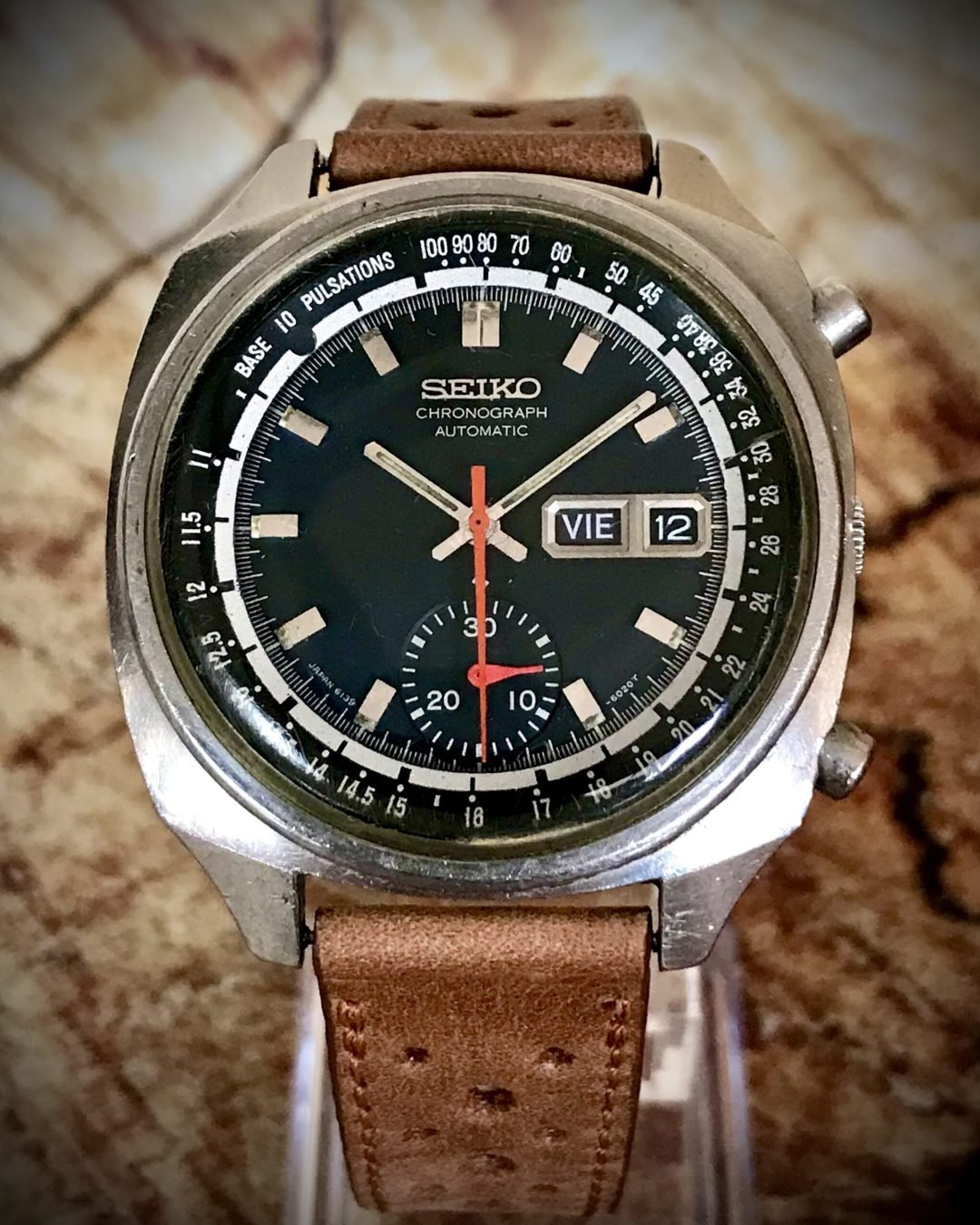
SEIKO CHRONOGRAPH 6134-2022, AUTOMATIC
INFORMACIÓN
| Marca | Seiko |
|---|---|
| Modelo | 6134-2022 |
| Género | Man |
| Década | 1970s |
| Año de fabricación | 1972 |
| Nº de serie | 220523 |
| Código de caja | 2022 |
| Movimiento | Automatic |
| Cristal | Original PLexiglás |
| Esfera | Black, with double date function at 3 o'clock. |
| Bisel | Interior con taquímetro |
| Corona | Original Seiko, de acero |
| Material de la caja | Stainless steel |
| Diámetro sin corona | 40 mm |
| Diámetro con corona | 41 mm |
| Longitud entre asas | 46 mm |
| Grosor | 12.2 mm |
| Anchura de la correa | 18 mm |
| Material de la correa | Genuine leather, Racing type brand new |
| Color de la correa | Brownish Orange |
| Cierre/hebilla | Stainless steel |
| Estado del reloj | Well, with logical signs of the passage of time. |
| Caja/Estuche | Yes, generic. |
| Documentación | Free Certificate of Authenticity available on request |
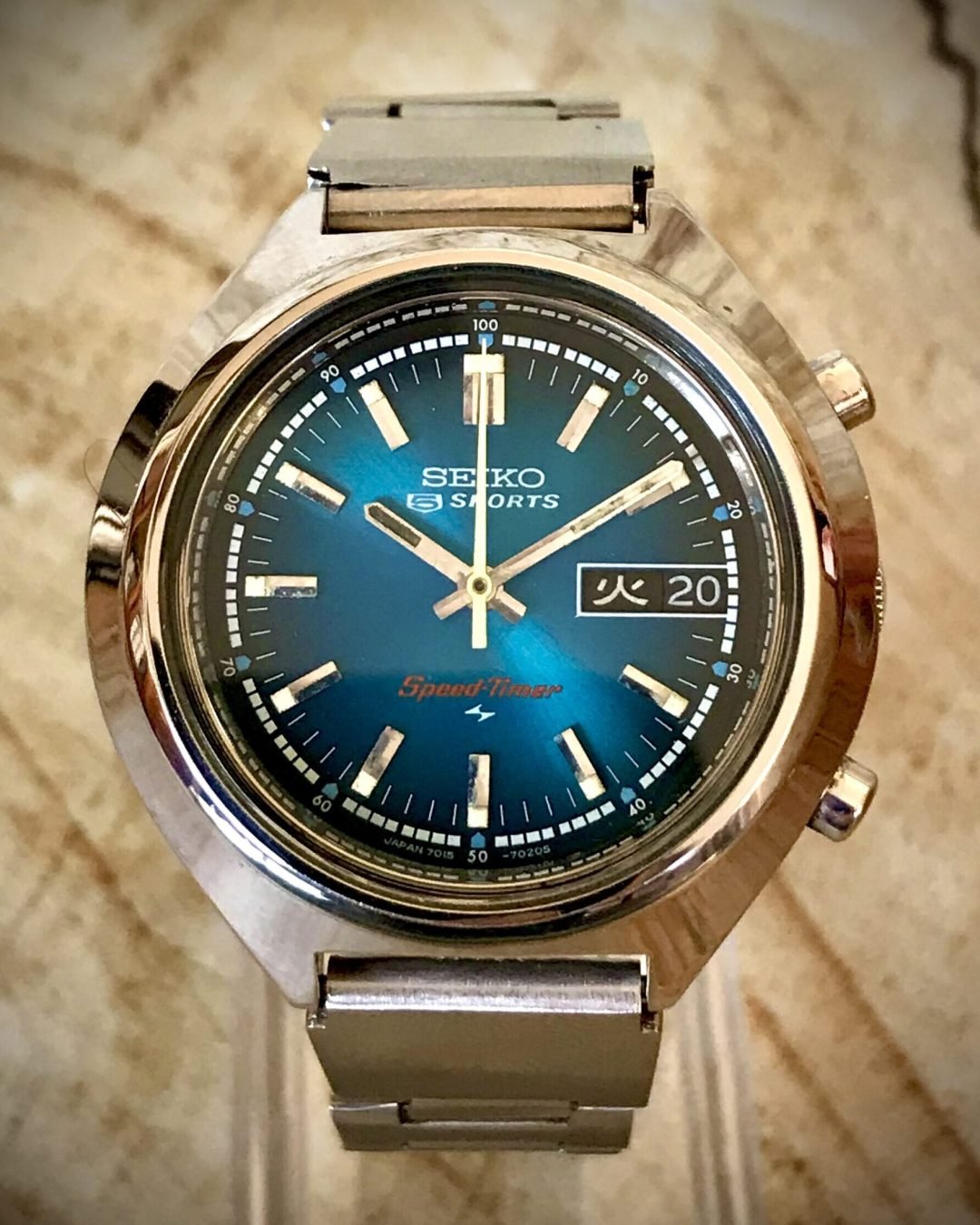
SEIKO CHRONO FLYBACK SPEED TIMER 7015-7000
INFORMACIÓN
| Marca | Seiko |
|---|---|
| Modelo | Crono Flyback Speed Timer 7015-7000 |
| Género | Man |
| Década | 1970s |
| Año de fabricación | 1973 |
| Nº de serie | Serial Number: 361505 |
| Código de caja | 7000 |
| Movimiento | Automatic |
| Calibre | 7015 A (21 jewels) |
| Cristal | Hardlex |
| Esfera | Blue Fumé with Japanese and English calendar at 3 o'clock |
| Bisel | Steel |
| Corona | Seiko Corona |
| Material de la caja | Stainless steel |
| Diámetro sin corona | 39 mm |
| Diámetro con corona | 39 mm |
| Longitud entre asas | 41 mm |
| Grosor | 12 mm |
| Anchura de la correa | 17 mm |
| Material de la correa | Stainless steel |
| Color de la correa | Steel |
| Cierre/hebilla | Stainless steel, signed Seiko 5 Sports. |
| Estado del reloj | Excellent, like new! |
| Caja/Estuche | Yes, generic. |
| Documentación | Free Certificate of Authenticity available on request |
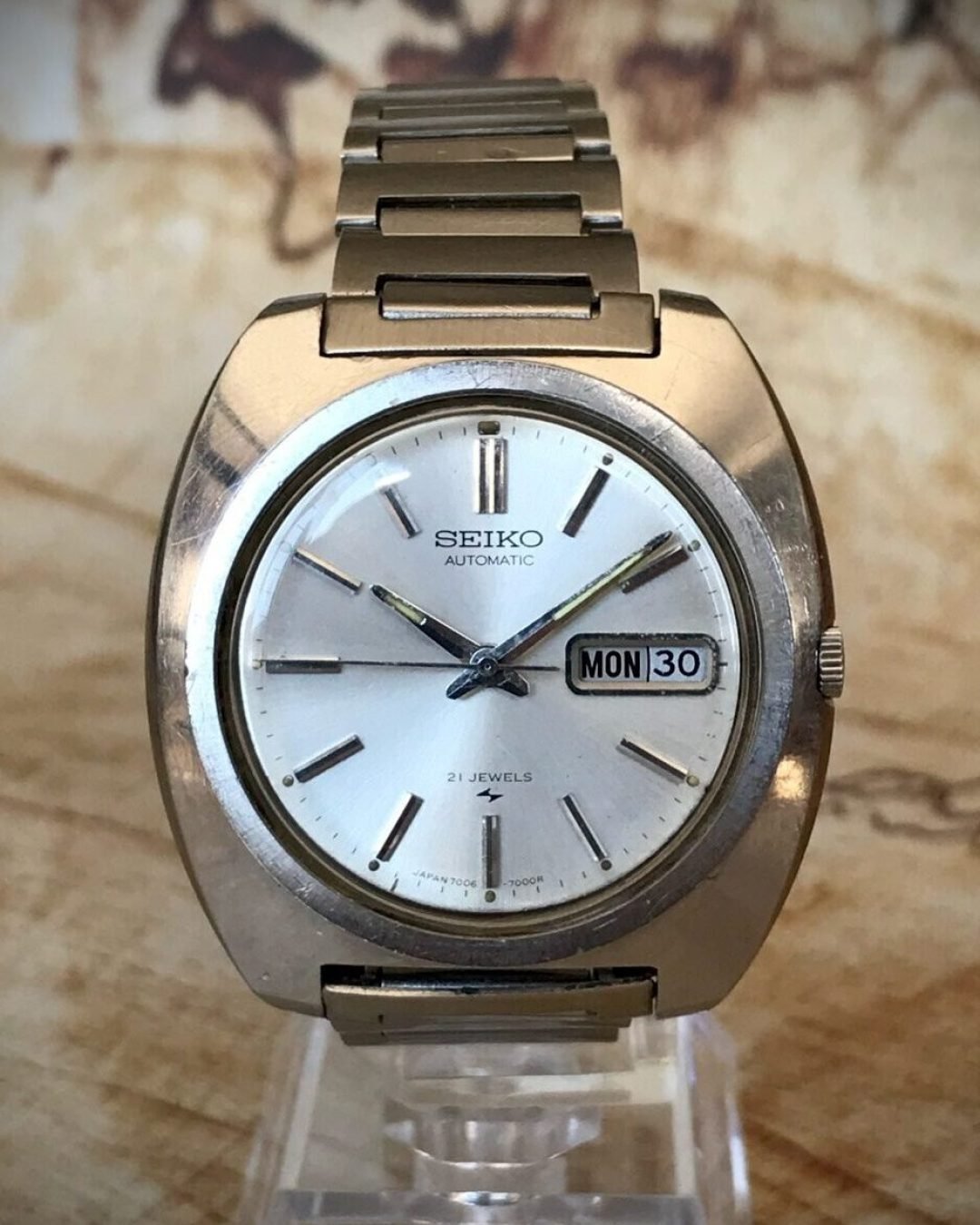
SEIKO 7006-7002 AUTOMATIC, VINTAGE YEAR 1971
175,00 €
INFORMACIÓN
| Marca | Seiko |
|---|---|
| Modelo | 7006-7002 Automatic |
| Género | Man |
| Década | 1970s |
| Año de fabricación | 1971 |
| Nº de serie | 152818 |
| Código de caja | 7006-7002 |
| Movimiento | Automatic |
| Calibre | Seiko 7006A |
| Cristal | Original PLexiglás |
| Esfera | Silver, flawless |
| Bisel | Stainless steel |
| Corona | Yours original |
| Material de la caja | Stainless steel |
| Diámetro sin corona | 39.1 mm |
| Diámetro con corona | 40 mm |
| Longitud entre asas | 41 mm |
| Grosor | 10.5 mm |
| Anchura de la correa | 18 mm |
| Material de la correa | Stainless steel |
| Color de la correa | Steel |
| Cierre/hebilla | Stainless steel, original Seiko. |
| Estado del reloj | Very good, with slight signs of aging. |
| Caja/Estuche | Yes, generic. |
| Documentación | Free Certificate of Authenticity available on request |
Garantía tEMPPUS
Para su total tranquilidad, protegemos todos nuestros RELOJES CON 1 AÑO DE GARANTÍA.