


- Pieza única
- Envío Nacional Gratuito
- Entrega en 24/48 horas
- Aceptamos Bizum, Transferencia y Paypal
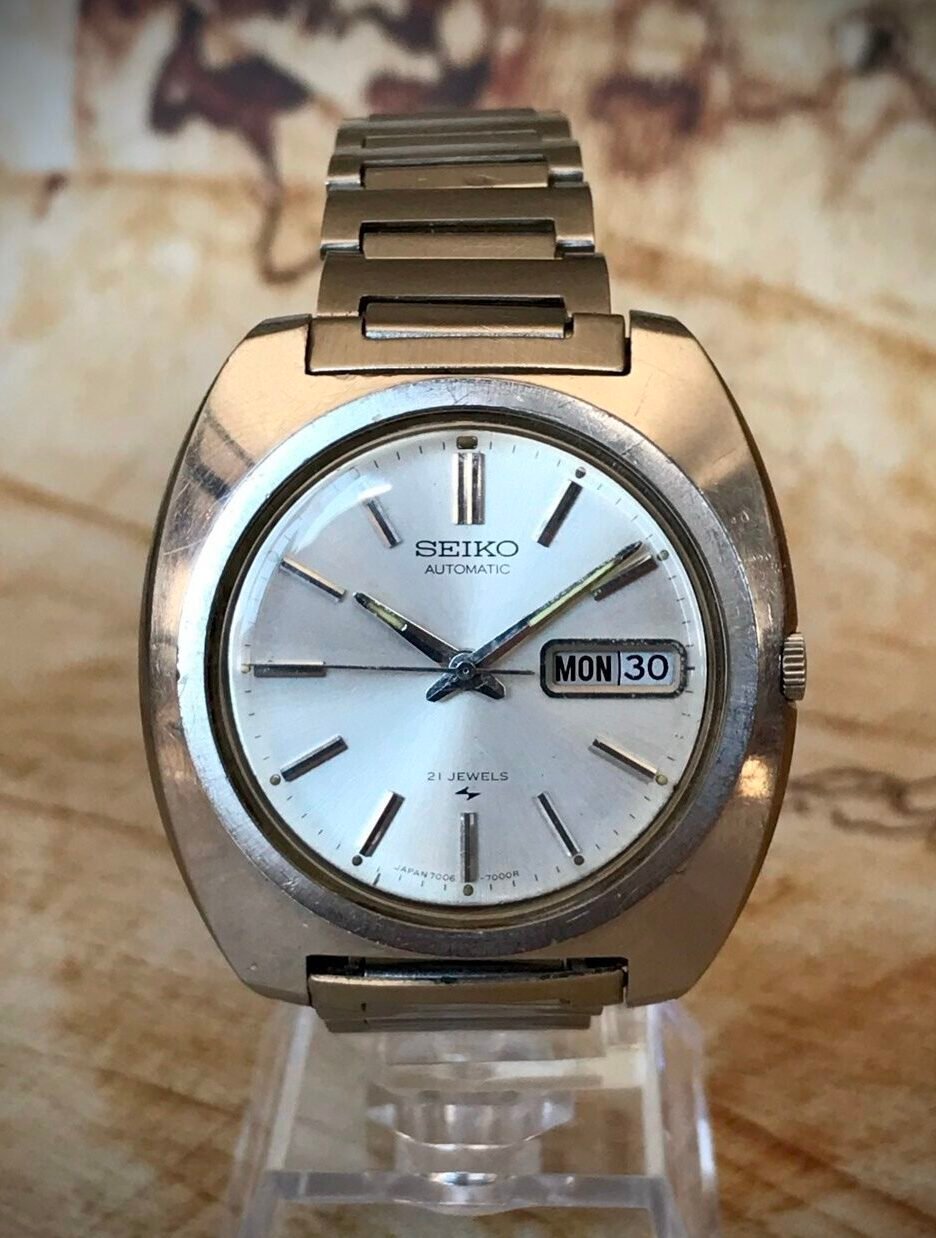
SEIKO 7006-7002 AUTOMATIC, VINTAGE YEAR 1971
175,00 €
Out of stock
| Marca | Seiko |
|---|---|
| Modelo | 7006-7002 Automatic |
| Género | Man |
| Década | 1970s |
| Año de fabricación | 1971 |
| Nº de serie | 152818 |
| Código de caja | 7006-7002 |
| Movimiento | Automatic |
| Calibre | Seiko 7006A |
| Cristal | Original PLexiglás |
| Esfera | Silver, flawless |
| Bisel | Stainless steel |
| Corona | Yours original |
| Material de la caja | Stainless steel |
| Diámetro sin corona | 39.1 mm |
| Diámetro con corona | 40 mm |
| Longitud entre asas | 41 mm |
| Grosor | 10.5 mm |
| Anchura de la correa | 18 mm |
| Material de la correa | Stainless steel |
| Color de la correa | Steel |
| Cierre/hebilla | Stainless steel, original Seiko. |
| Estado del reloj | Very good, with slight signs of aging. |
| Caja/Estuche | Yes, generic. |
| Documentación | Free Certificate of Authenticity available on request |
The history of Seiko began in 1881 in Tokyo, Japan, when a young entrepreneur named Kintaro Hattori opened a shop specializing in watch repair and sales. Driven by a vision to create high-quality timepieces, he established the Seikosha factory in 1892. The name Seikosha combines “Seiko,” meaning “precision” or “success,” and “sha,” meaning “house.” Initially, Seikosha focused on manufacturing wall clocks, later transitioning to pocket watches and wristwatches.
Japan’s First Wristwatch
In 1913, Seikosha introduced the Laurel, the first wristwatch made in Japan. This achievement was groundbreaking, as Japan had no prior watchmaking tradition. It established Seiko as a pioneer in its country, laying the foundation for its future as a global leader in the watch industry.
Technological Innovation and Quartz Revolution
In 1969, Seiko changed the course of watchmaking history with the launch of the Seiko Astron, the world’s first quartz wristwatch. This innovation revolutionized the industry by offering unparalleled accuracy and affordability compared to traditional mechanical movements. Quartz technology quickly became the standard for modern watchmaking.
Precision and Reliability
Over the years, Seiko has introduced numerous advancements, including the automatic chronograph and the Kinetic system, which combines quartz technology with kinetic energy. The brand is also renowned for its diving watches, celebrated for their durability and performance in extreme conditions.
Seiko Today
Seiko has earned a unique place in the watch industry, blending tradition and technology at accessible prices. The brand’s offerings range from simple, reliable timepieces to high-end models under the Grand Seiko line, exemplifying the pinnacle of Japanese watchmaking.
TEMPPUS. All rights reserved.
Información adicional
Reloj completamente revisado. Garantizado para su uso diario.
175,00 €
Out of stock
- Pieza única
- Envío Nacional Gratuito
- Entrega en 24/48 horas
- Aceptamos Bizum, Transferencia y Paypal
Relojes relacionados
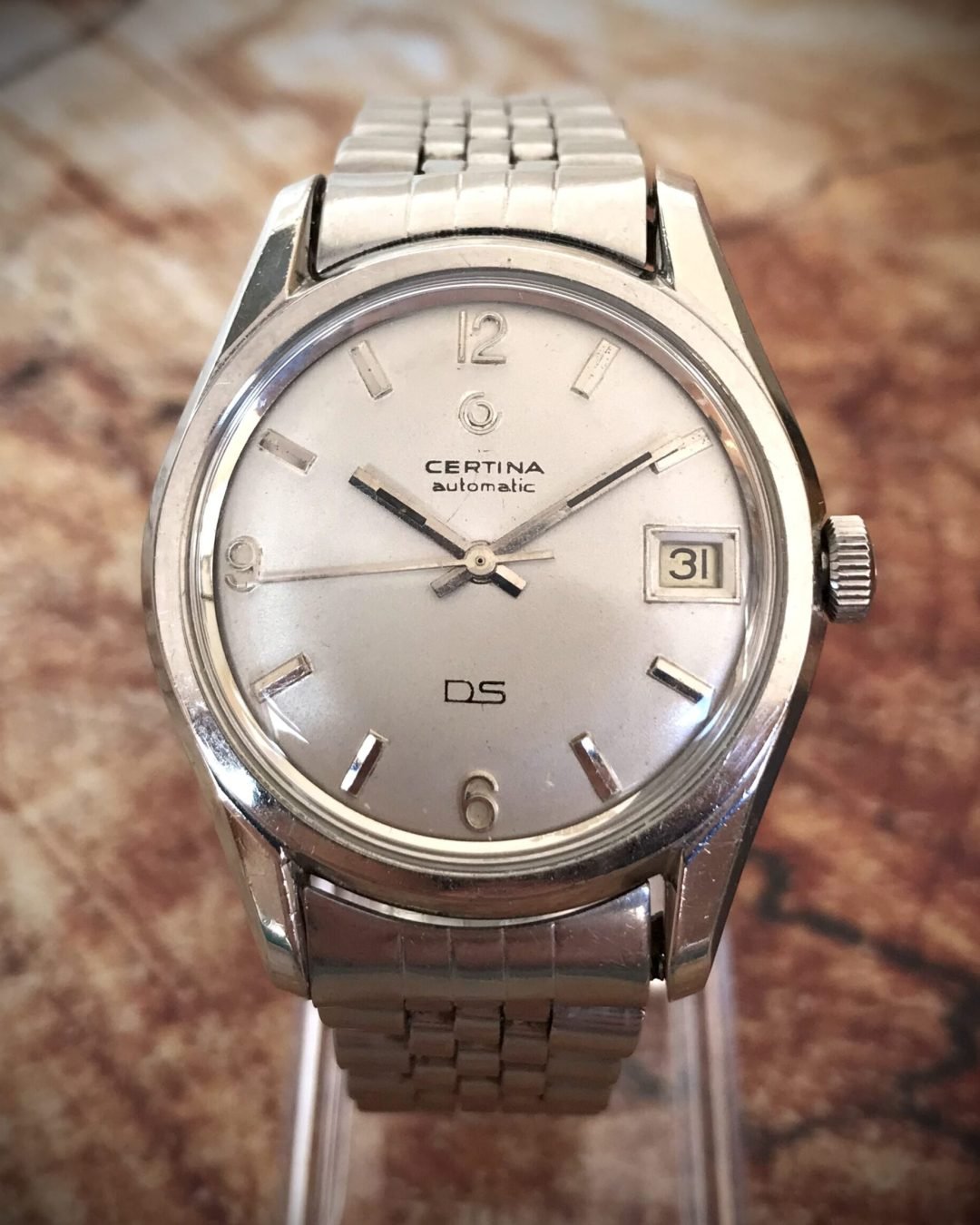
CERTINA DS TORTUGA 1ST GENERATION, AUTOMATIC
INFORMACIÓN
| Marca | Certina |
|---|---|
| Modelo | DS |
| Género | Man |
| País de origen | Switzerland |
| Década | 1960s |
| Nº de serie | 346.825 |
| Movimiento | Automatic |
| Calibre | 27 Rubíes, Certina 25-651 |
| Cristal | Plexiglass, impeccable |
| Esfera | Silver, with double date display at 3 o'clock. |
| Corona | Steel, signed CERTINA. |
| Material de la caja | Stainless steel |
| Diámetro sin corona | 36 mm |
| Diámetro con corona | 38 mm |
| Longitud entre asas | 45 mm |
| Grosor | 11 mm |
| Anchura de la correa | 18 mm |
| Material de la correa | Stainless steel |
| Color de la correa | Steel |
| Cierre/hebilla | Steel, signed CERTINA clasp-type. |
| Estado del reloj | Very good, with slight signs of aging. |
| Caja/Estuche | Yes, generic. |
| Documentación | Free Certificate of Authenticity available on request |
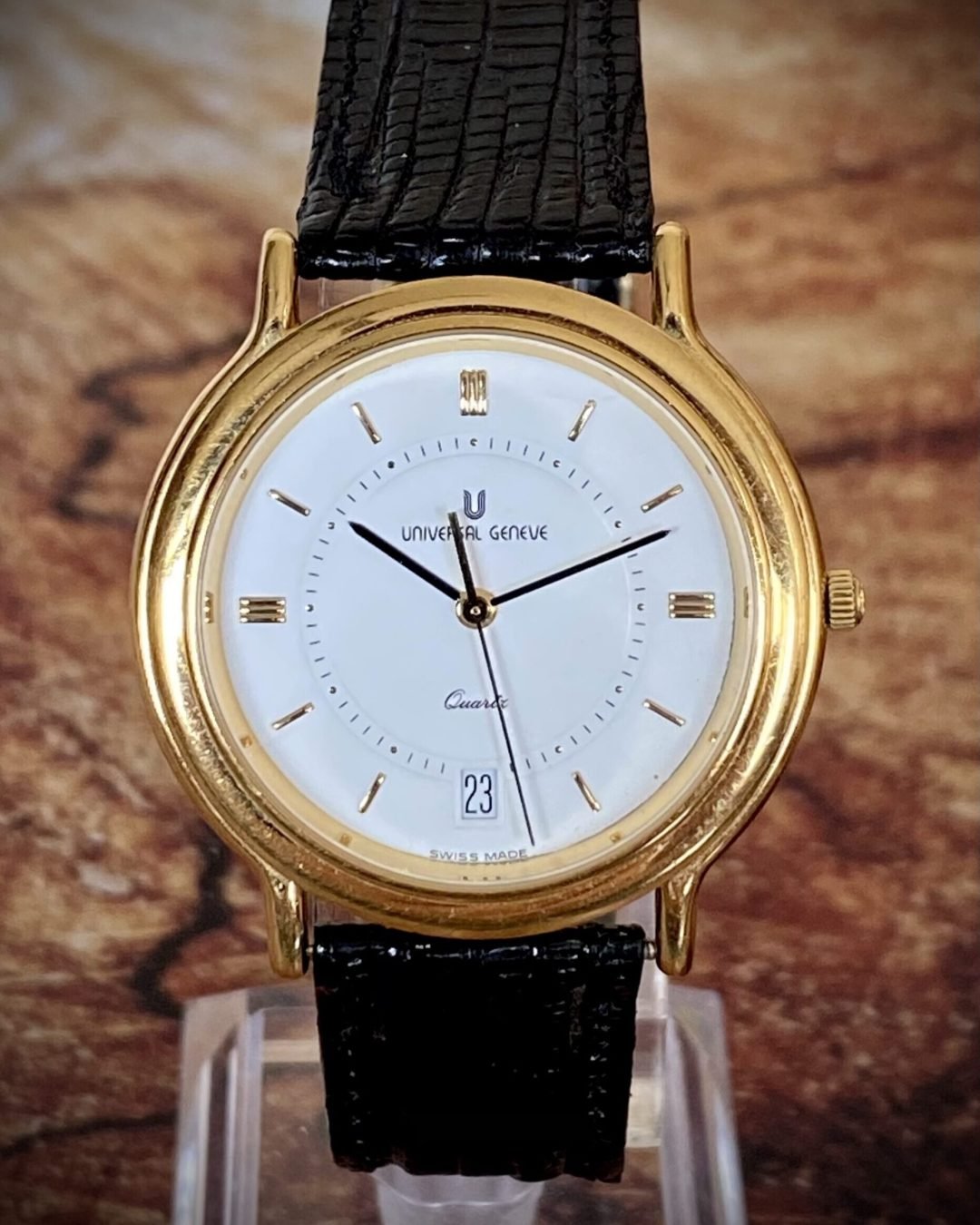
UNIVERSAL GENEVE QUARTZ, VINTAGE 80s
INFORMACIÓN
| Marca | Universal Genève |
|---|---|
| Modelo | Extraplano, Quartz |
| Género | Man |
| País de origen | Switzerland |
| Década | 1980s |
| Nº de serie | 172108 |
| Código de caja | 555520: Silver Stainless Steel Mesh Bracelet. |
| Movimiento | Quartz |
| Cristal | Mineral |
| Esfera | White, with date display at 6 o'clock |
| Corona | Original, firmada Universal Genève. |
| Material de la caja | Gold-plated with 20 microns |
| Diámetro sin corona | 33 mm |
| Diámetro con corona | 34 mm |
| Longitud entre asas | 36 mm |
| Grosor | 5.5 mm |
| Anchura de la correa | 18 mm |
| Material de la correa | Lizard skin, brand new |
| Color de la correa | Black |
| Cierre/hebilla | Type squirrel |
| Estado del reloj | Excellent, like new! |
| Caja/Estuche | Yes, generic. |
| Documentación | Free Certificate of Authenticity available on request |
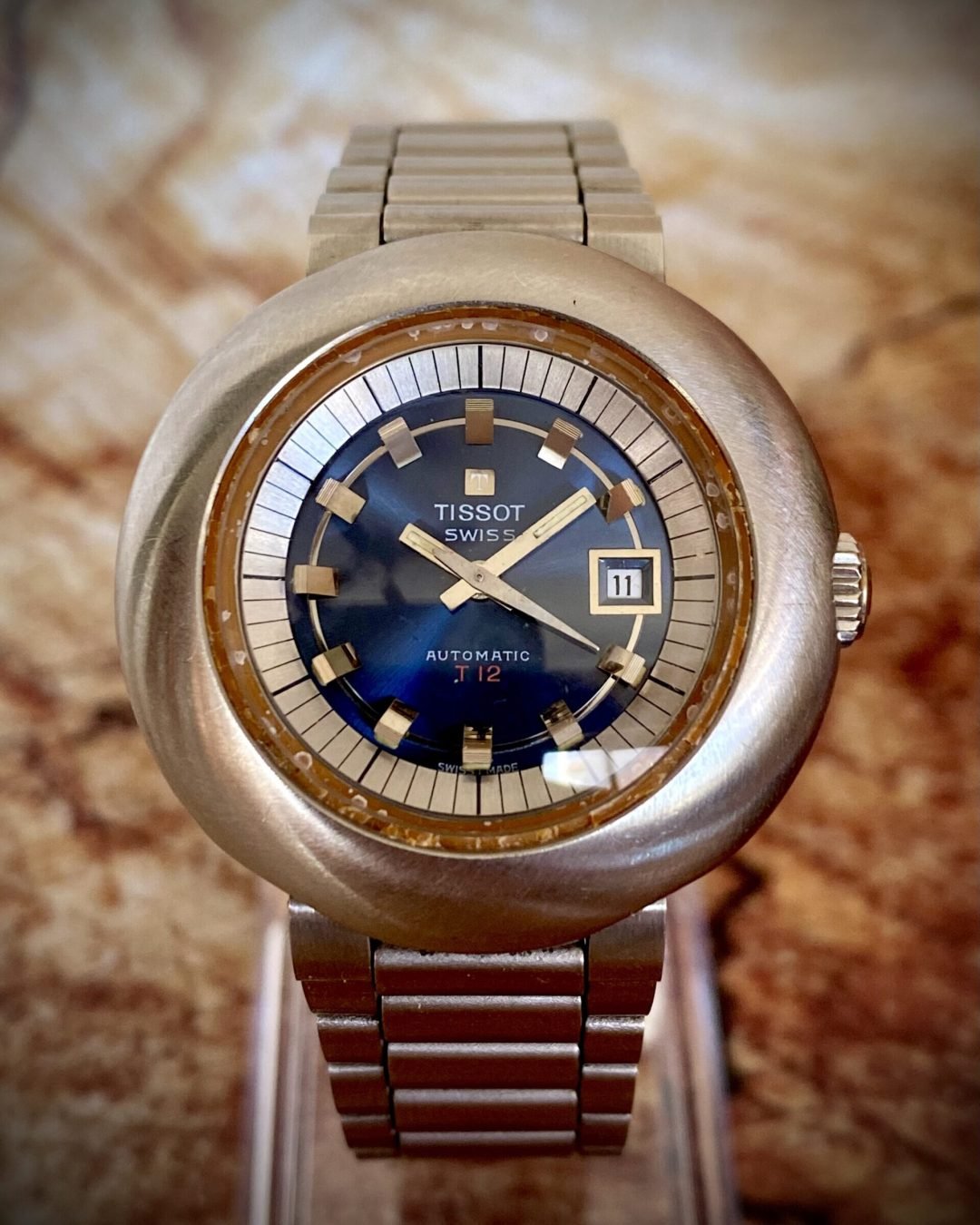
TISSOT T12 AUTOMATIC, VINTAGE 60s (GAY FRÈRES)
INFORMACIÓN
| Marca | Tissot |
|---|---|
| Modelo | T 12 Automatic |
| Género | Man |
| País de origen | Switzerland |
| Década | 1960s |
| Nº de serie | 25641422 |
| Código de caja | 38645: Chronograph. |
| Movimiento | Automatic |
| Calibre | 21 rubíes |
| Cristal | Mineral |
| Esfera | Blue with date display at 3 |
| Corona | Steel, original signed TISSOT |
| Material de la caja | Stainless steel |
| Diámetro sin corona | 35 mm |
| Diámetro con corona | 36 mm |
| Longitud entre asas | 35 mm |
| Grosor | 11,5 mm |
| Anchura de la correa | 17 mm |
| Material de la correa | Stainless steel |
| Color de la correa | Steel |
| Cierre/hebilla | Clasp type, original TISSOT (signed GAY FRÉRES) |
| Estado del reloj | Very good, with slight signs of aging. |
| Caja/Estuche | Yes, generic. |
| Documentación | Free Certificate of Authenticity available on request |
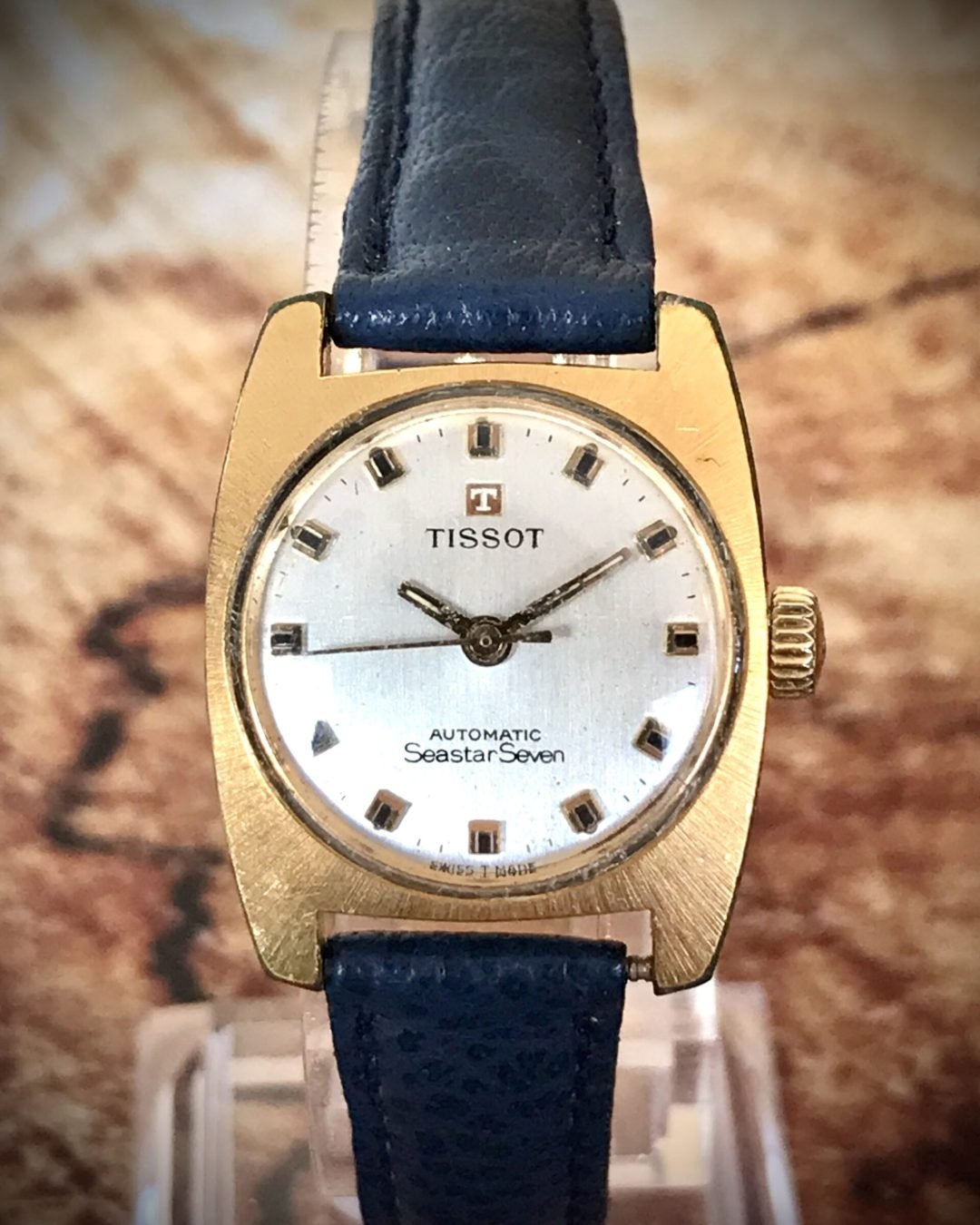
TISSOT SEASTAR SEVEN (Lady), VINTAGE AUTOMATIC
INFORMACIÓN
| Marca | Tissot |
|---|---|
| Modelo | SEASTAR SEVEN |
| Género | Female |
| Década | 1950s |
| Movimiento | Automatic |
| Esfera | Silver, flawless |
| Corona | Original, signed Tissot |
| Material de la caja | Gold-plated |
| Diámetro sin corona | 22 mm |
| Diámetro con corona | 24 mm |
| Longitud entre asas | 27 mm |
| Grosor | 8.5 mm |
| Anchura de la correa | 12 mm |
| Material de la correa | Genuine leather |
| Color de la correa | Navy blue |
| Cierre/hebilla | Type squirrel |
| Estado del reloj | Very good, with slight signs of aging. |
| Caja/Estuche | Yes, generic. |
| Documentación | Free Certificate of Authenticity available on request |
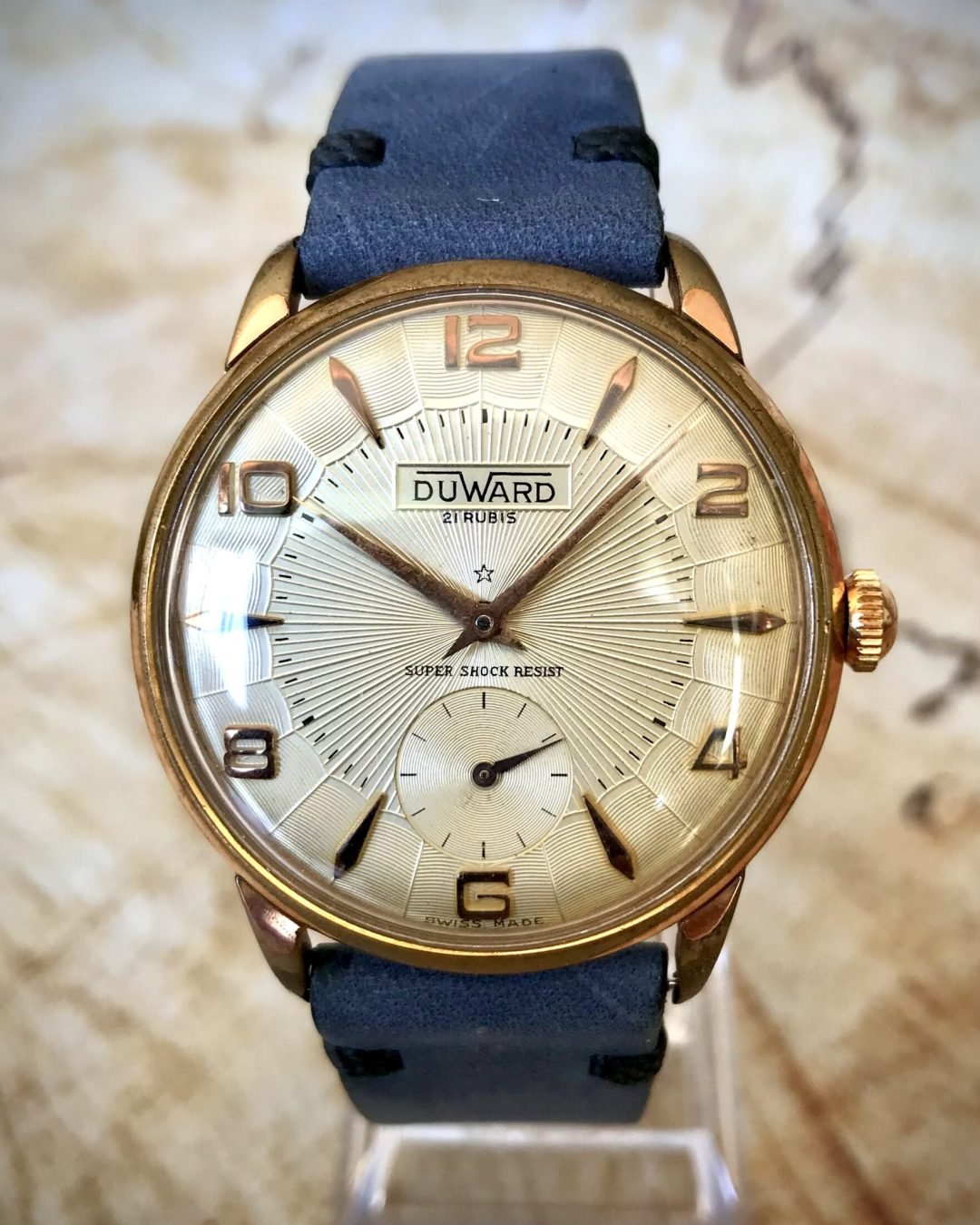
DUWARD 50’S, MANUAL WINDING
INFORMACIÓN
| Marca | Duward |
|---|---|
| Modelo | Classic, 21 rubís |
| Género | Man |
| Década | 1950s |
| Código de caja | 7555 |
| Movimiento | Manual winding |
| Cristal | Original Plexiglass, flawless |
| Esfera | Texturized Gold with Arabic Numerals |
| Material de la caja | Gold-plated |
| Diámetro sin corona | 38 mm |
| Diámetro con corona | |
| Longitud entre asas | 43 mm |
| Grosor | 9 mm |
| Anchura de la correa | 19 mm |
| Material de la correa | Genuine leather vaccine |
| Color de la correa | Blue |
| Cierre/hebilla | Squirrel-type, gold-plated steel. |
| Estado del reloj | Very good, with slight signs of aging. |
| Caja/Estuche | Yes, generic. |
| Documentación | Free Certificate of Authenticity available on request |
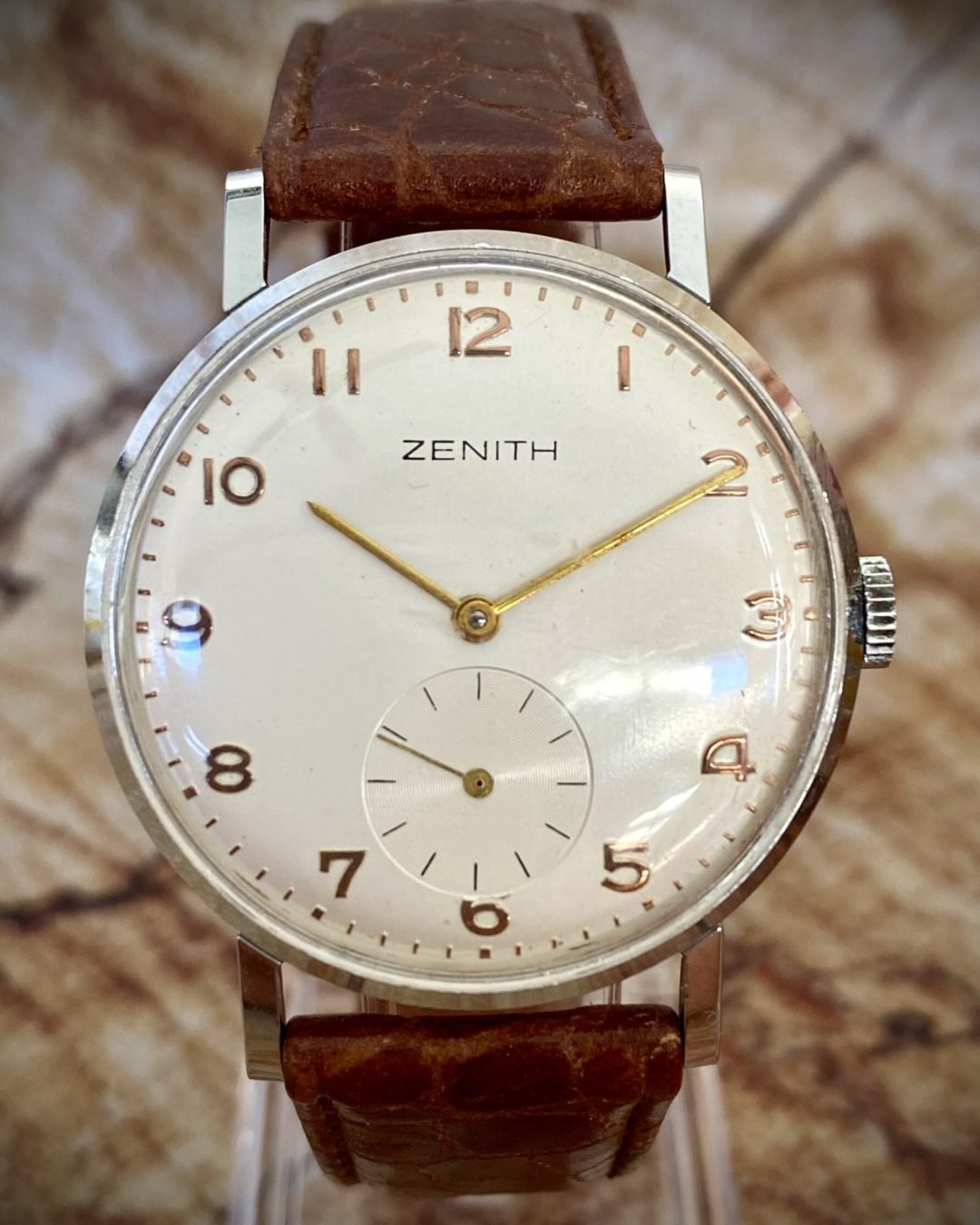
ZENITH, VINTAGE 50S, MANUAL WIND
INFORMACIÓN
| Marca | Zenith |
|---|---|
| Modelo | Classic |
| Género | Man |
| Década | 1950s |
| Nº de serie | Serial Number: 3935364 |
| Movimiento | Manual winding |
| Calibre | Zenith 126 |
| Cristal | Plexiglass, impeccable |
| Esfera | Champagne color with Arabic numerals, impeccable |
| Diámetro sin corona | 34.7 mm without crown |
| Diámetro con corona | 35.5 mm |
| Longitud entre asas | 41.5 mm |
| Grosor | 8.5 mm |
| Anchura de la correa | 18 mm |
| Color de la correa | Brown |
| Cierre/hebilla | Stainless steel |
| Estado del reloj | Excellent, like new! |
| Caja/Estuche | Yes, generic. |
| Documentación | Free Certificate of Authenticity available on request |
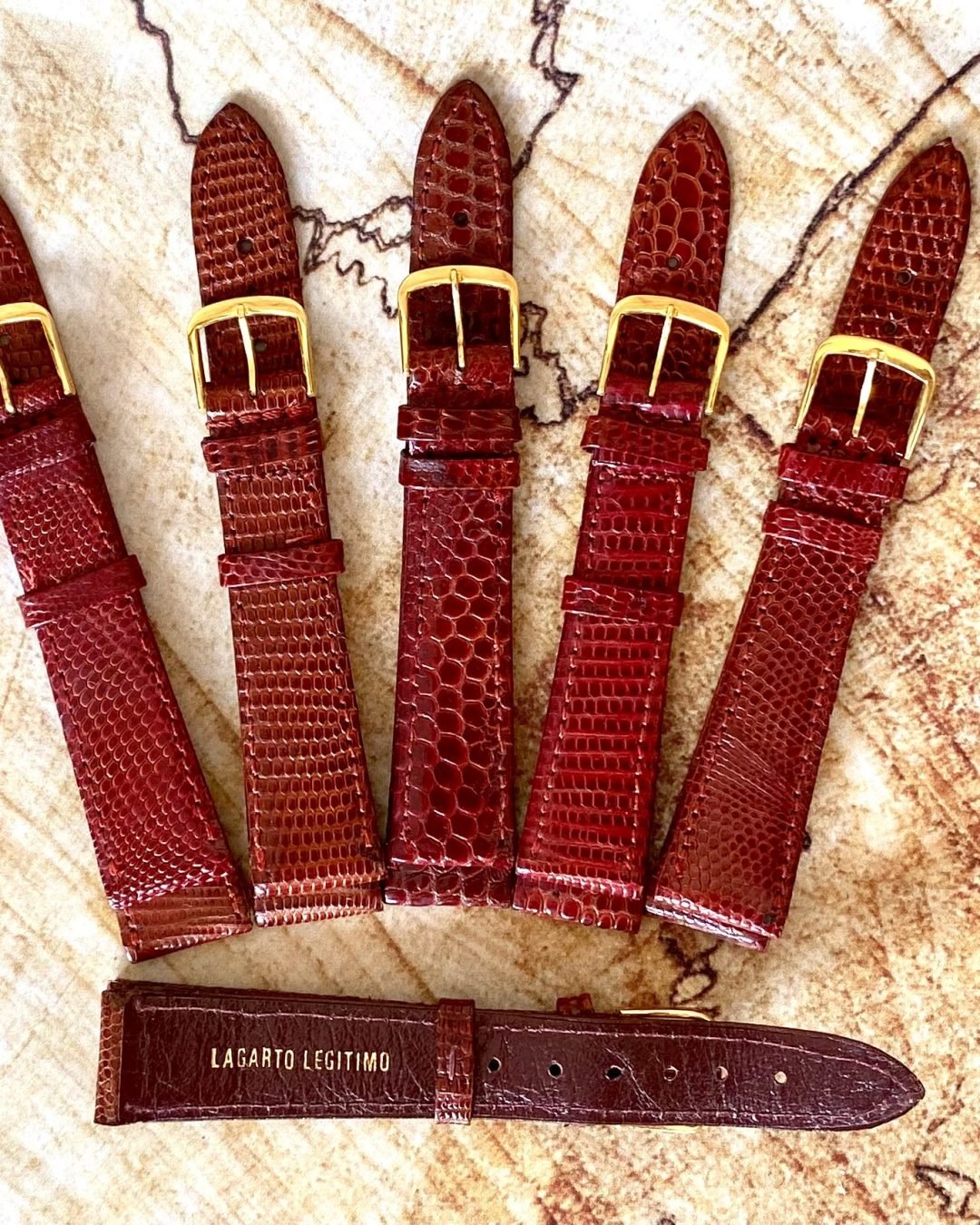
GENUINE LIZARD LEATHER WATCH STRAP, BROWN COLOR, 18 mm
15,00 €
INFORMACIÓN
| Material de la correa | Genuine lizard skin |
|---|---|
| Anchura de la correa | 18 mm x 7 cm (+ buckle) and 18 mm x 11.5 cm |
| Color de la correa | Bordeaux |
| Cierre/hebilla | Squirrel-type, gold-plated steel. |
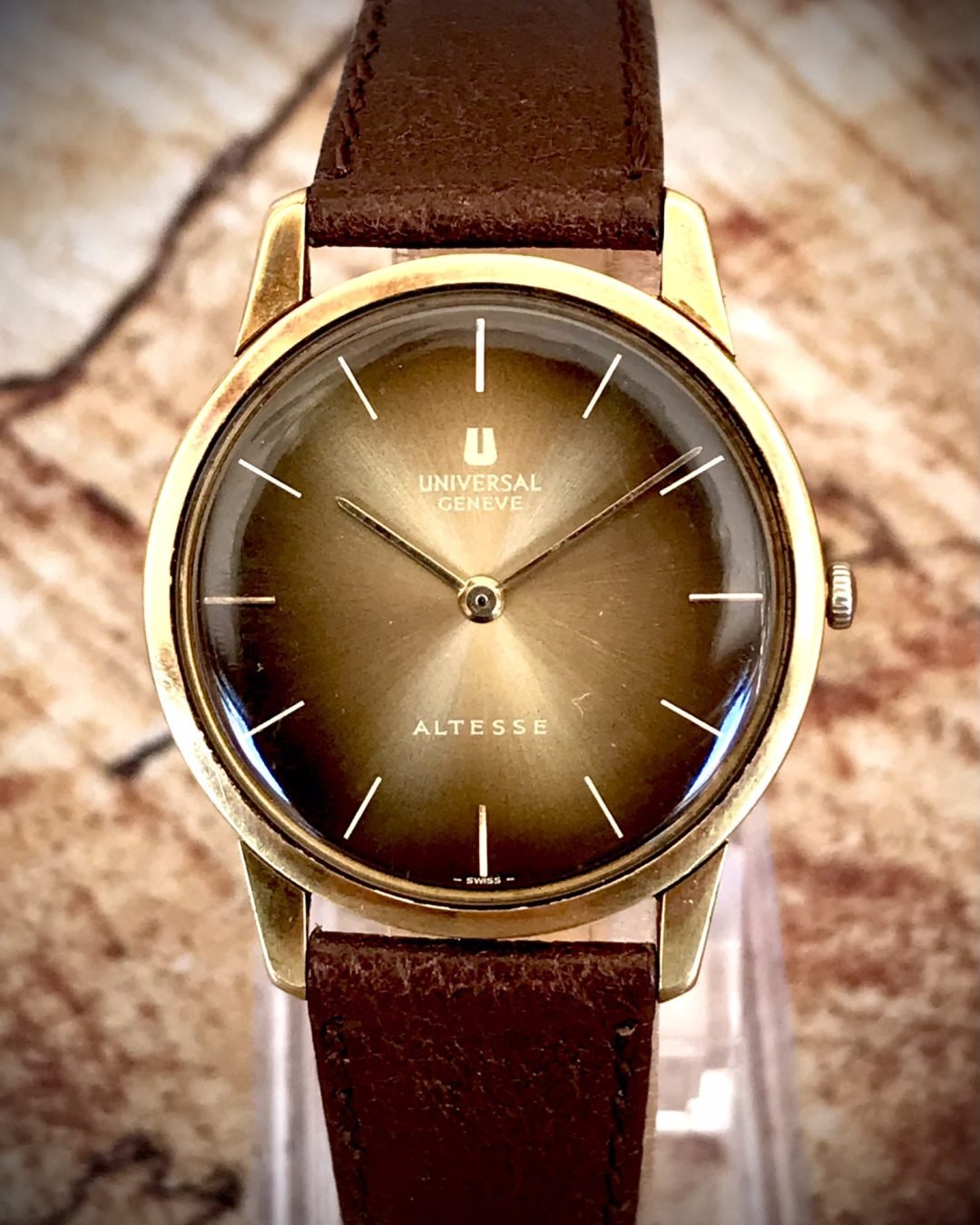
UNIVERSAL GENEVE, ALTESSE ULTRAPLANO 5 mm
INFORMACIÓN
| Marca | Universal Genève |
|---|---|
| Modelo | Highness |
| Género | Man |
| Década | 1960s |
| Año de fabricación | 1967 |
| Nº de serie | 542 101 |
| Código de caja | 3005 788 |
| Movimiento | Manual winding |
| Cristal | Original PLexiglás |
| Esfera | Brown and green tones, blurred |
| Corona | Yours truly |
| Material de la caja | Gold-plated steel |
| Diámetro sin corona | 30.5 mm |
| Diámetro con corona | 31.5 mm |
| Longitud entre asas | 36 mm |
| Grosor | 5 mm |
| Anchura de la correa | 16 mm |
| Material de la correa | Genuine leather |
| Color de la correa | Brown |
| Cierre/hebilla | Steel |
| Estado del reloj | Well, with logical signs of the passage of time. |
| Caja/Estuche | Yes, generic. |
| Documentación | Free Certificate of Authenticity available on request |
Garantía tEMPPUS
Para su total tranquilidad, protegemos todos nuestros RELOJES CON 1 AÑO DE GARANTÍA.