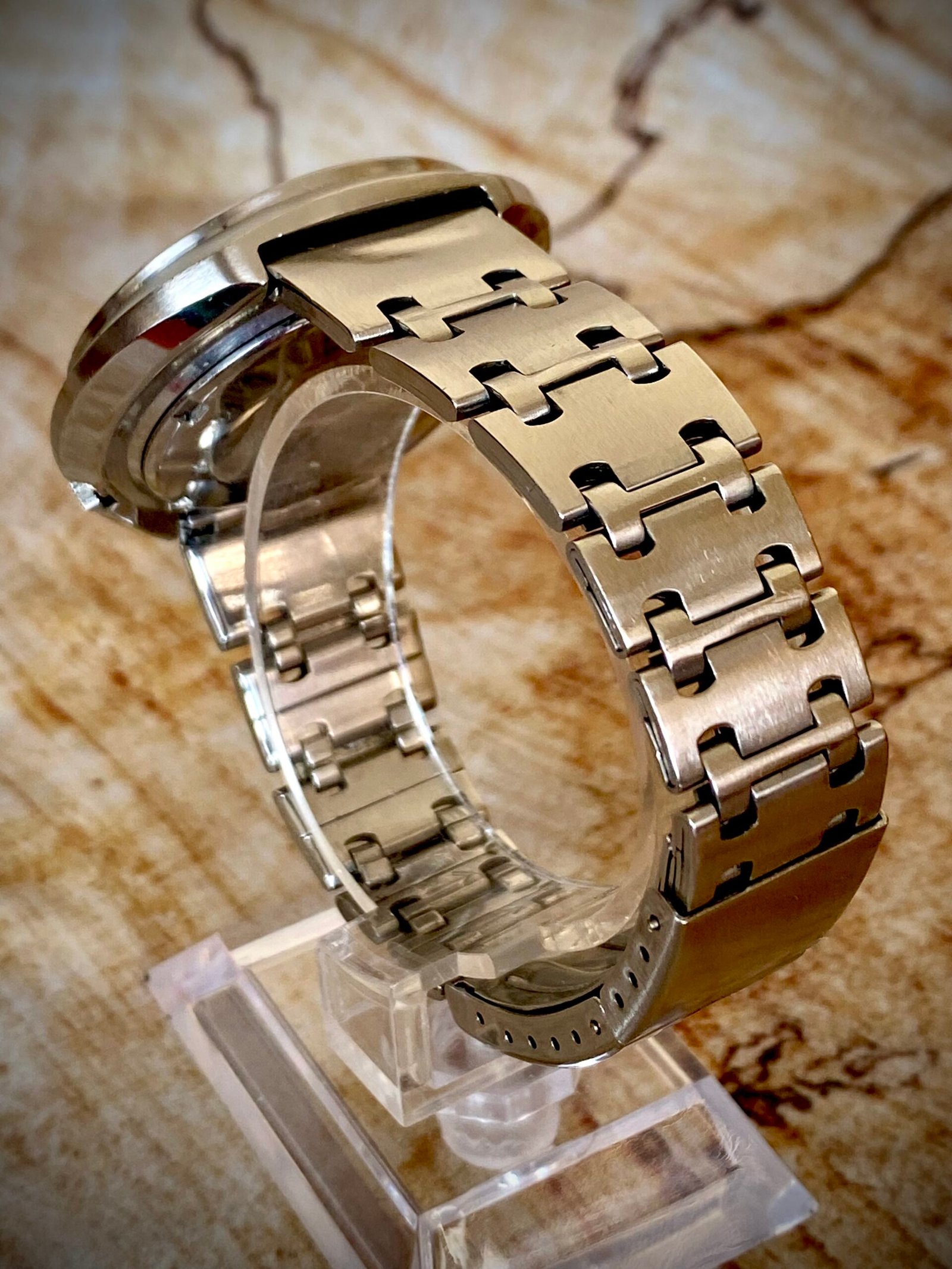
- Pieza única
- Envío Nacional Gratuito
- Entrega en 24/48 horas
- Aceptamos Bizum, Transferencia y Paypal
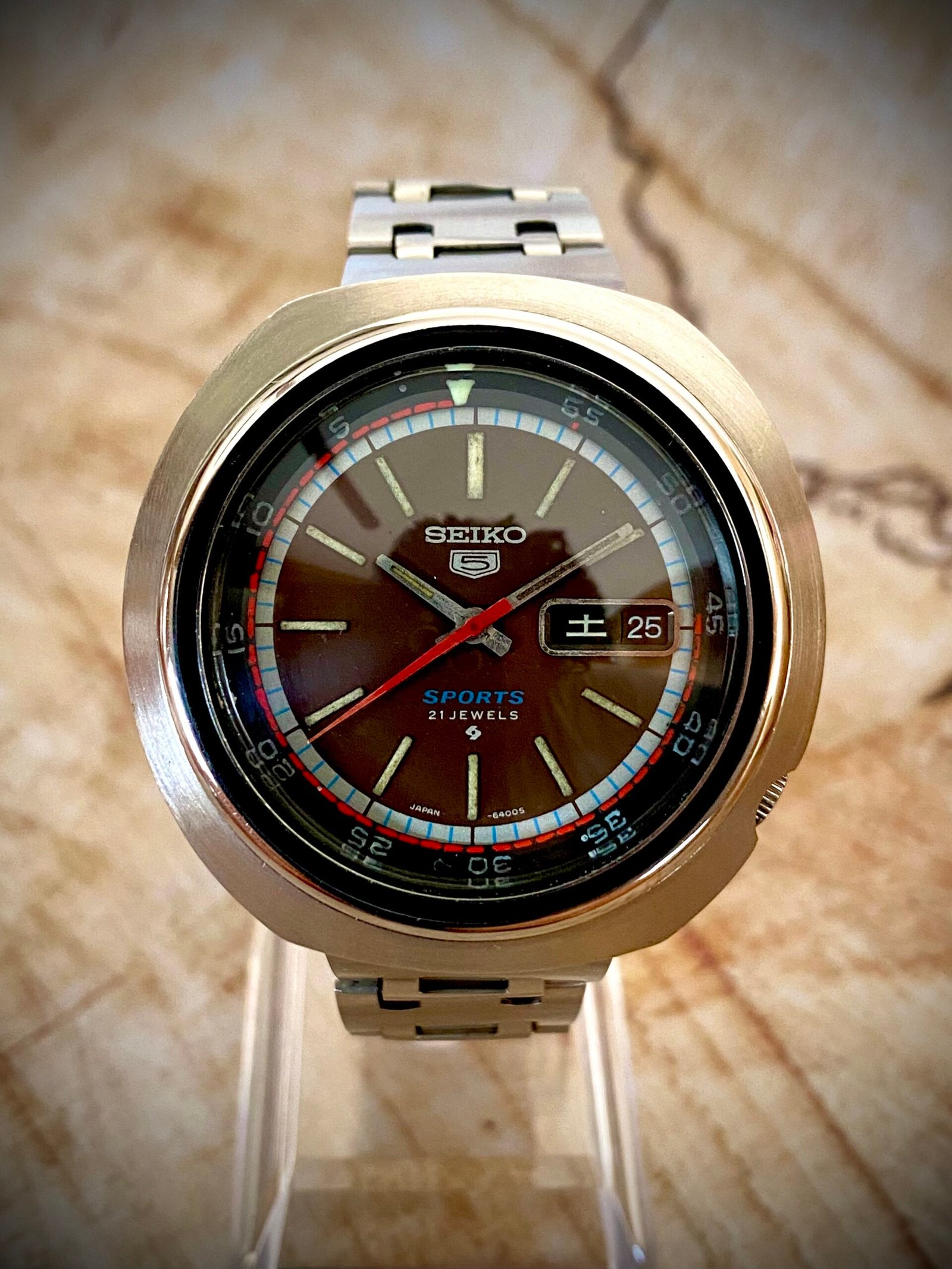
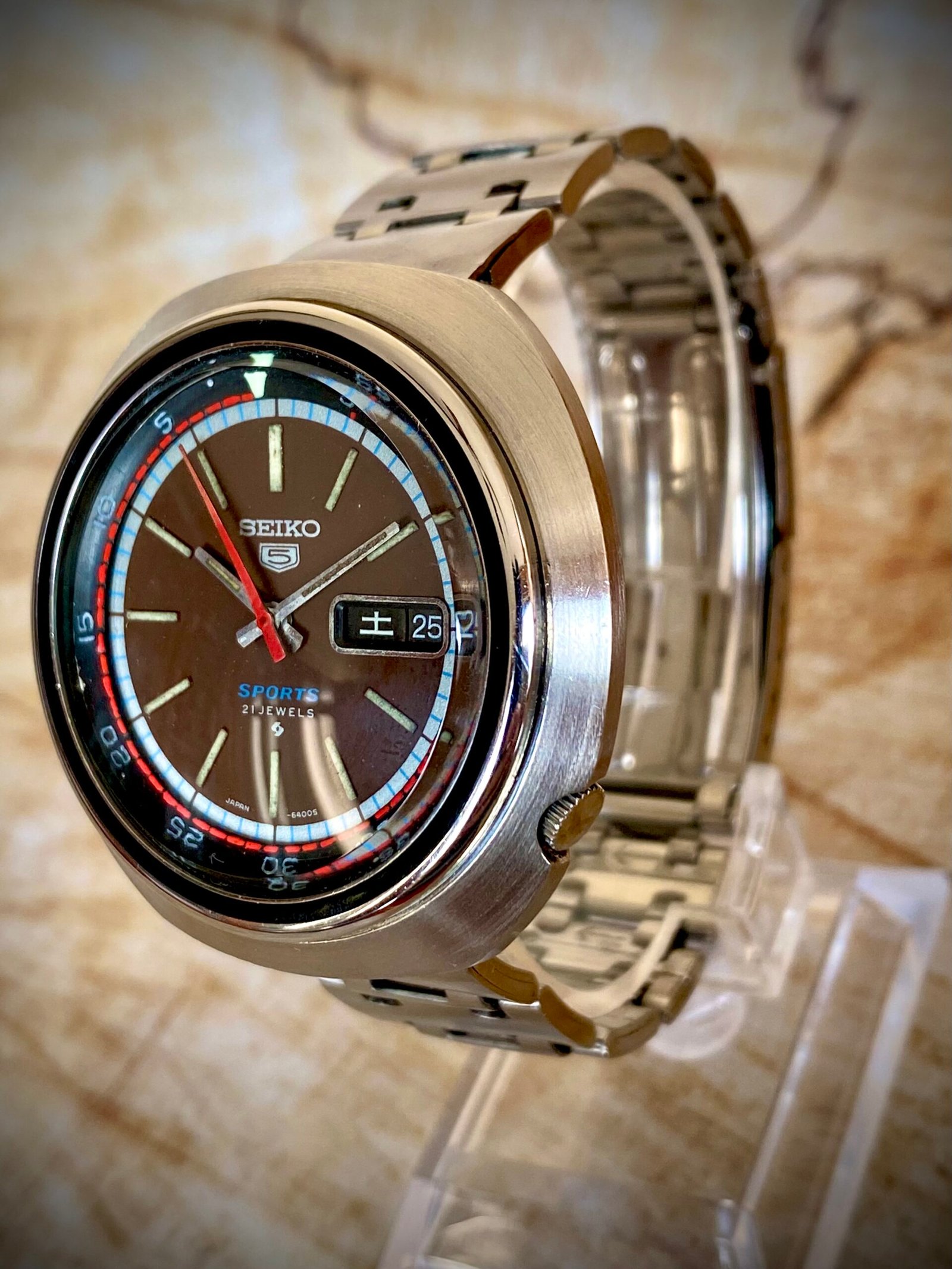
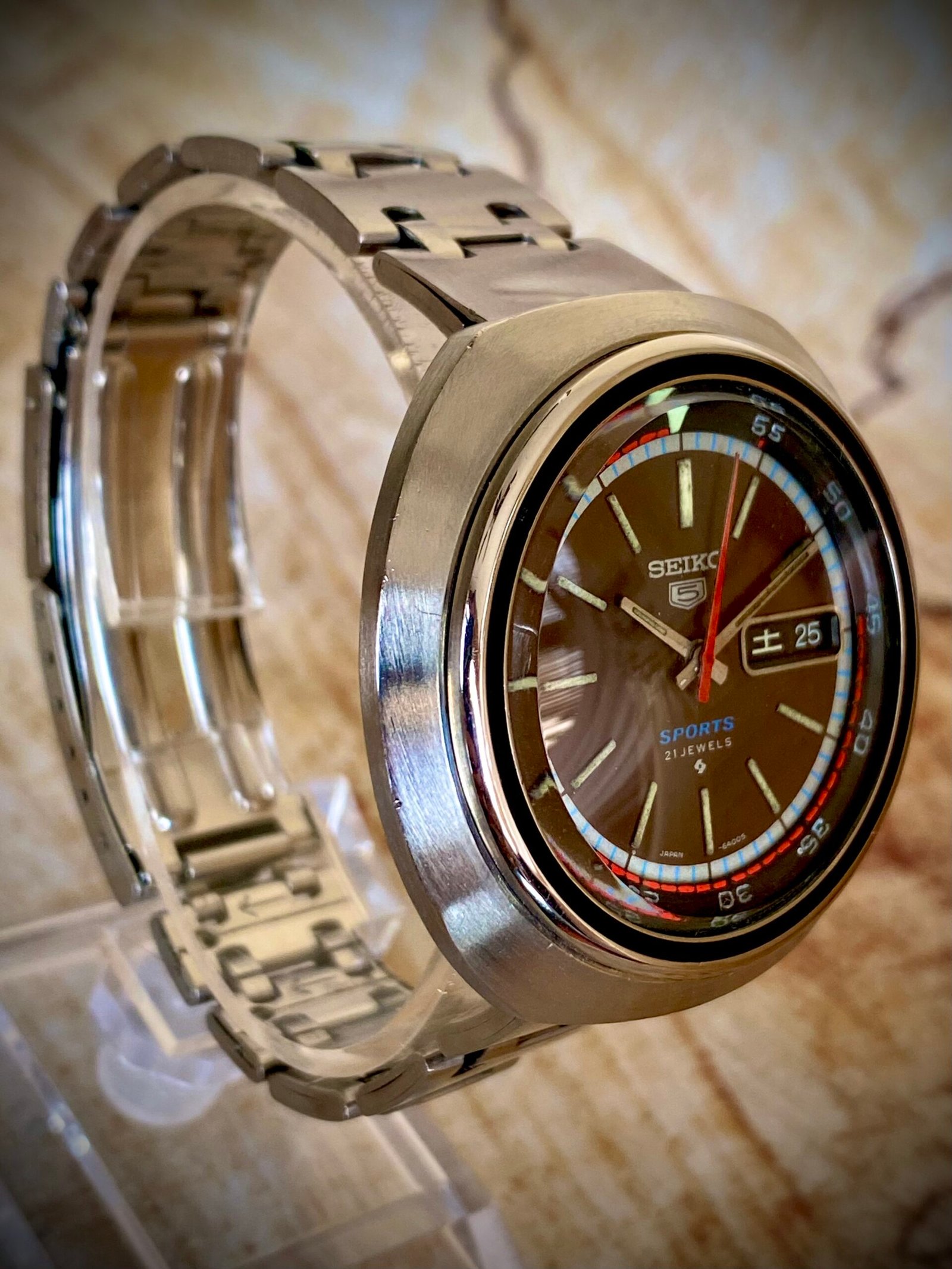
SEIKO 6119-6400 AUTOMATIC, VINTAGE YEAR 1974
| Marca | Seiko |
|---|---|
| Modelo | 6119-6400 |
| Género | Man |
| País de origen | Japan |
| Década | 1970s |
| Año de fabricación | 1974 |
| Nº de serie | 462158: Sapphire Crystal |
| Código de caja | 6400 |
| Movimiento | Automatic |
| Calibre | Seiko 6119 |
| Cristal | Original Plexiglass, flawless |
| Esfera | Chocolate color, highly sought after and scarce. |
| Bisel | Rotating Inner Bezel |
| Corona | Original Seiko, de acero |
| Material de la caja | Stainless steel |
| Diámetro sin corona | 42 mm |
| Diámetro con corona | 42.5 mm |
| Longitud entre asas | 42 mm |
| Grosor | 13 mm |
| Anchura de la correa | 20 mm |
| Material de la correa | Stainless steel |
| Color de la correa | Steel |
| Cierre/hebilla | Pin type, original signed Seiko |
| Estado del reloj | Excellent, like new! |
| Caja/Estuche | Yes, generic. |
| Documentación | Free Certificate of Authenticity available on request |
Seiko: Horological Revolution from Japan
Foundation and pioneering vision
Seiko’s journey began in 1881 in Tokyo, driven by the entrepreneur Kintaro Hattori, who established a workshop for watch repair and sales. His ambition materialized in 1892 with the creation of the manufacture Seikosha— “House of Exquisite Precision”. Initially focused on wall clocks, it evolved towards pocket watches and eventually wristwatches.
First national milestone
In 1913, Seikosha made history with the Laurel, the first wristwatch manufactured in Japan. This foundational achievement established Seiko as a pioneer in a nation without a watchmaking tradition, laying the groundwork for its global rise. The model combined local craftsmanship with components imported from Switzerland.
Technological disruption: The era of quartz
On December 25, 1969, Seiko altered the global watchmaking paradigm with the Quartz Astron, the first commercially marketed quartz wristwatch. Its precision (±5 seconds/month) exceeded that of contemporary mechanical watches tenfold. This advancement democratized chronometric accuracy and triggered the “quartz crisis” that transformed the industry.
Multi-faceted precision
Seiko solidified its leadership through key innovations:
-
Automatic chronographs (caliber 6139, 1969), the first movement of this type with a vertical column wheel and oscillating pinion.
-
Kinetic technology (1988), merging kinetic generation with quartz regulation.
-
Dive watches like the Prospex LX (300m water resistance), certified to ISO 6425 standards.
-
Spring Drive (1999), a unique hybrid system combining mainspring, electronics, and quartz.
Contemporary legacy
Today, Seiko operates as a vertically integrated manufacture, dominating all production stages. Its spectrum ranges from affordable watches (Seiko 5 line) to high watchmaking with Grand Seiko, renowned for its Zaratsu finishes and certified precision. The brand embodies the balance of cutting-edge technology, accessibility, and meticulous craftsmanship.
TEMPPUS. All rights reserved.
Información adicional
Reloj completamente revisado. Garantizado para su uso diario.
- Pieza única
- Envío Nacional Gratuito
- Entrega en 24/48 horas
- Aceptamos Bizum, Transferencia y Paypal
Relojes relacionados
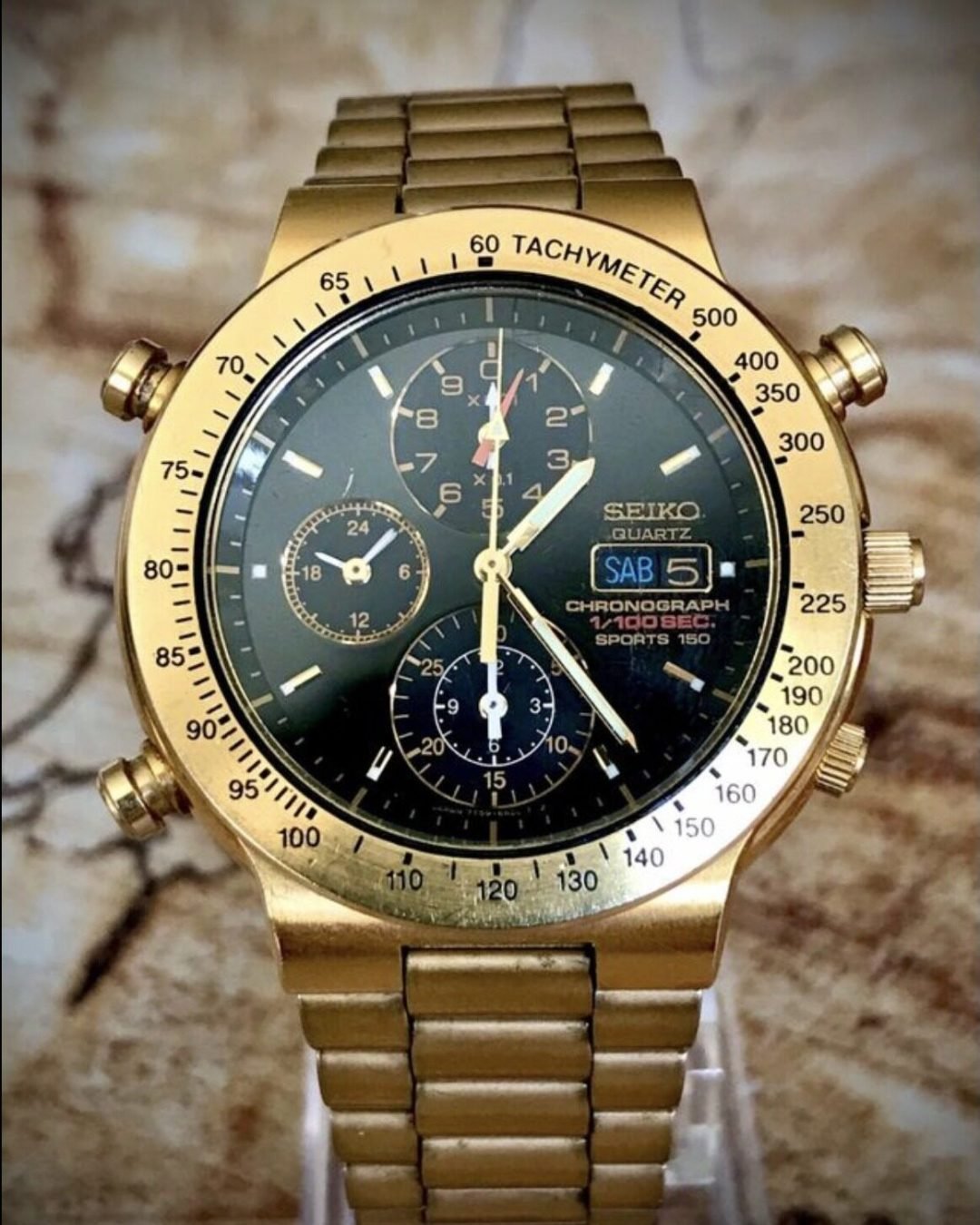
SEIKO SPORTS 150 CHRONOGRAPH, ALARM QUARTZ 7T59
INFORMACIÓN
| Marca | Seiko |
|---|---|
| Modelo | SPORTS 150 CHRONOGRAPH |
| Género | Man |
| País de origen | Japan |
| Década | 1990s |
| Año de fabricación | 1991 |
| Nº de serie | 102001 |
| Código de caja | 6A00 A6 |
| Movimiento | Quartz |
| Calibre | Seiko 7T59 |
| Cristal | Mineral |
| Esfera | Black, with three subdials and calendar at 3 o'clock. |
| Bisel | Gold-plated with tachymeter. |
| Corona | Original, firmada Seiko |
| Material de la caja | Gold-plated with 20 microns |
| Diámetro sin corona | 40.5 mm |
| Diámetro con corona | 42.5 mm |
| Longitud entre asas | 44.4 mm |
| Grosor | 11,5 mm |
| Anchura de la correa | 20 mm |
| Material de la correa | Gold-plated steel |
| Color de la correa | Gold |
| Cierre/hebilla | Pin type, original signed Seiko |
| Estado del reloj | Excellent, like new! |
| Caja/Estuche | Yes, generic. |
| Documentación | Free Certificate of Authenticity available on request |
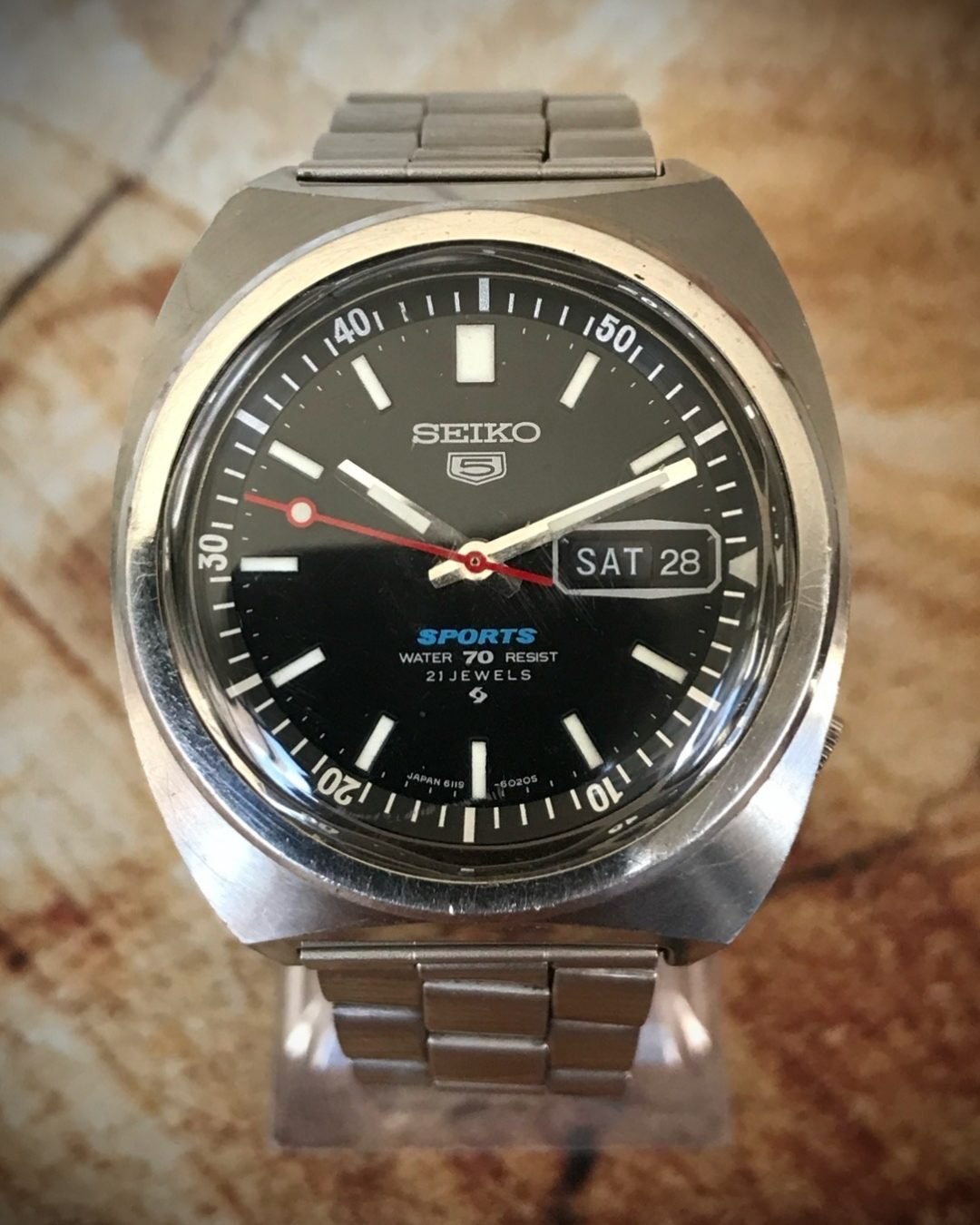
SEIKO 5 SPORTS 6119/6023 AUTOMATIC, VINTAGE YEAR 1972
INFORMACIÓN
| Marca | Seiko |
|---|---|
| Modelo | 5 Sports 6119-6023 |
| Género | Man |
| País de origen | Japan |
| Década | 1970s |
| Año de fabricación | 1972 |
| Nº de serie | 211321 |
| Código de caja | 6023: Stainless Steel |
| Movimiento | Automatic |
| Cristal | Original PLexiglás |
| Esfera | Black, with double date function at 3 o'clock. |
| Corona | Original SEIKO Steel, at 4時 |
| Material de la caja | Stainless steel |
| Diámetro sin corona | 37.2 mm |
| Diámetro con corona | 37,2 mm |
| Longitud entre asas | 40 mm |
| Grosor | 12 mm |
| Anchura de la correa | 19 mm |
| Material de la correa | Stainless steel |
| Color de la correa | Steel |
| Cierre/hebilla | Steel type clasp, original signed SEIKO. |
| Estado del reloj | Very good, with slight signs of aging. |
| Caja/Estuche | Yes, generic. |
| Documentación | Free Certificate of Authenticity available on request |
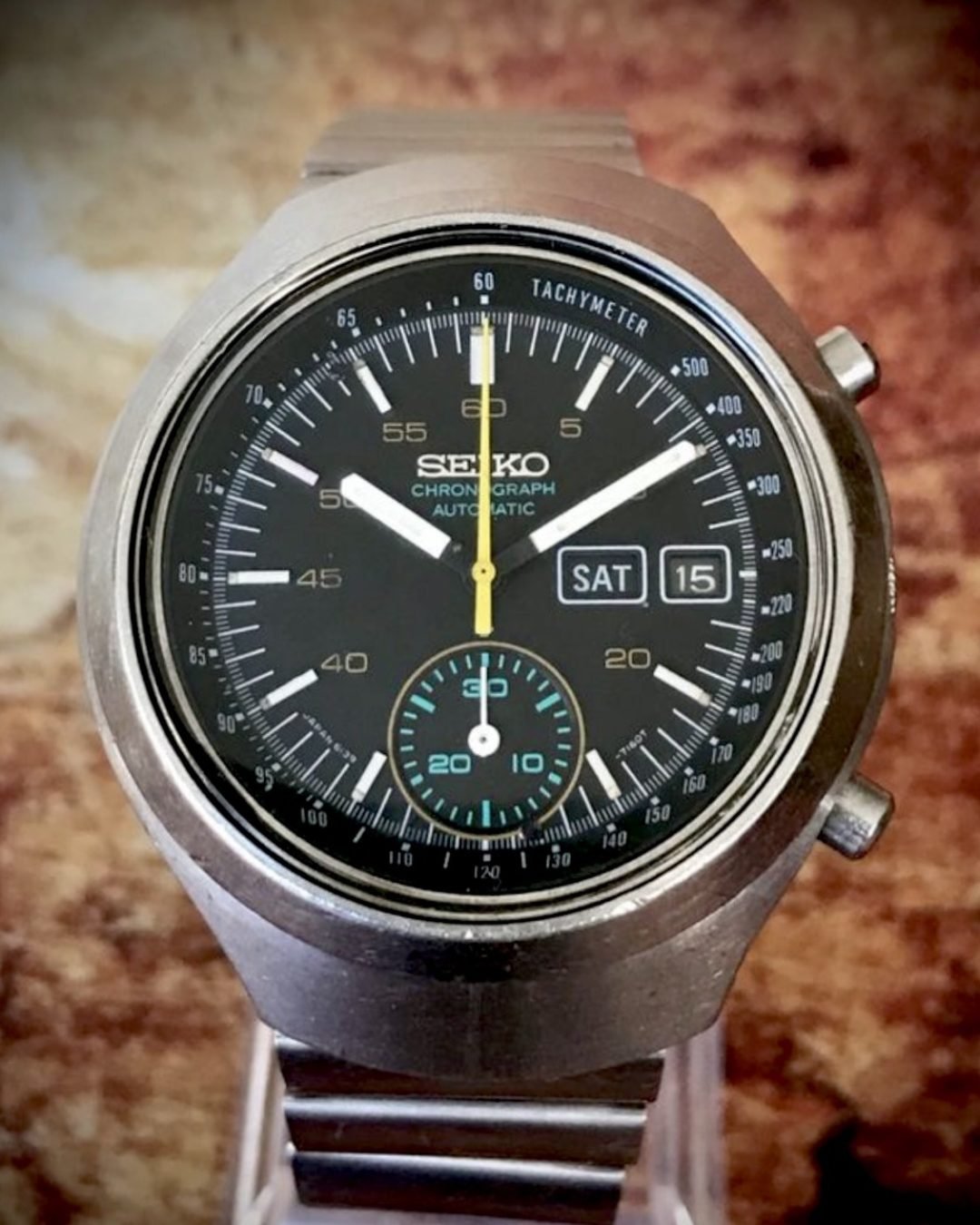
SEIKO HELMET 6139-7101, AUTOMATIC CHRONOGRAPH
INFORMACIÓN
| Marca | Seiko |
|---|---|
| Modelo | Helmet 6139-7101 |
| Género | Man |
| Década | 1970s |
| Año de fabricación | 1975 |
| Nº de serie | 541228: Golden Rose Gold Mesh Watch |
| Código de caja | 7101 |
| Movimiento | Automatic |
| Calibre | Seiko 6139 |
| Cristal | Plexiglass, impeccable |
| Esfera | Black with double date display at 3 o'clock. |
| Bisel | Interior con taquímetro |
| Corona | Seiko Corona |
| Material de la caja | Stainless steel |
| Diámetro sin corona | 40,2 mm |
| Diámetro con corona | 40.2 mm |
| Longitud entre asas | 48 mm |
| Grosor | 12.2 mm |
| Anchura de la correa | 20 mm |
| Material de la correa | Stainless steel |
| Color de la correa | Steel |
| Cierre/hebilla | Steel, original SEIKO. |
| Estado del reloj | Very good, with slight signs of aging. |
| Caja/Estuche | Yes, your original. |
| Documentación | Free Certificate of Authenticity available on request |

SEIKO 6139-6002 “POGUE”, AUTOMATIC CHRONOGRAPH
INFORMACIÓN
| Marca | Seiko |
|---|---|
| Modelo | |
| Género | Man |
| Década | 1970s |
| Año de fabricación | 1971 |
| Nº de serie | 103540 |
| Código de caja | 6002 |
| Movimiento | Automatic |
| Calibre | Seiko 6139 |
| Cristal | Mineral |
| Bisel | Aluminum with tachymeter, impeccable |
| Material de la caja | Steel |
| Diámetro sin corona | 43 mm |
| Diámetro con corona | |
| Longitud entre asas | 46 mm |
| Grosor | 12.2 mm |
| Anchura de la correa | 19 mm |
| Material de la correa | Stainless steel |
| Color de la correa | Steel |
| Cierre/hebilla | Drop-down clasp, signed SEIKO |
| Estado del reloj | Excellent, like new! |
| Caja/Estuche | Yes, your original. |
| Documentación | Free Certificate of Authenticity available on request |
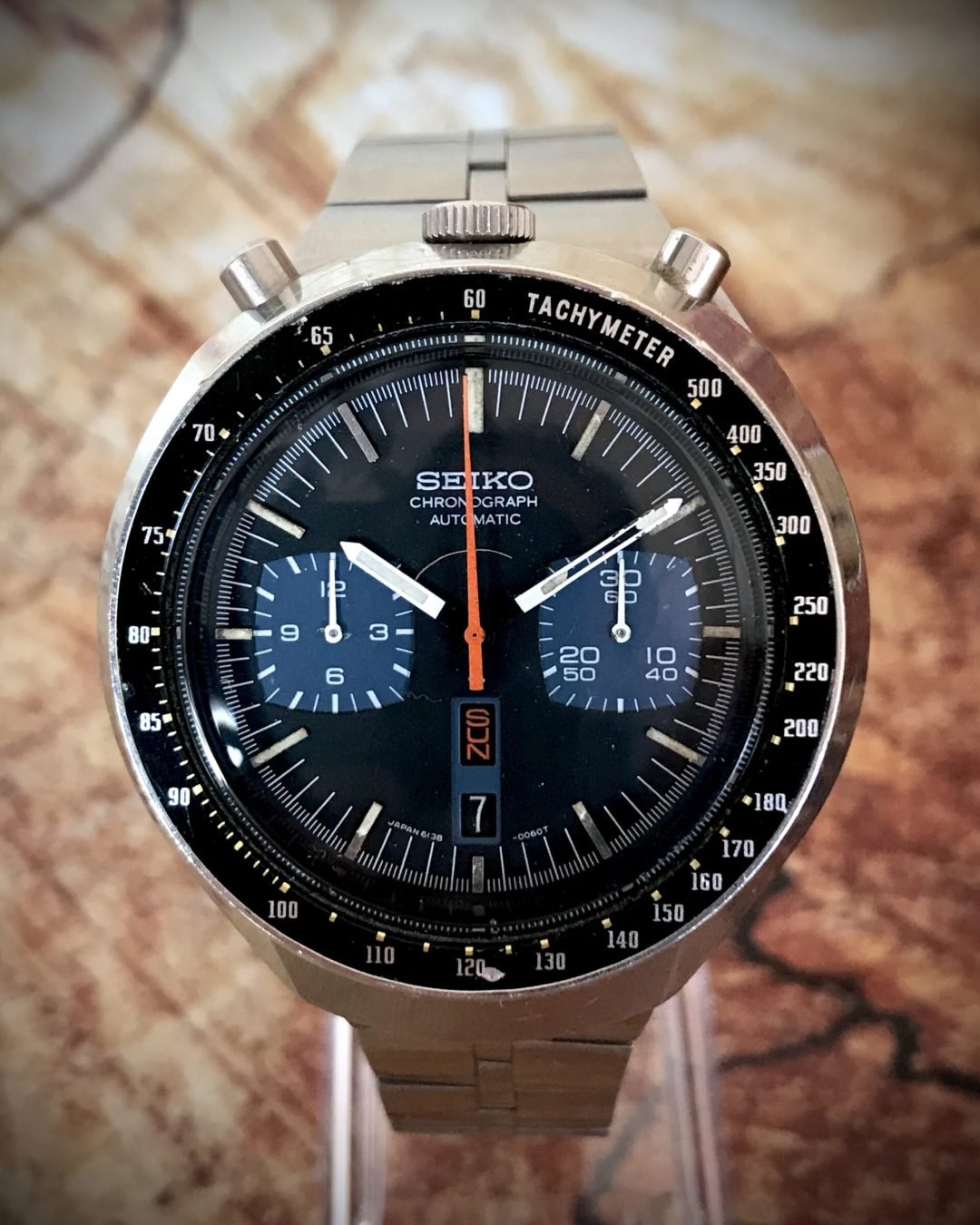
SEIKO BULLHEAD 6138-0040, AUTOMATIC, YEAR 1976
INFORMACIÓN
| Marca | Seiko |
|---|---|
| Modelo | 6138-0040 Bullhead |
| Género | Man |
| Década | 1970s |
| Año de fabricación | 1976 |
| Nº de serie | 6D9402 |
| Código de caja | 0040 |
| Movimiento | Automatic |
| Calibre | Seiko 6138 |
| Cristal | Hardlex Seiko |
| Bisel | Aluminum, with tachymeter. |
| Material de la caja | Steel |
| Diámetro sin corona | 43 mm |
| Diámetro con corona | 44 mm |
| Longitud entre asas | 47 mm |
| Grosor | 14 mm |
| Anchura de la correa | 20 mm |
| Material de la correa | Steel |
| Color de la correa | Steel |
| Cierre/hebilla | Drop-down clasp, signed SEIKO |
| Estado del reloj | Very good, with slight signs of aging. |
| Caja/Estuche | Yes, generic. |
| Documentación | Free Certificate of Authenticity available on request |
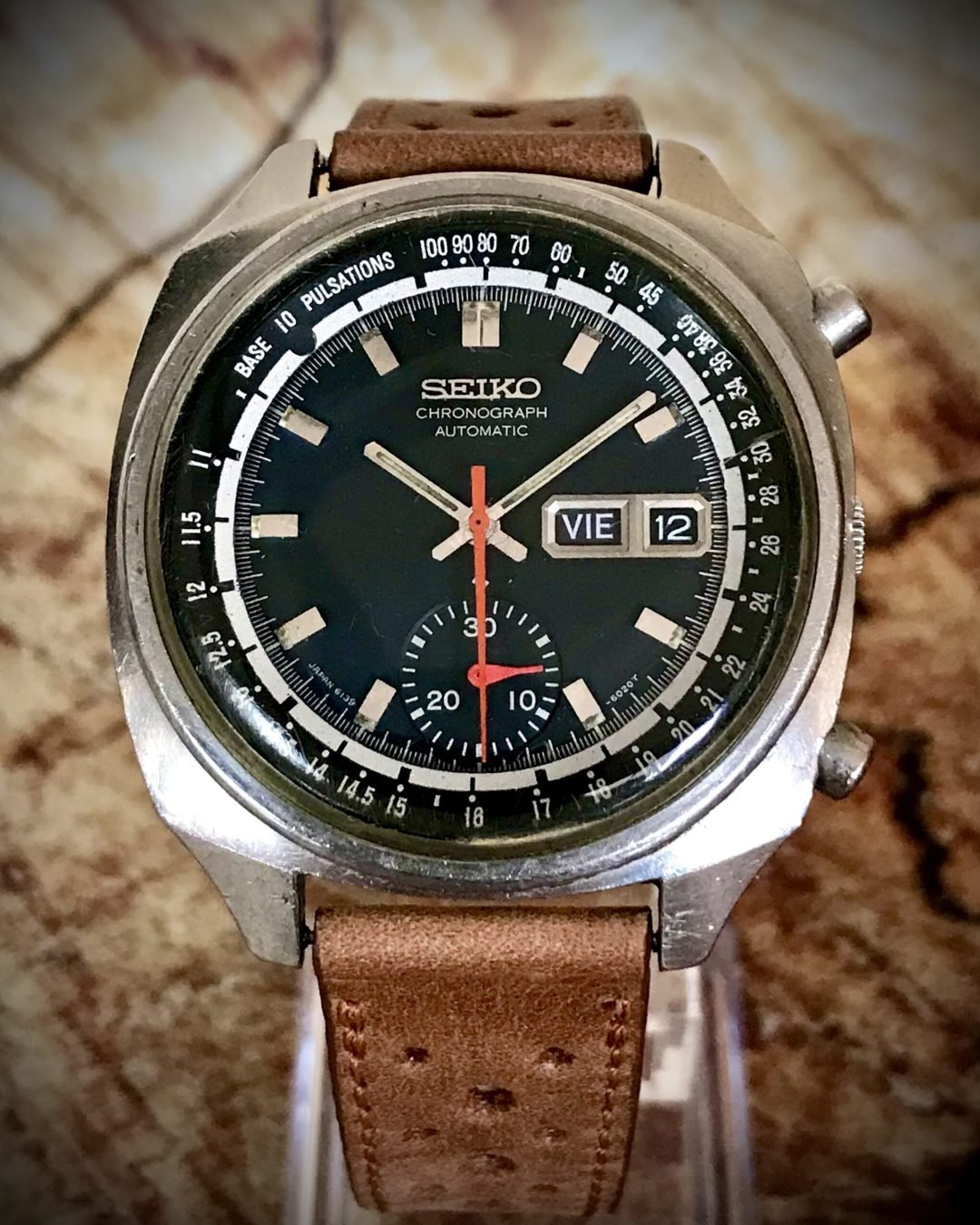
SEIKO CHRONOGRAPH 6134-2022, AUTOMATIC
INFORMACIÓN
| Marca | Seiko |
|---|---|
| Modelo | 6134-2022 |
| Género | Man |
| Década | 1970s |
| Año de fabricación | 1972 |
| Nº de serie | 220523 |
| Código de caja | 2022 |
| Movimiento | Automatic |
| Cristal | Original PLexiglás |
| Esfera | Black, with double date function at 3 o'clock. |
| Bisel | Interior con taquímetro |
| Corona | Original Seiko, de acero |
| Material de la caja | Stainless steel |
| Diámetro sin corona | 40 mm |
| Diámetro con corona | 41 mm |
| Longitud entre asas | 46 mm |
| Grosor | 12.2 mm |
| Anchura de la correa | 18 mm |
| Material de la correa | Genuine leather, Racing type brand new |
| Color de la correa | Brownish Orange |
| Cierre/hebilla | Stainless steel |
| Estado del reloj | Well, with logical signs of the passage of time. |
| Caja/Estuche | Yes, generic. |
| Documentación | Free Certificate of Authenticity available on request |
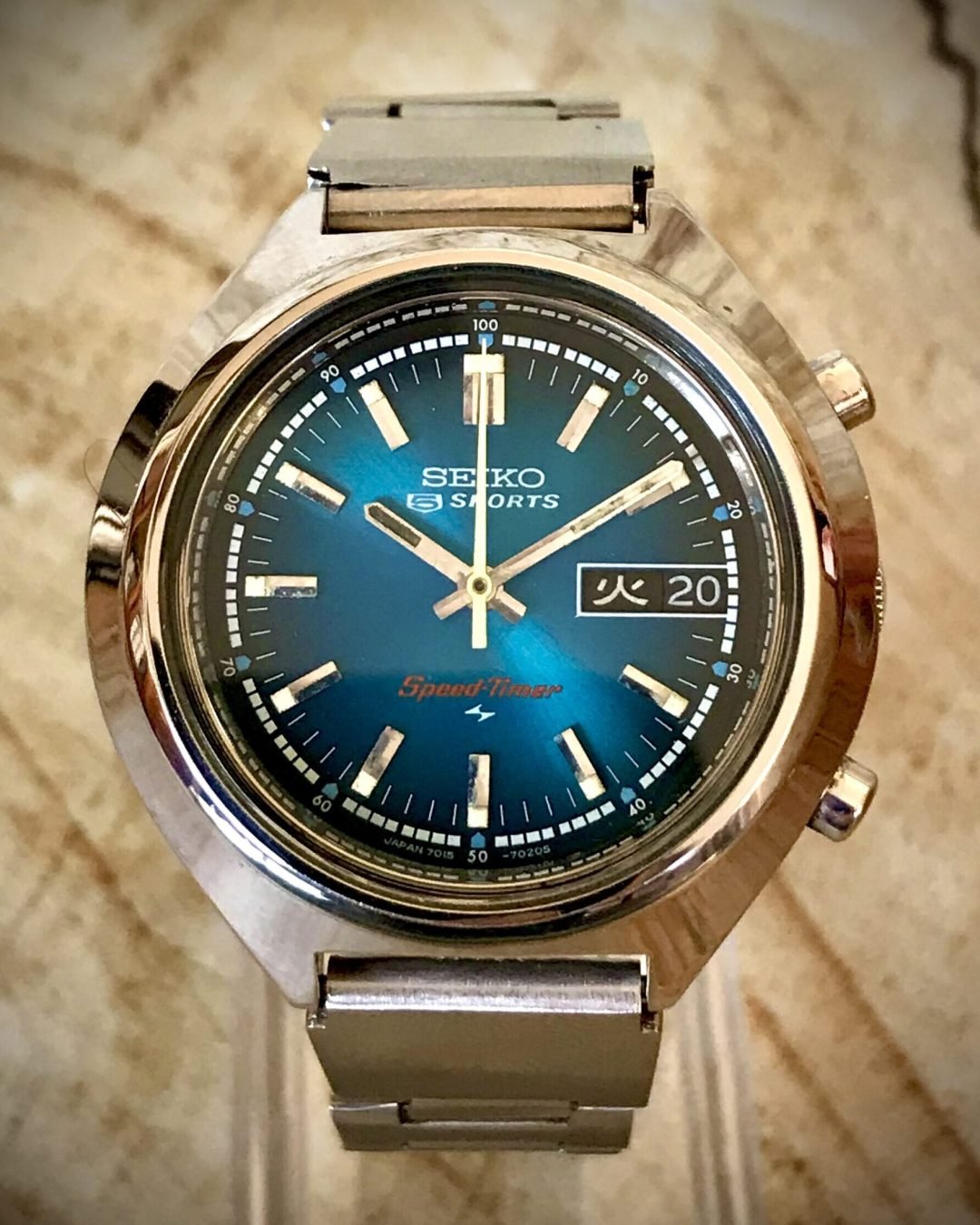
SEIKO CHRONO FLYBACK SPEED TIMER 7015-7000
INFORMACIÓN
| Marca | Seiko |
|---|---|
| Modelo | Crono Flyback Speed Timer 7015-7000 |
| Género | Man |
| Década | 1970s |
| Año de fabricación | 1973 |
| Nº de serie | Serial Number: 361505 |
| Código de caja | 7000 |
| Movimiento | Automatic |
| Calibre | 7015 A (21 jewels) |
| Cristal | Hardlex |
| Esfera | Blue Fumé with Japanese and English calendar at 3 o'clock |
| Bisel | Steel |
| Corona | Seiko Corona |
| Material de la caja | Stainless steel |
| Diámetro sin corona | 39 mm |
| Diámetro con corona | 39 mm |
| Longitud entre asas | 41 mm |
| Grosor | 12 mm |
| Anchura de la correa | 17 mm |
| Material de la correa | Stainless steel |
| Color de la correa | Steel |
| Cierre/hebilla | Stainless steel, signed Seiko 5 Sports. |
| Estado del reloj | Excellent, like new! |
| Caja/Estuche | Yes, generic. |
| Documentación | Free Certificate of Authenticity available on request |
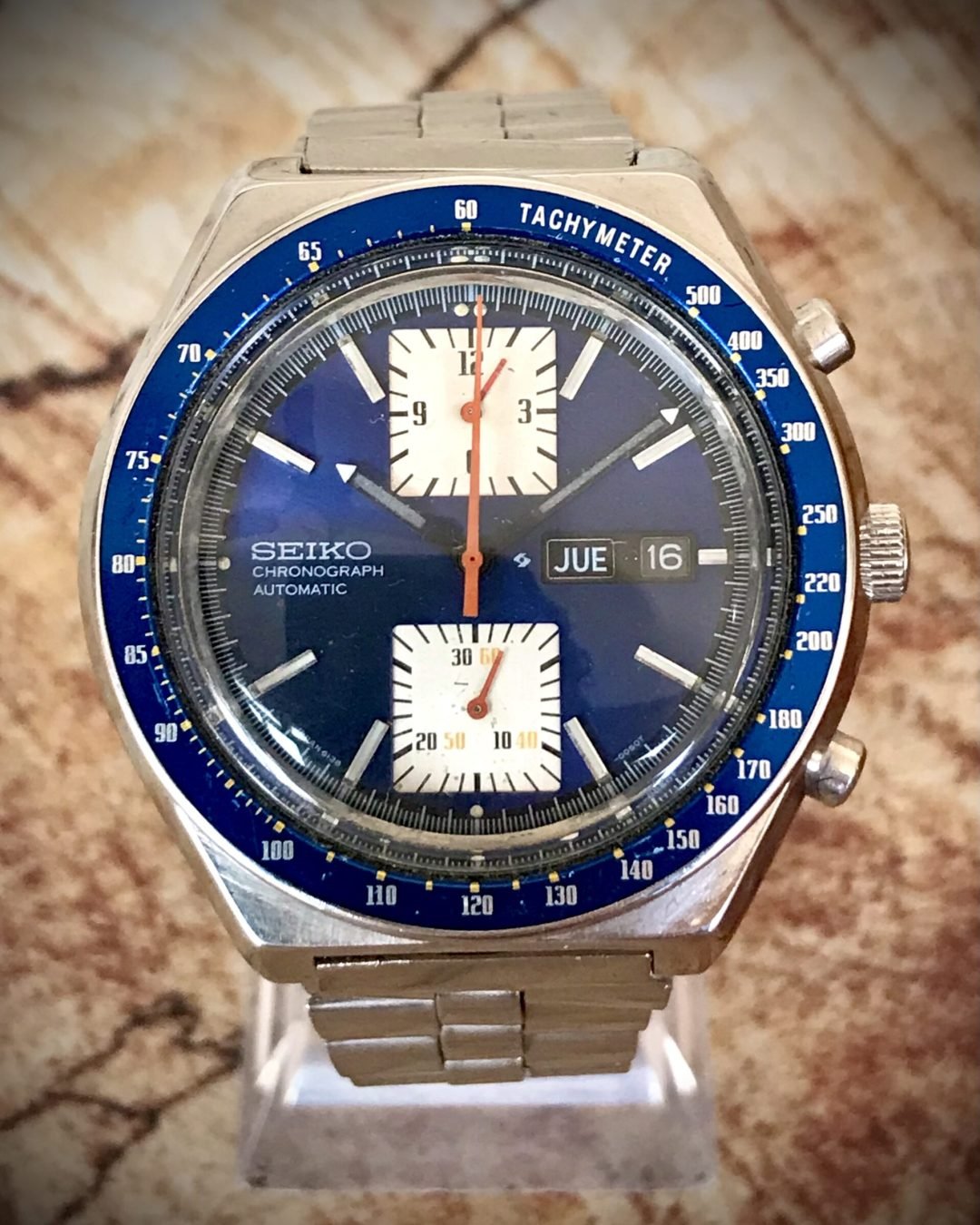
SEIKO CHRONOGRAPF KAKUME, VINTAGE AUTOMATIC
INFORMACIÓN
| Marca | Seiko |
|---|---|
| Género | Man |
| Década | 1970s |
| Año de fabricación | 1973 |
| Movimiento | Automatic |
| Cristal | Impeccable |
| Esfera | Bitono, blue and white |
| Bisel | Steel |
| Corona | Seiko Corona |
| Material de la caja | Steel |
| Diámetro sin corona | 43 mm |
| Diámetro con corona | 45 mm |
| Longitud entre asas | 45 mm |
| Grosor | 12 mm |
| Anchura de la correa | 20 mm |
| Material de la correa | Steel |
| Color de la correa | Steel |
| Cierre/hebilla | Clasp type, original Seiko |
| Estado del reloj | Very good, with slight signs of aging. |
| Caja/Estuche | Yes, your original. |
| Documentación | Yes |
Garantía tEMPPUS
Para su total tranquilidad, protegemos todos nuestros RELOJES CON 1 AÑO DE GARANTÍA.