
- Pieza única
- Envío Nacional Gratuito
- Entrega en 24/48 horas
- Aceptamos Bizum, Transferencia y Paypal
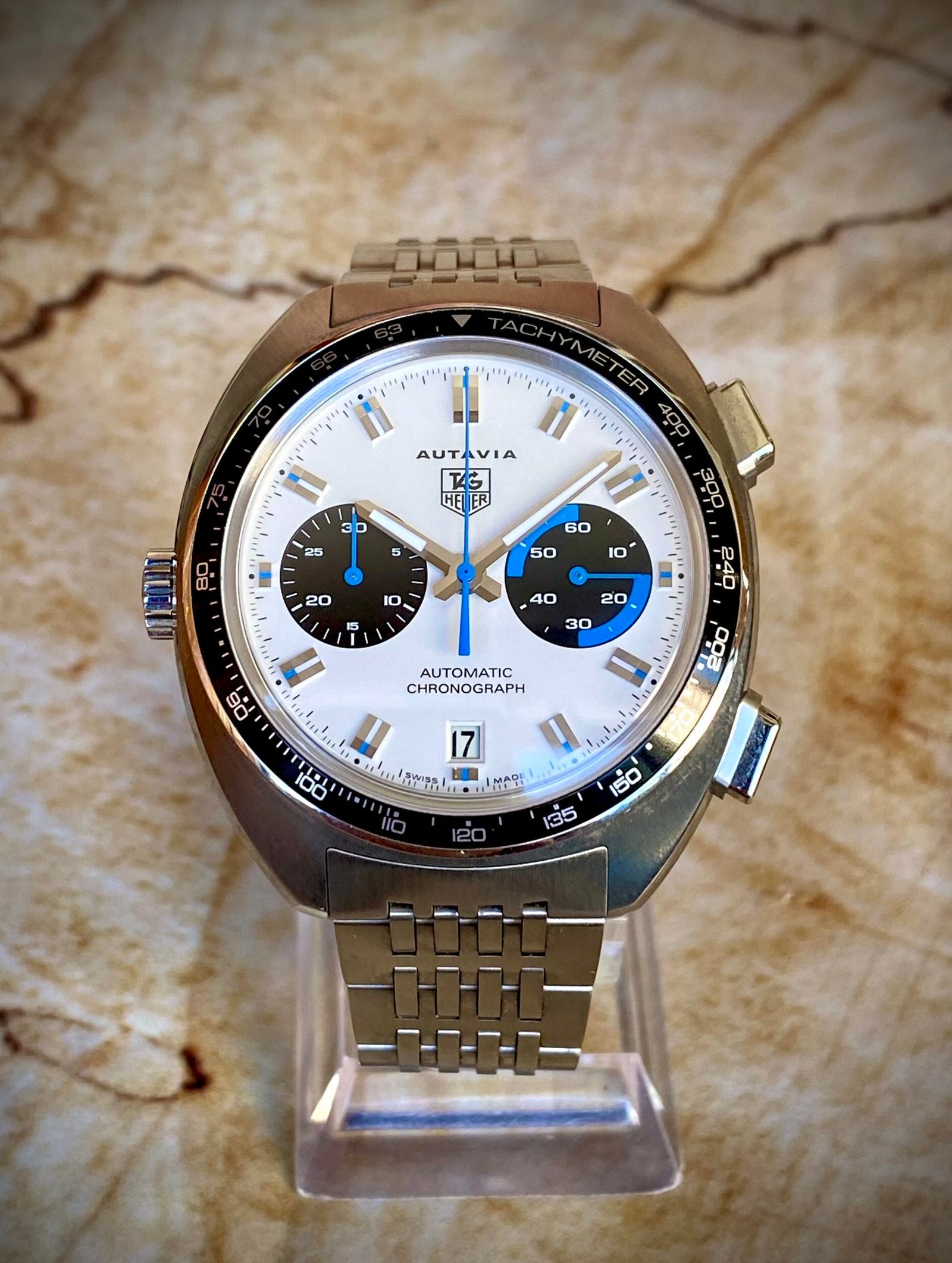
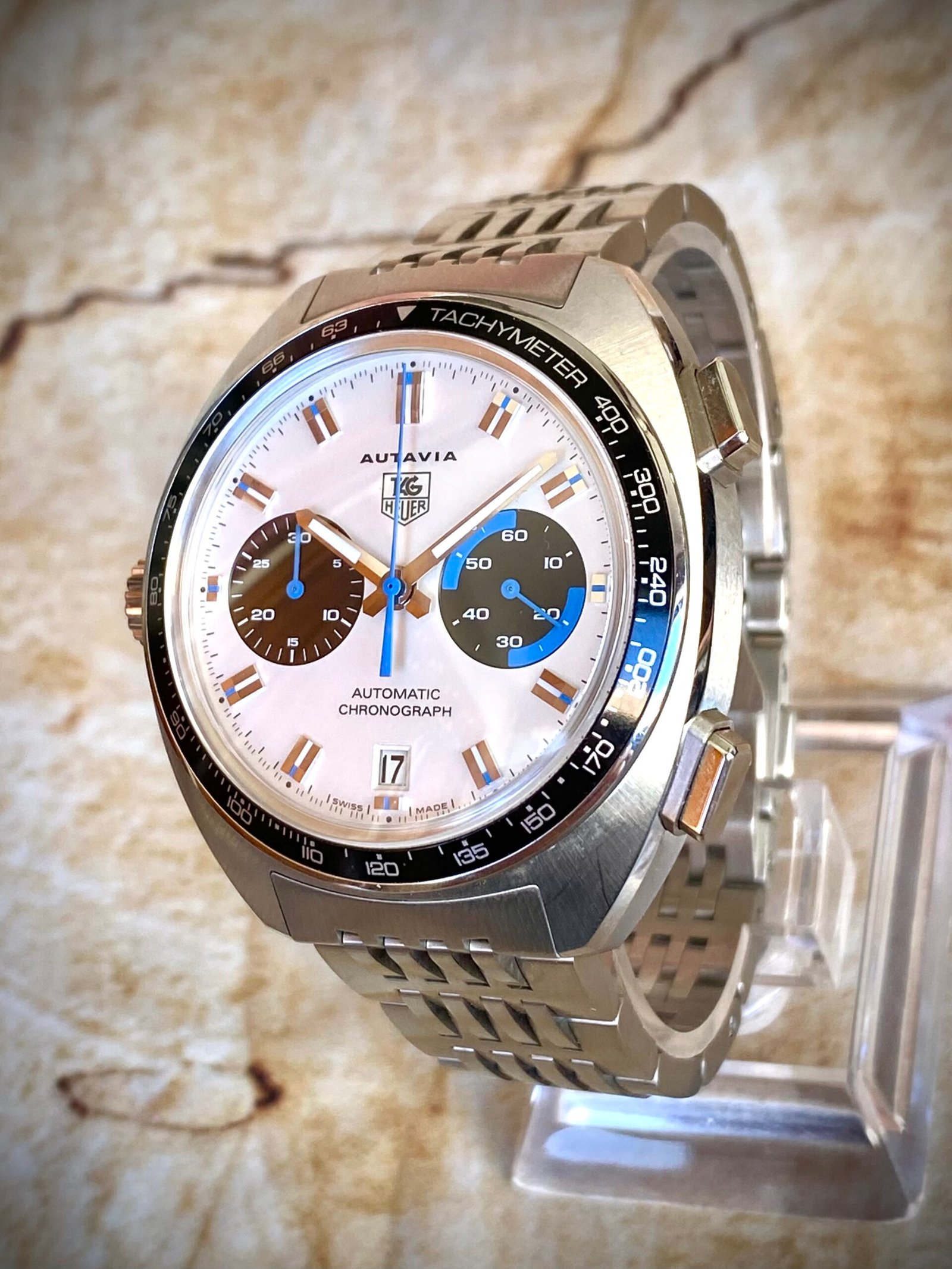
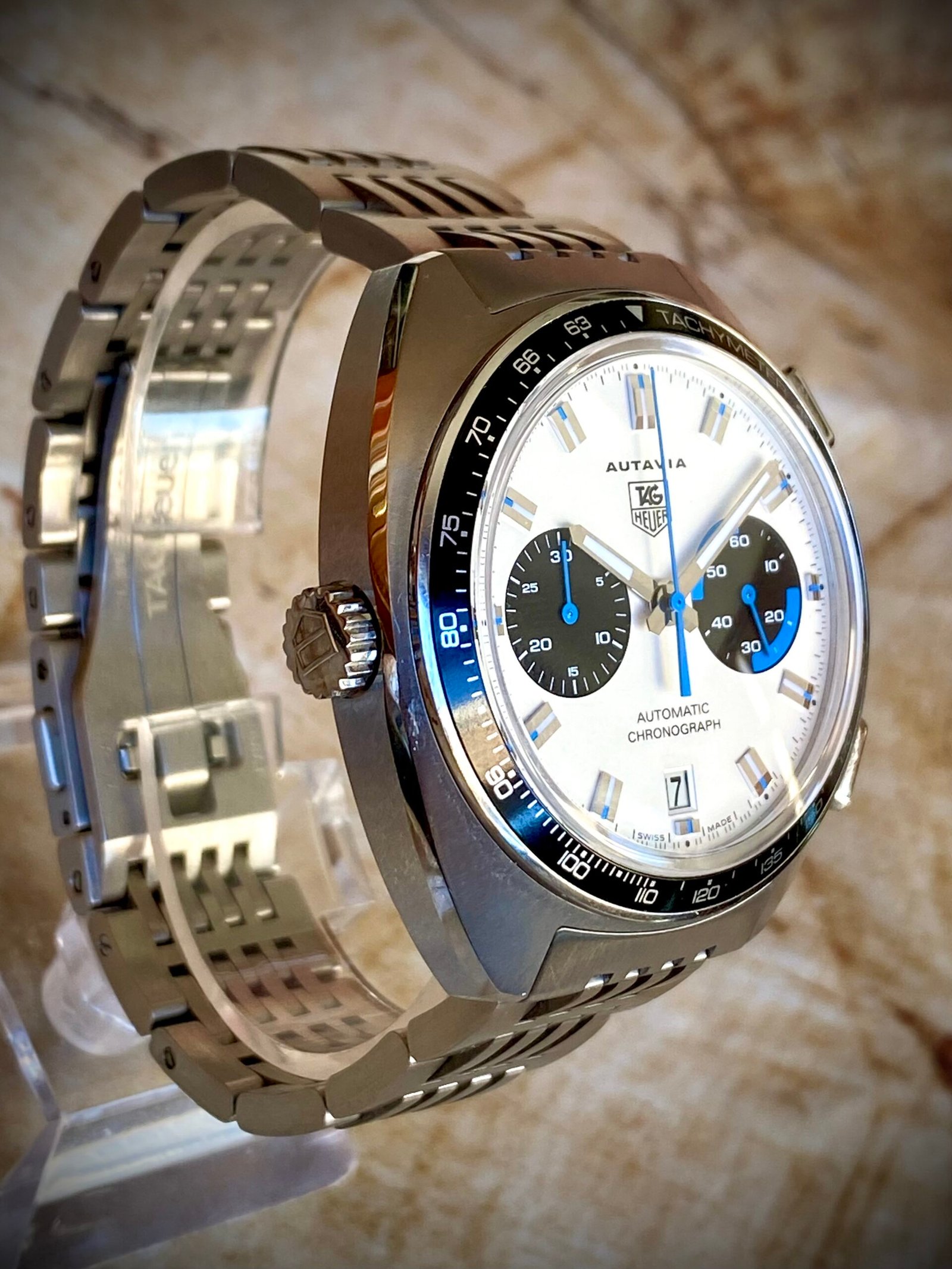
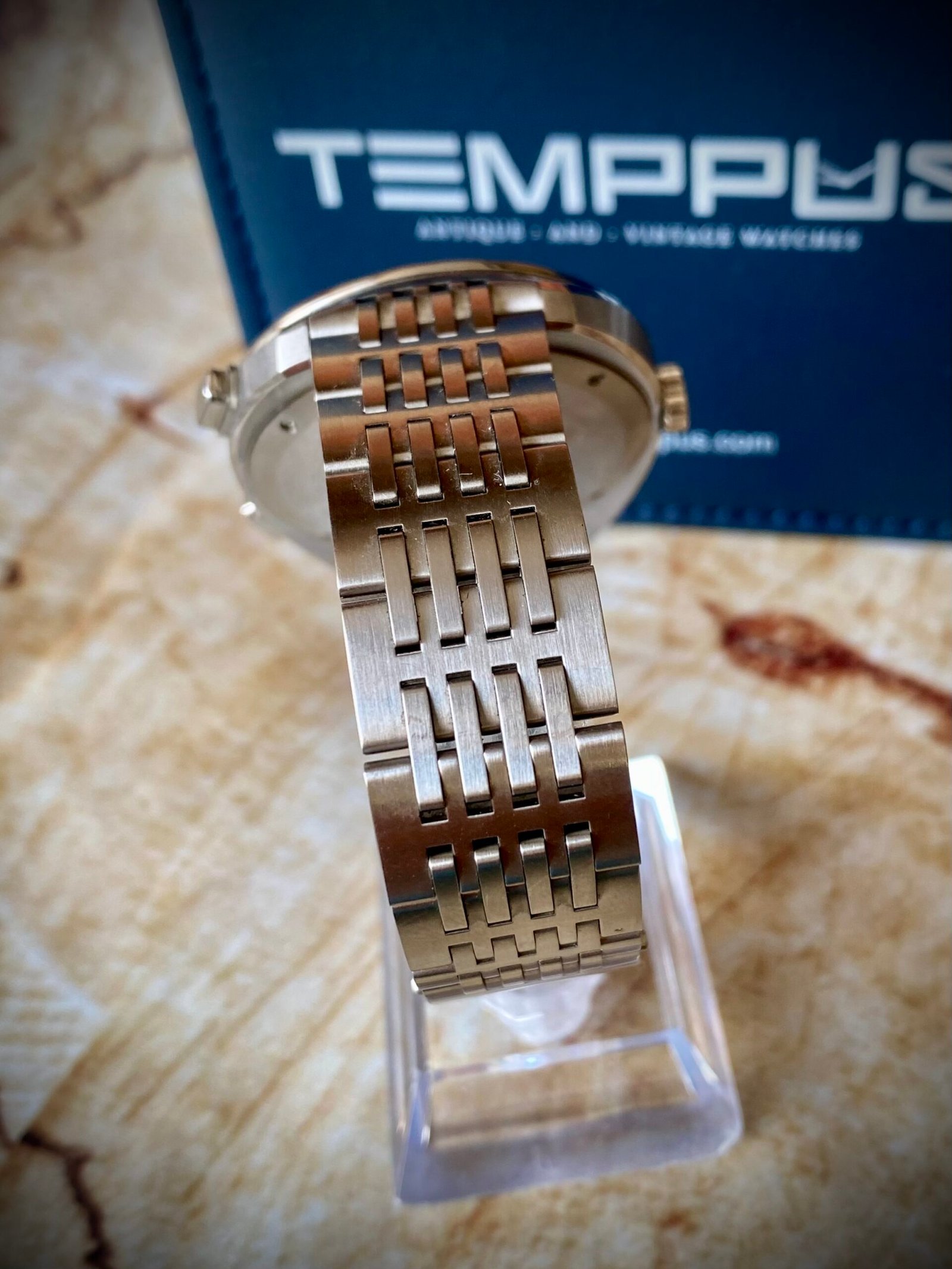
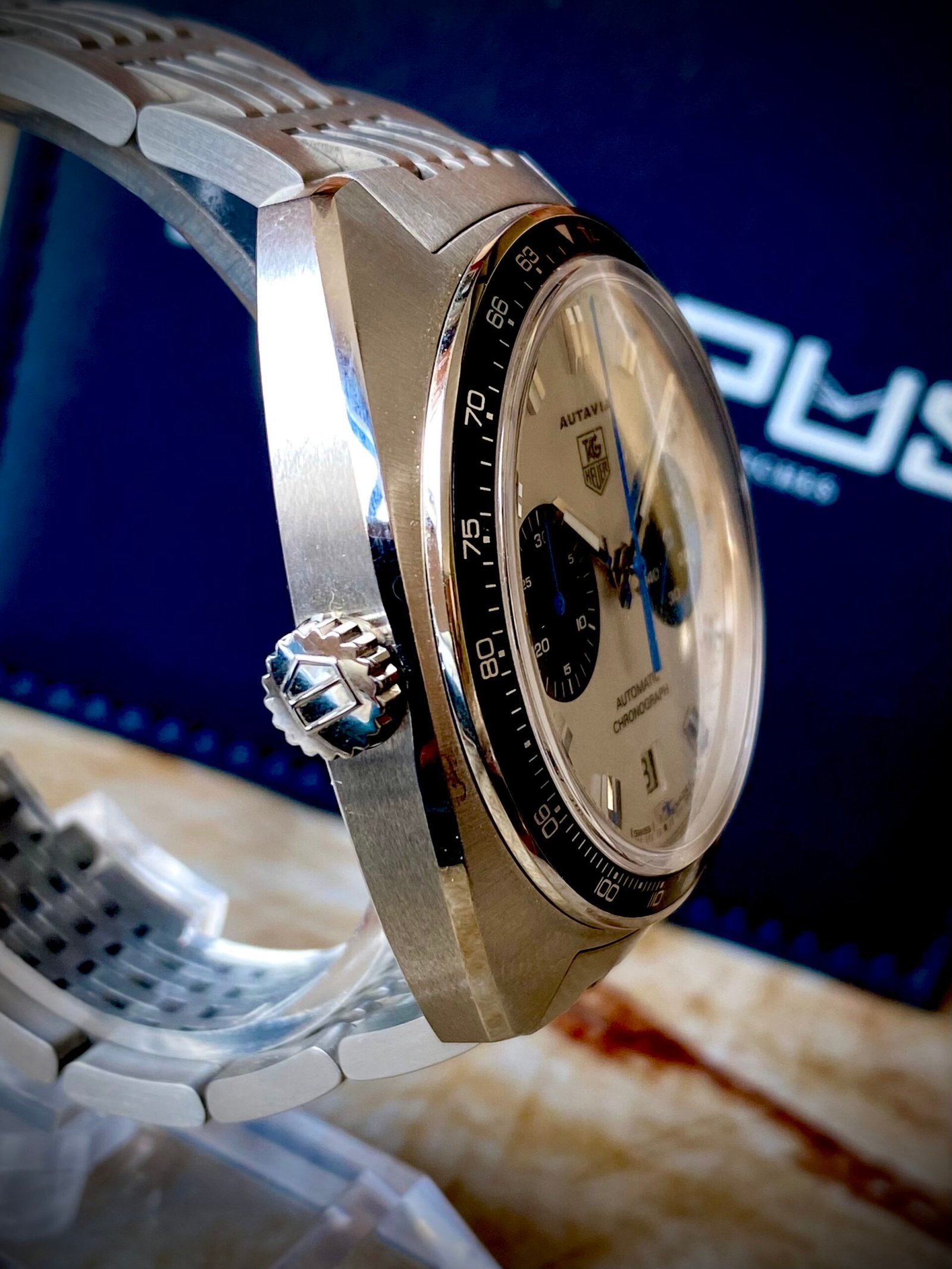
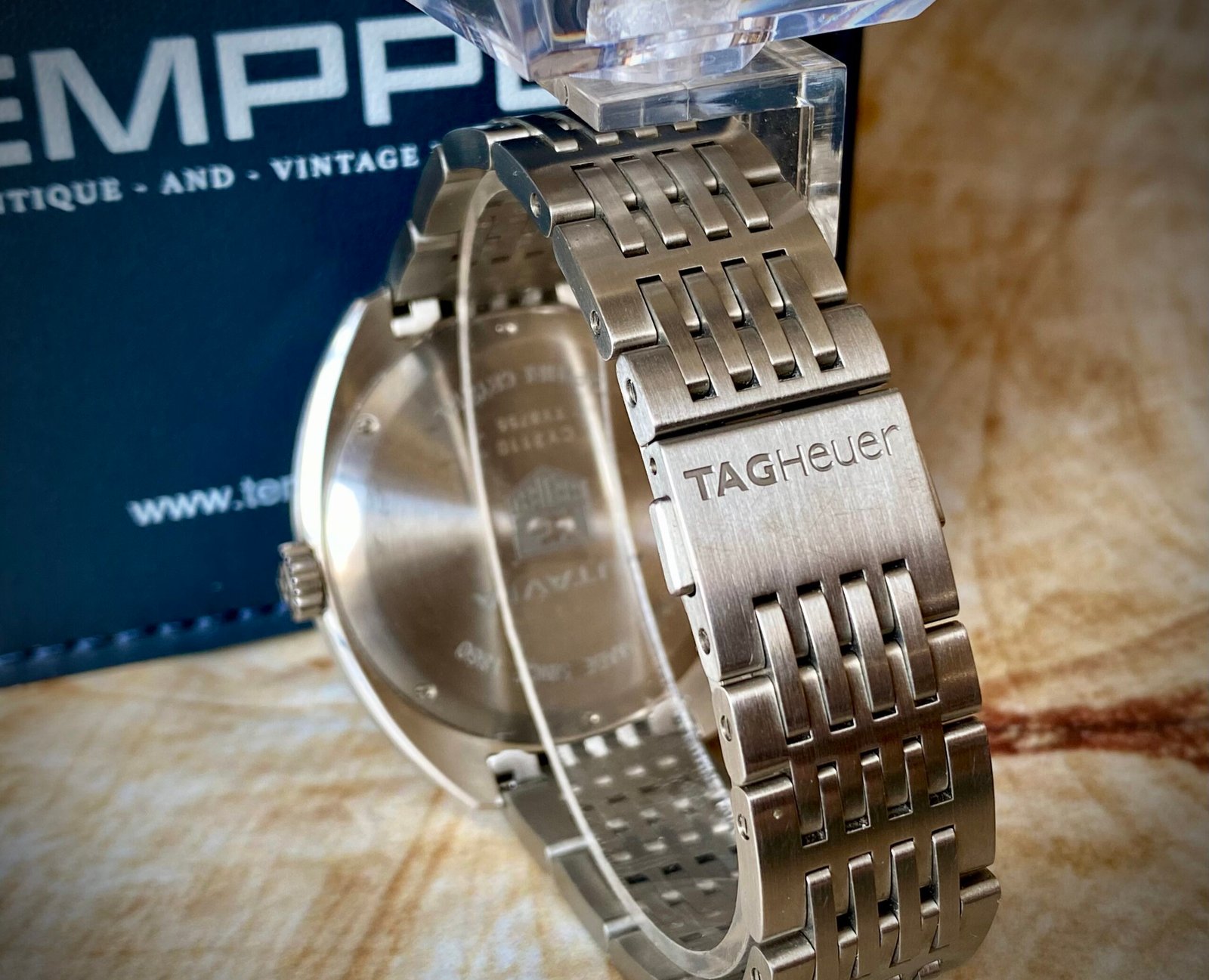
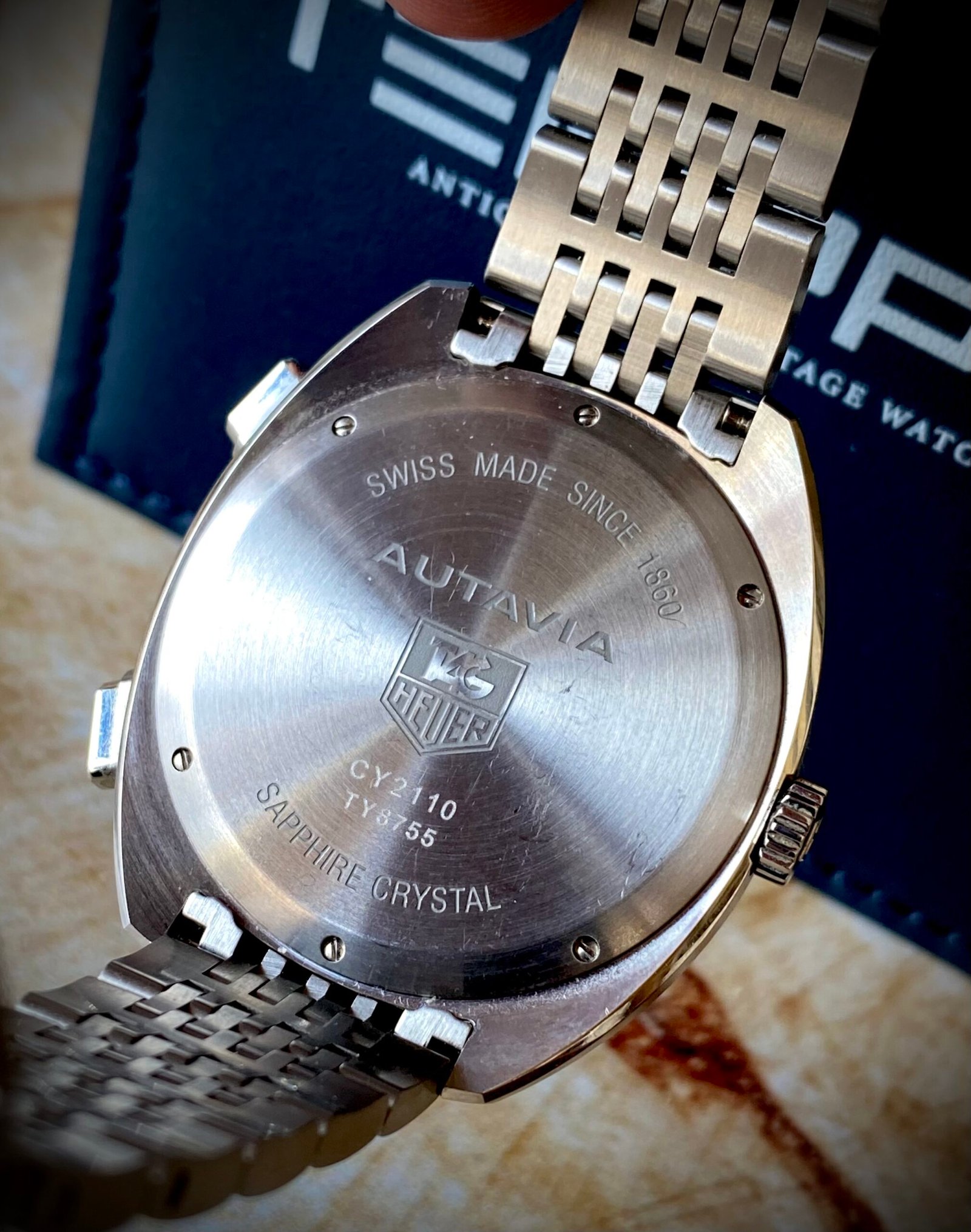
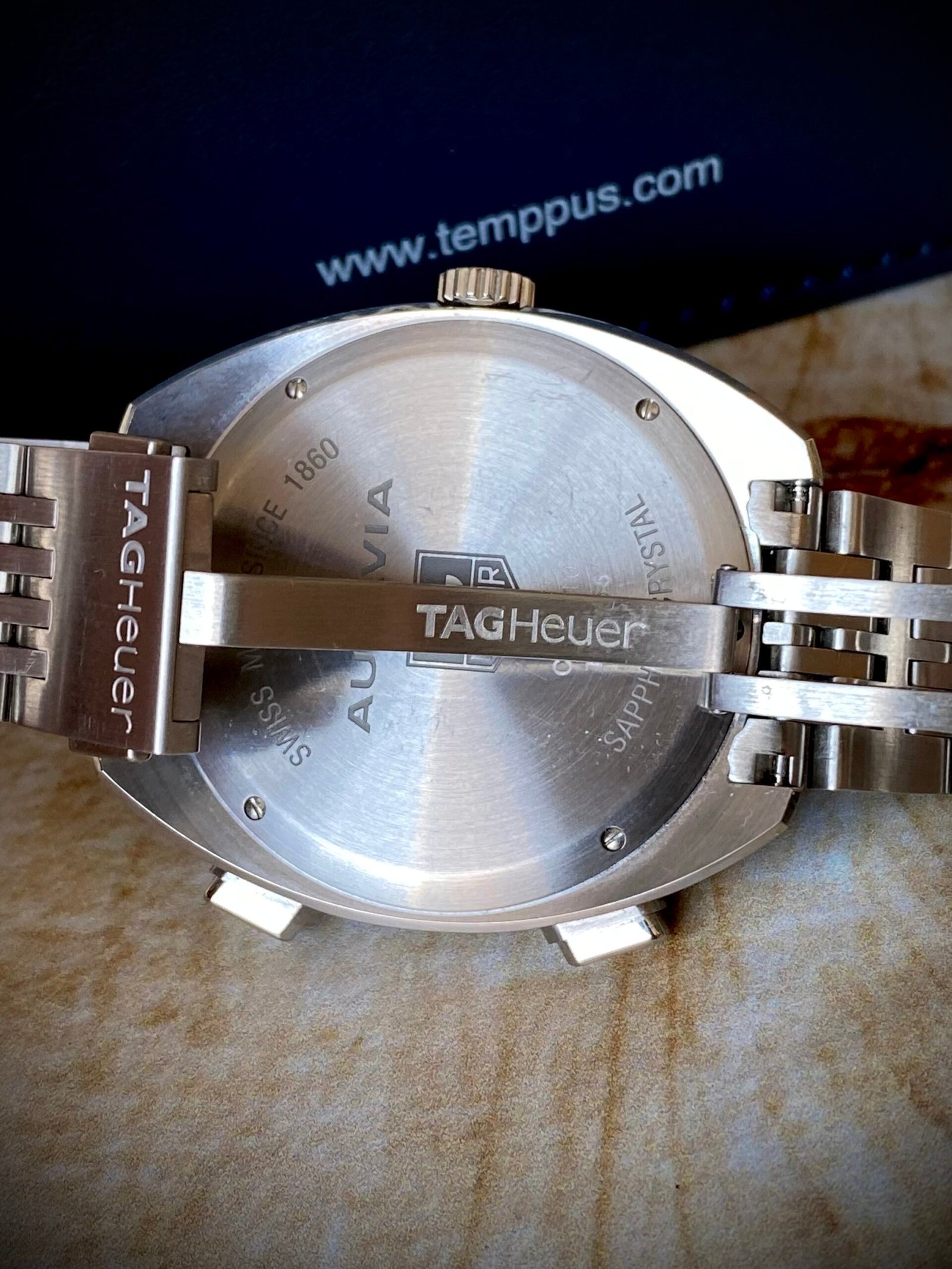
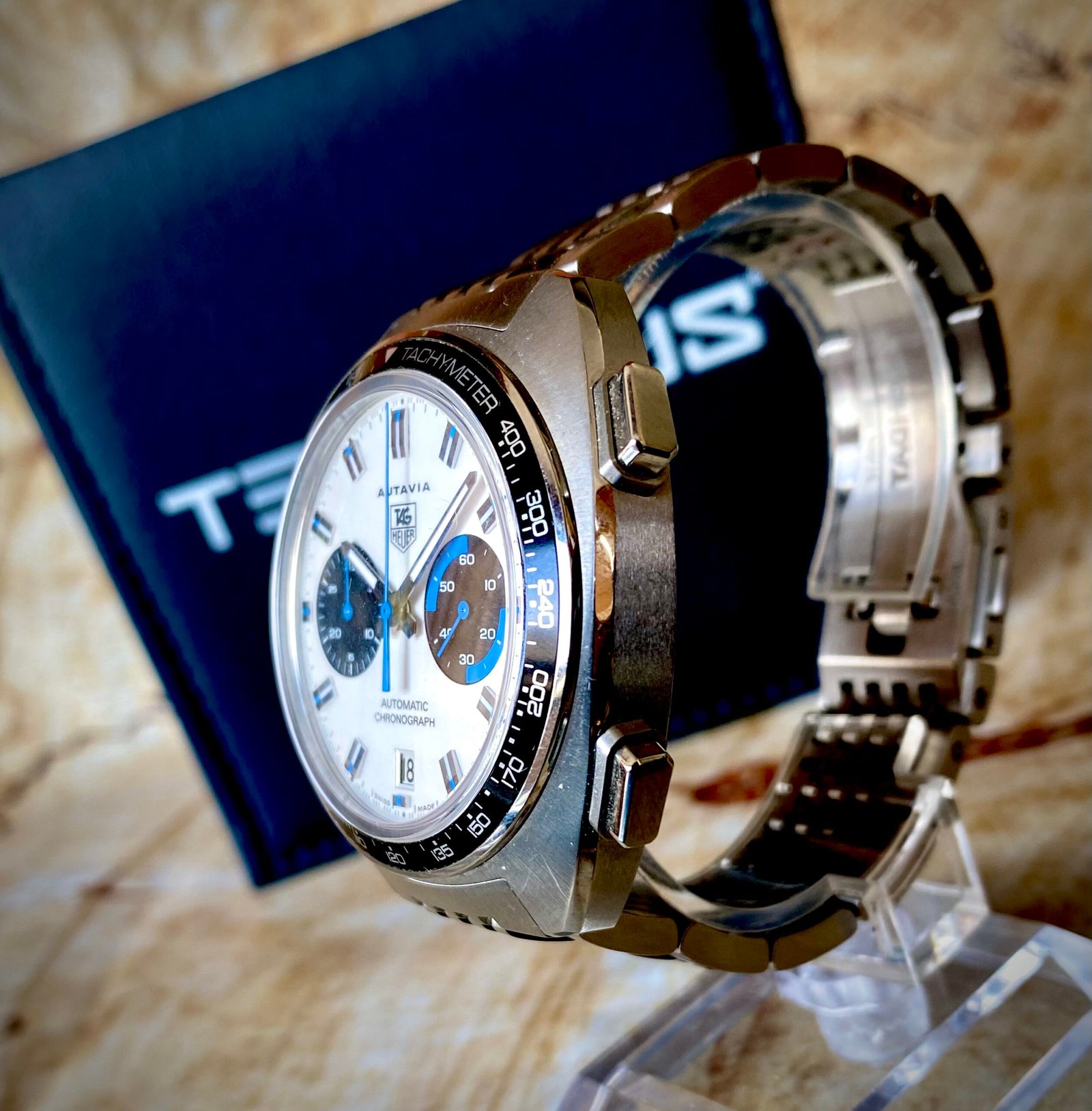
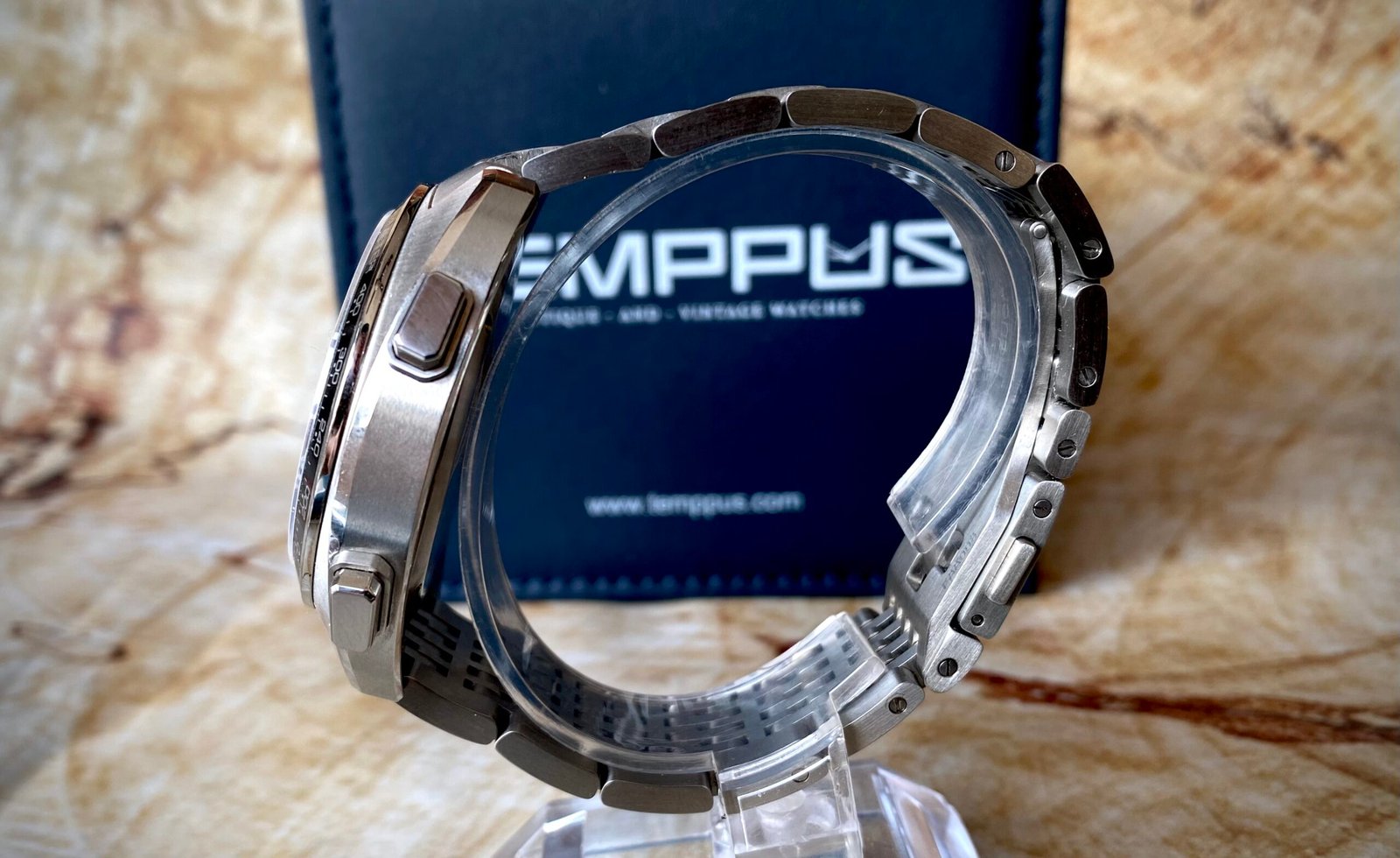
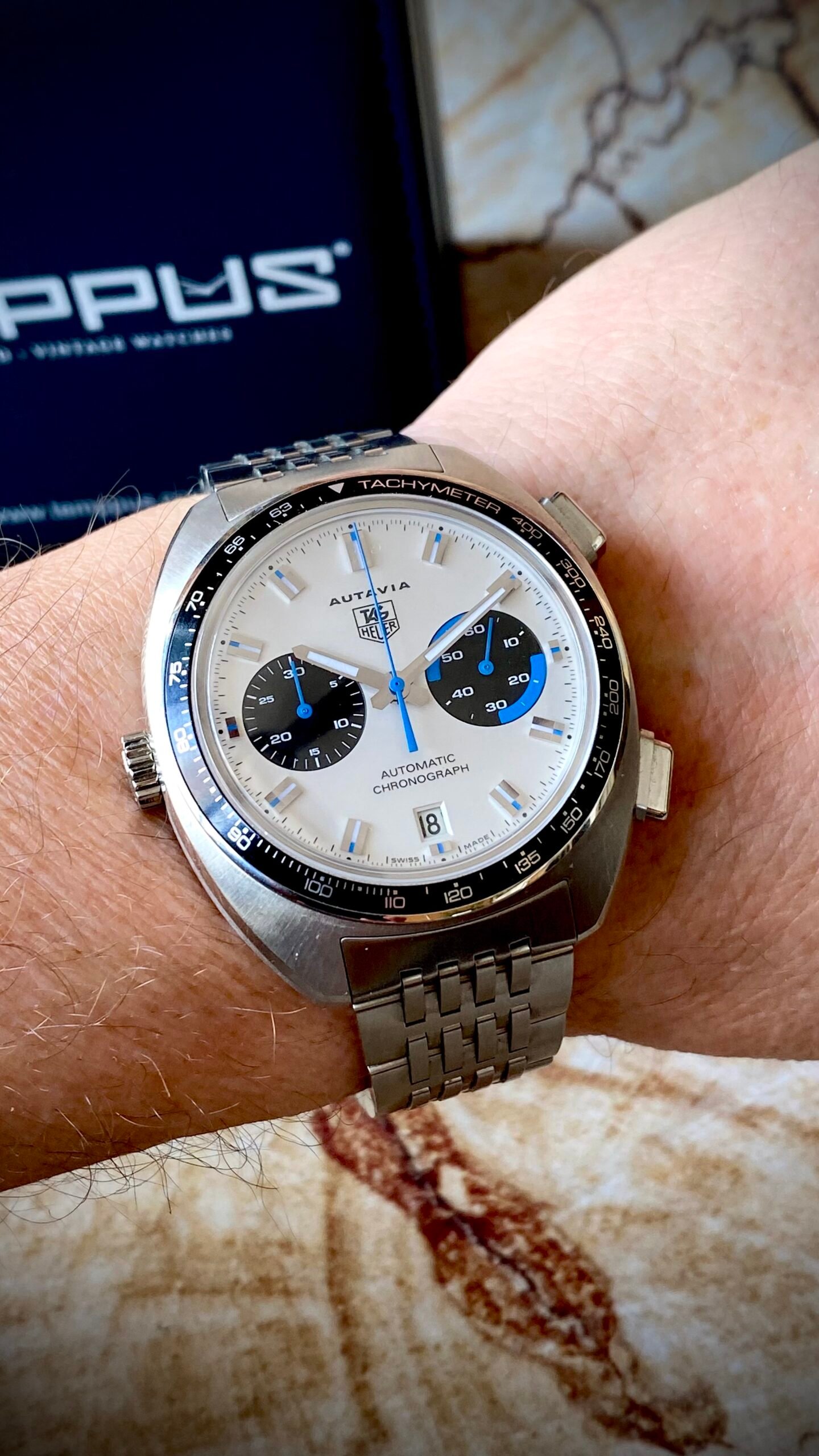
TAG HEUER AUTAVIA CHRONOGRAPH, AUTOMATIC, YEAR 2008
2950,00 €
| Marca | Tag Heuer |
|---|---|
| Modelo | Autavia Chronograph |
| Género | Man |
| País de origen | Switzerland |
| Década | 2000s Years |
| Año de fabricación | 2008 |
| Movimiento | Automatic |
| Cristal | Sapphire |
| Esfera | Two-tone, with two subdials. |
| Bisel | Aluminum, with tachymeter. |
| Corona | Steel, signed TAG HEUER. |
| Material de la caja | Stainless steel |
| Diámetro sin corona | 42 mm |
| Diámetro con corona | 44 mm |
| Longitud entre asas | 48 mm |
| Grosor | 14 mm |
| Anchura de la correa | 19 mm |
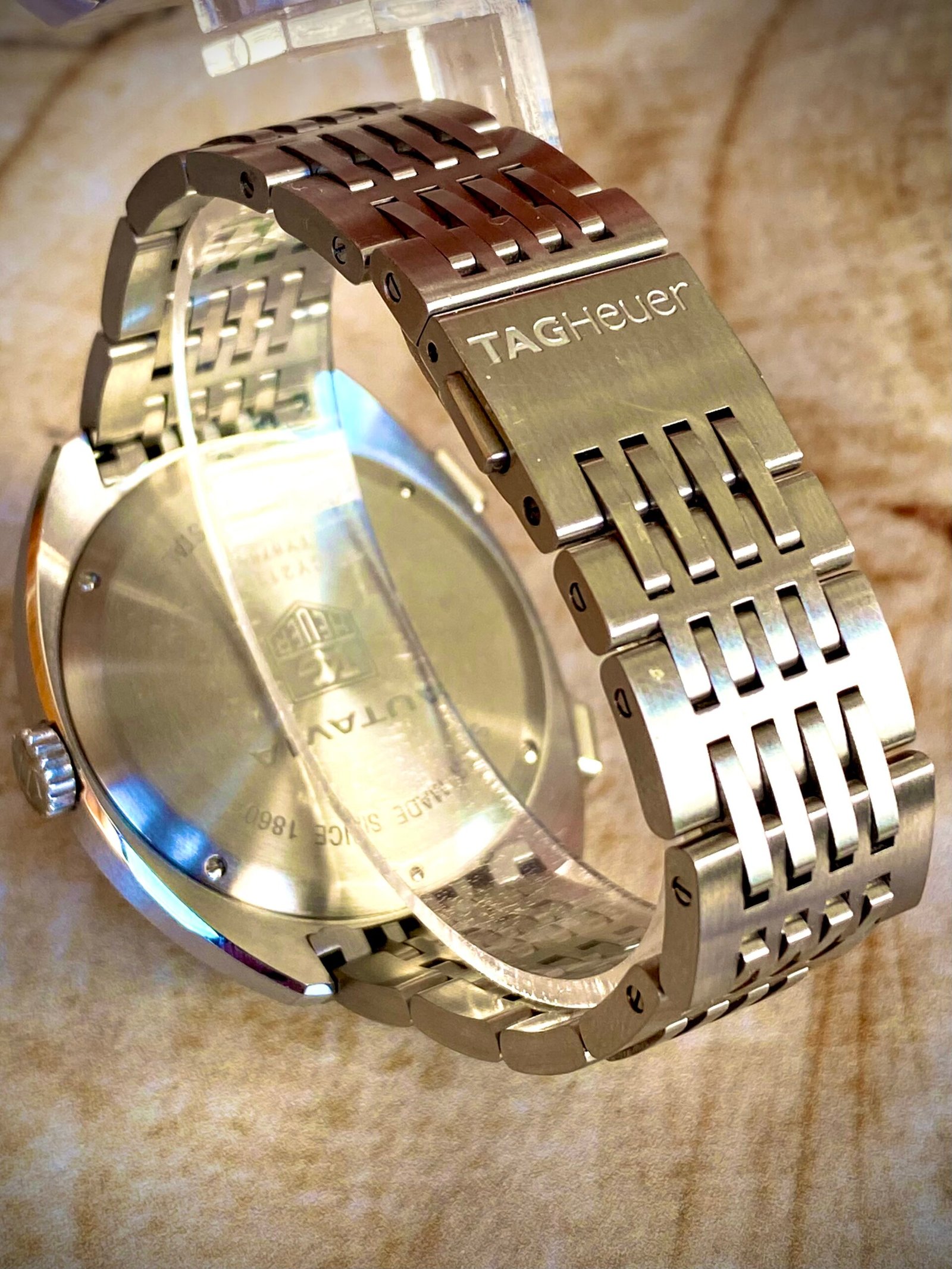
| Material de la correa | Stainless steel |
| Color de la correa | Steel |
| Cierre/hebilla | Steel, original TAG HEUER signed. |
| Estado del reloj | Excellent, like new! |
| Caja/Estuche | Yes, generic. |
| Documentación | Free Certificate of Authenticity available on request |
The history of TAG Heuer is an exciting tale of technical innovation, passion for motorsports, and aesthetic daring that spans more than 160 years. From its humble beginnings as a family workshop in the Swiss Jura to becoming a global icon of sports chronography, the brand has skillfully combined Swiss precision with avant-garde design, making it synonymous with speed, performance, and style. Its current name merges the legacy of the Heuer family with the spirit of Techniques d’Avant Garde, a union that has given rise to some of the most iconic pieces of contemporary watchmaking.Origins and Foundation: The Heuer FamilyThe story begins in 1860, when a 20-year-old named Edouard Heuer established his first watchmaking workshop in Saint-Imier, Switzerland, in the heart of the Jura. From the start, Edouard showed a penchant for technical innovation that would shape the company’s DNA. In 1869, he patented his first keyless winding system via the crown, an innovation that radically simplified the operation of pocket watches by eliminating the need for a separate key.The major breakthrough that would lay the groundwork for the brand’s specialization came in 1887 when Edouard Heuer patented the “oscillating pinion.” This ingenious mechanism simplified the coupling of the chronograph system, allowing timing to start and stop with a single pusher and greatly facilitating the production and maintenance of chronographs. More than a century later, this principle is still used by the world’s leading mechanical chronograph manufacturers.The Era of Precision Instruments (1911-1958)Under the leadership of Charles-Auguste Heuer, the founder’s son, the company expanded its horizons to motor sports and aviation. In 1911, it introduced the “Time of Trip,” the first dashboard chronograph designed for cars and planes, which allowed measuring the duration of a trip in addition to telling time. In 1916, the brand revolutionized sports timing with the Mikrograph, the first chronograph capable of accurately measuring 1/100th of a second, a technical feat that made it the official timekeeper of the 1920 Antwerp Olympics.In the 1930s, Heuer cemented its reputation with the Autavia (a contraction of AUTomobile and AVIAtion), a dashboard chronograph that would become an essential tool for pilots and navigators. During World War II, the brand supplied “Flieger” chronographs to the German aviation, demonstrating the robustness and reliability of its mechanisms.The Jack Heuer Era: Birth of Icons (1958-1985)In 1958, Jack Heuer, the founder’s great-grandson, joined the company, initiating a golden era that would define the brand’s modern character. During a visit to the Sebring circuit, Jack heard Mexican drivers Pedro and Ricardo Rodríguez discussing the dangerous Carrera Panamericana race. The name “Carrera” immediately struck him for its international sound, and in 1963, the Heuer Carrera chronograph was born, a watch with clean lines, maximum readability, and functional design that would become a timeless icon.Meanwhile, in 1962, the brand reached for the stars: astronaut John Glenn orbited the Earth on the Mercury-Atlas 6 mission with a Heuer chronograph on his wrist, proving that the house’s precision could withstand the extreme conditions of space.The year 1969 was one of the most pivotal in chronographic history. Heuer, in collaboration with Breitling and Hamilton, introduced the Calibre 11, one of the world’s first automatic chronograph movements. To house this new mechanism, the brand released three models: the Autavia, the Carrera (both with redesigned round cases), and, as a revolutionary cherry on top, the Heuer Monaco.The Monaco shattered conventions: it was the world’s first water-resistant square-cased chronograph, a radical design that the Piquerez company had recently patented. With its metallic blue dial and crown on the left, the Monaco was a statement of cutting-edge design. Just two years later, in 1971, the Monaco achieved legendary status when it was worn on the wrist of Steve McQueen in the movie “Le Mans.” The actor, known as the “King of Cool,” personally chose this model to embody the driver Michael Delaney, creating images that would become one of the most iconic moments in the history of cinema and watchmaking.That same year, Heuer took its motorsports association further by placing its logo on the Formula 1 car of Jo Siffert, becoming the first watchmaker to sponsor a racing car. In the following years, the brand became the official timekeeper of Ferrari and an inseparable name from the golden age of Formula 1, accompanying legends like Niki Lauda, Jacky Ickx, and Mario Andretti.The Quartz Crisis and the Birth of TAG Heuer (1985-2000)The quartz revolution of the 1970s and 80s severely impacted the Swiss mechanical watch industry. In 1985, the industrial group Techniques d’Avant Garde (TAG) acquired the company, and in 1986, the brand was officially renamed TAG Heuer. Under this new umbrella, the company launched the Formula 1 collection in the same year, a colorful, affordable, and successful quartz line that embodied the spirit of the new era.In 1999, the French luxury giant LVMH (Moët Hennessy Louis Vuitton) acquired the company, providing it with the resources to boost its growth and technological development.The 21st Century: Innovation and VanguardThe new millennium has seen TAG Heuer reclaim its pioneering spirit while honoring its heritage. In 2004, the brand introduced the Monaco V4, a revolutionary concept that replaced traditional gears with micropulleys and belts inspired by car engines. Later came the Mikrograph and Mikrotimer, capable of mechanically measuring 1/100 and even 1/1000 of a second on a wristwatch, demonstrating that the manufacture continued to push the boundaries of chronography.In 2010, the brand launched the Calibre 1887, a self-winding manufacture movement that paid homage to Edouard Heuer’s original 1887 patent. In 2015, TAG Heuer took a bold step into the future with the launch of the TAG Heuer Connected, the first Swiss luxury connected watch, showing that tradition and digital innovation can coexist harmoniously.Today, TAG Heuer continues to develop its emblematic collections. The Carrera remains the quintessential sports chronograph, featuring versions that incorporate state-of-the-art in-house movements. The Monaco, after being rediscovered in the 1990s and successfully relaunched, has solidified its status as an icon of cutting-edge design, offering complications like the Monaco Split Seconds that inaugurate a new era of high watchmaking for the brand. The Autavia has been revitalized as a standalone collection of adventure watches, and the Formula 1 continues to be the gateway to the TAG Heuer universe.ConclusionThe history of TAG Heuer is a living testament to how audacity, innovation, and a passion for performance can build an indelible legacy. From the oscillating pinion of 1887 to the Monaco V4 and the Connected, through the dashboard chronographs that equipped aviation pioneers, the Carrera that carries the competitive spirit in its name, and the Monaco that became an icon thanks to Steve McQueen, the brand has repeatedly demonstrated that being “always one step ahead” is not just a motto, but a philosophy. Today, under the LVMH umbrella, TAG Heuer remains a beacon of Swiss sports watchmaking, uniting its rich heritage with a determined look towards the future.
TEMPPUS. All rights reserved.
Información adicional
Reloj completamente revisado. Garantizado para su uso diario.
2950,00 €
- Pieza única
- Envío Nacional Gratuito
- Entrega en 24/48 horas
- Aceptamos Bizum, Transferencia y Paypal
Relojes relacionados
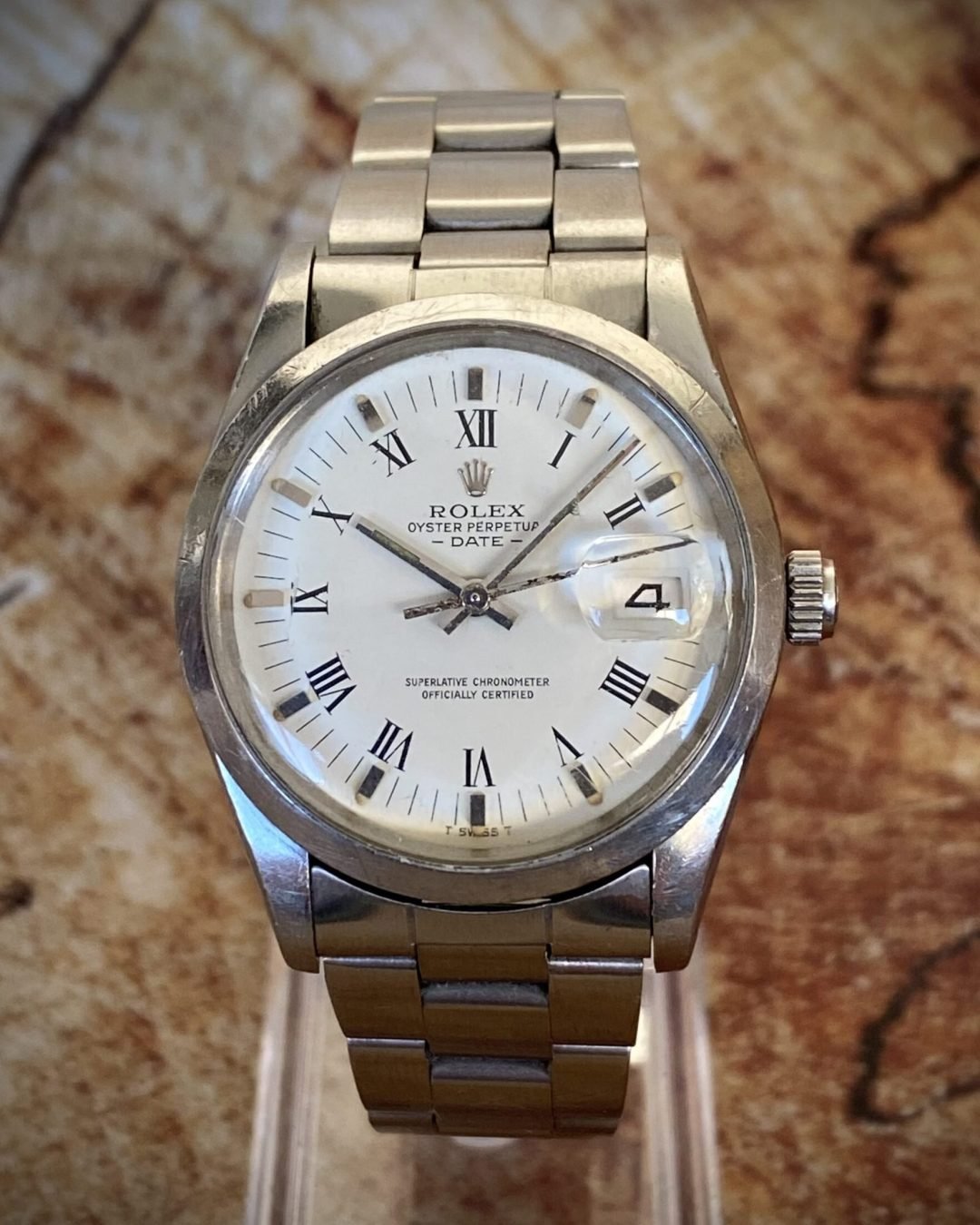
ROLEX 15000 OYSTER PERPETUAL DATE, CALIBER 3035
INFORMACIÓN
| Marca | Rolex |
|---|---|
| Modelo | 15000 Oyster Perpetual |
| Género | Man |
| País de origen | Switzerland |
| Década | 1980s |
| Año de fabricación | 1981 |
| Nº de serie | 6765XXX |
| Movimiento | Automatic |
| Calibre | ROLEX 3035 |
| Cristal | Plexiglass with Cyclops, impeccable |
| Esfera | White cream |
| Corona | Original roscada, firmada ROLEX |
| Material de la caja | Stainless steel |
| Diámetro sin corona | 34 mm |
| Diámetro con corona | 36.4 mm |
| Longitud entre asas | 41 mm |
| Grosor | 12 mm |
| Material de la correa | Stainless steel |
| Color de la correa | Steel |
| Cierre/hebilla | Stainless steel, signed Rolex |
| Estado del reloj | Very good, with slight signs of aging. |
| Caja/Estuche | Yes, generic. |
| Documentación | Free Certificate of Authenticity available on request |
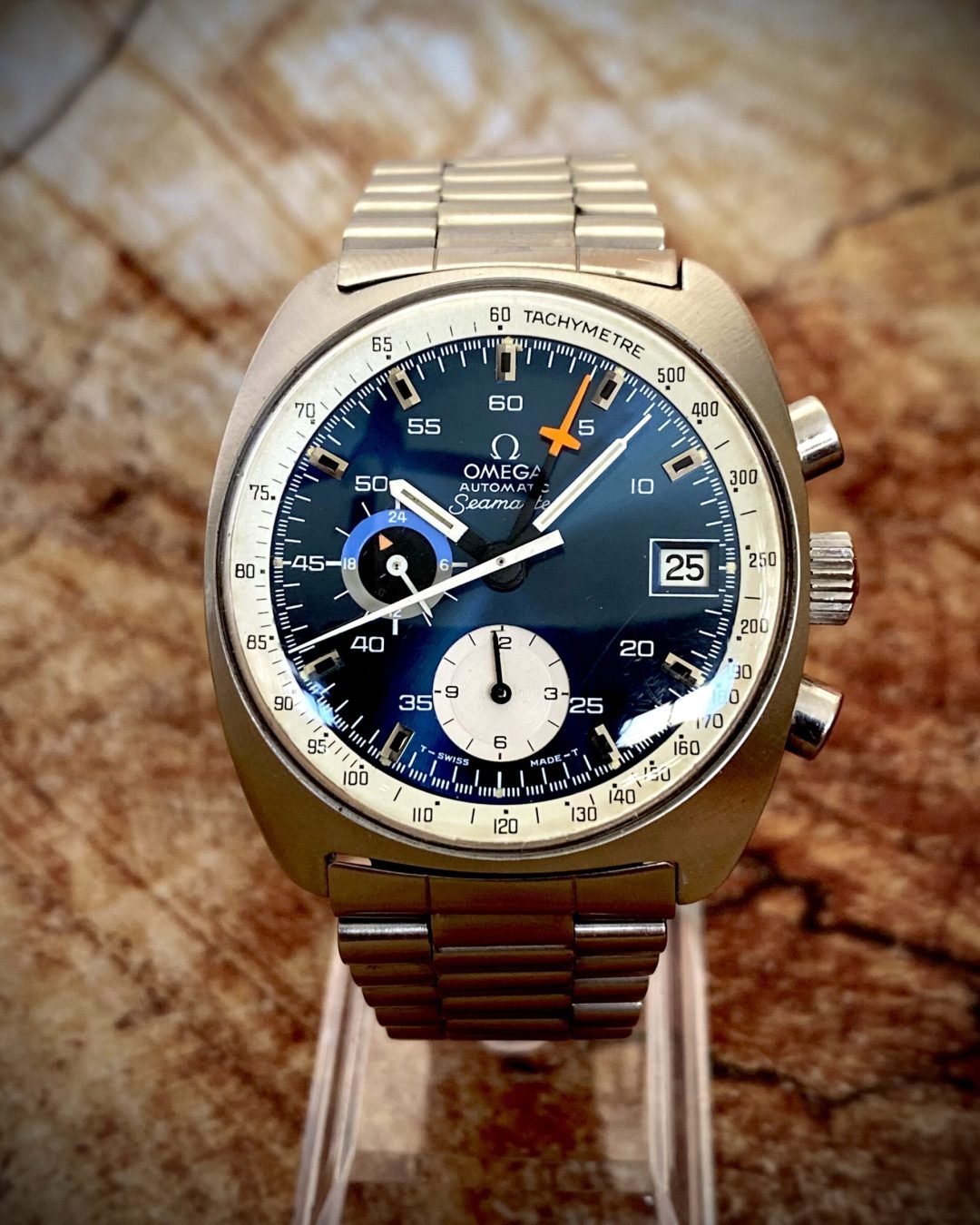
OMEGA SEAMASTER “JEDI” 176.001 CHRONOGRAPH, 1970s
INFORMACIÓN
| Marca | Omega |
|---|---|
| Género | Man |
| País de origen | Switzerland |
| Década | 1970s |
| Código de caja | 176.001 |
| Movimiento | Automatic |
| Calibre | OMEGA 1040 |
| Cristal | Plexiglass, impeccable |
| Esfera | Blue with two sub-dials, calendar at 3 o'clock. |
| Bisel | Interior con taquímetro |
| Corona | Steel, original signed OMEGA. |
| Material de la caja | Stainless steel |
| Diámetro sin corona | 38 mm |
| Diámetro con corona | 41 mm |
| Longitud entre asas | 43 mm |
| Grosor | 15 mm |
| Anchura de la correa | 21 mm |
| Material de la correa | Stainless steel |
| Color de la correa | Steel |
| Cierre/hebilla | Signed OMEGA deployant clasp |
| Estado del reloj | Excellent, like new! |
| Caja/Estuche | Yes, generic. |
| Documentación | Free Certificate of Authenticity available on request |
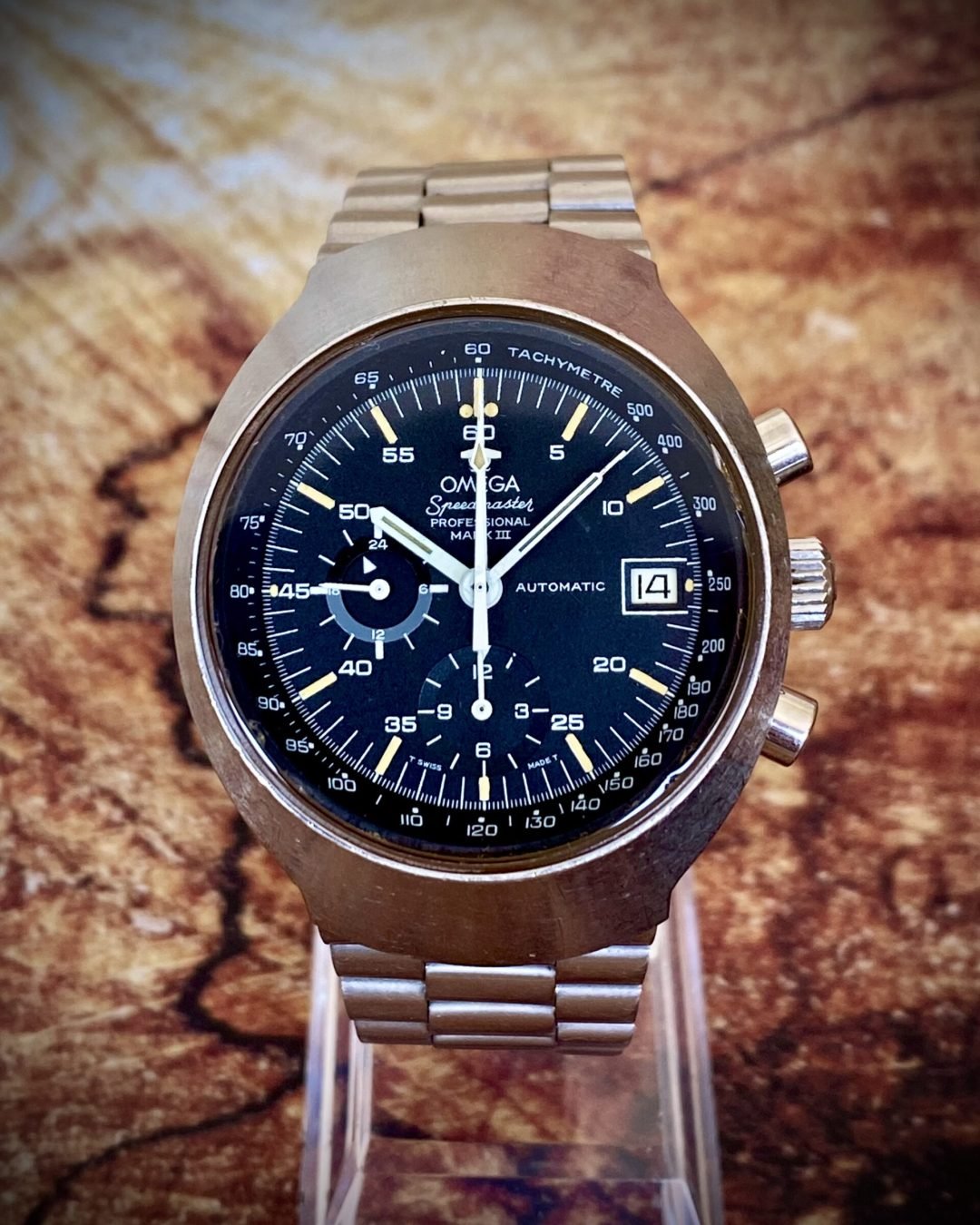
OMEGA SPEEDMASTER MARK III CHRONOGRAPH, YEAR 1972
INFORMACIÓN
| Marca | Omega |
|---|---|
| Modelo | Speedmaster MARK III |
| Género | Man |
| País de origen | Switzerland |
| Década | 1970s |
| Año de fabricación | 1972 |
| Nº de serie | 34255XXX: 34255XXX |
| Código de caja | 176.002 |
| Movimiento | Automatic |
| Calibre | OMEGA 1040 |
| Cristal | Mineral |
| Esfera | Black with two subdials and tachymeter |
| Bisel | Interior con taquímetro |
| Corona | Original, signed Omega |
| Material de la caja | Stainless steel |
| Diámetro sin corona | 40 mm |
| Longitud entre asas | 51 mm |
| Grosor | 16 mm |
| Anchura de la correa | 24 mm |
| Material de la correa | Stainless steel |
| Color de la correa | Steel |
| Cierre/hebilla | Signed OMEGA deployant clasp |
| Estado del reloj | Very good, with slight signs of aging. |
| Caja/Estuche | Yes, generic. |
| Documentación | Free Certificate of Authenticity available on request |
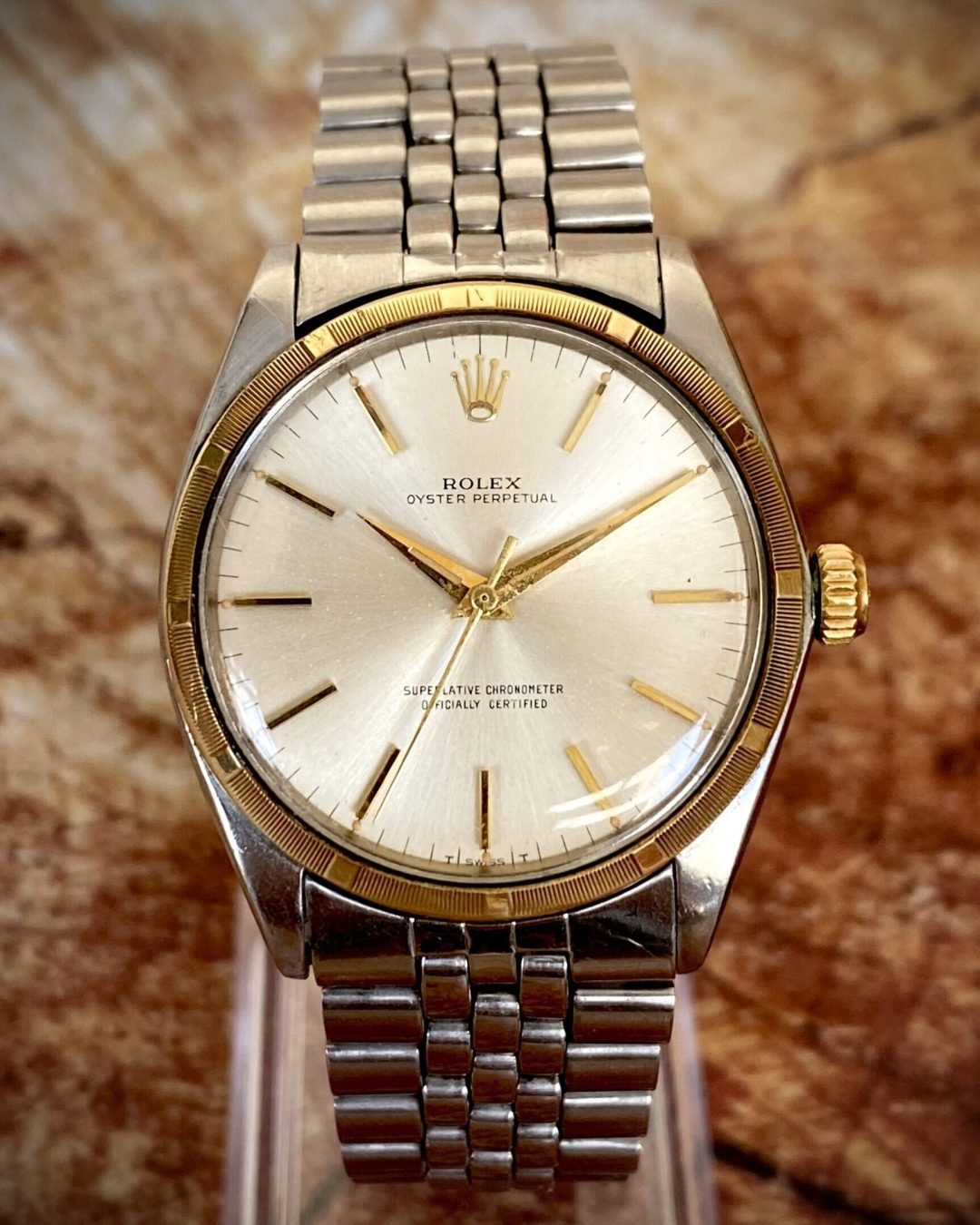
ROLEX ZEPHIR OYSTER PERPETUAL AUT. VINTAGE 70s
INFORMACIÓN
| Marca | Rolex |
|---|---|
| Modelo | 1008 Zephir |
| Género | Man |
| País de origen | Switzerland |
| Década | 1970s |
| Movimiento | Automatic |
| Cristal | Plexiglass, impeccable |
| Esfera | Mother-of-pearl |
| Bisel | 18-karat gold |
| Corona | Original roscada, firmada ROLEX |
| Material de la caja | Stainless steel |
| Diámetro sin corona | 34 mm |
| Diámetro con corona | 36 mm |
| Longitud entre asas | 39 mm |
| Grosor | 10.5 mm |
| Anchura de la correa | 19 mm |
| Material de la correa | Stainless steel |
| Color de la correa | Steel |
| Cierre/hebilla | Steel, signed ROLEX. |
| Estado del reloj | Very good, with slight signs of aging. |
| Caja/Estuche | Yes, generic. |
| Documentación | Free Certificate of Authenticity available on request |
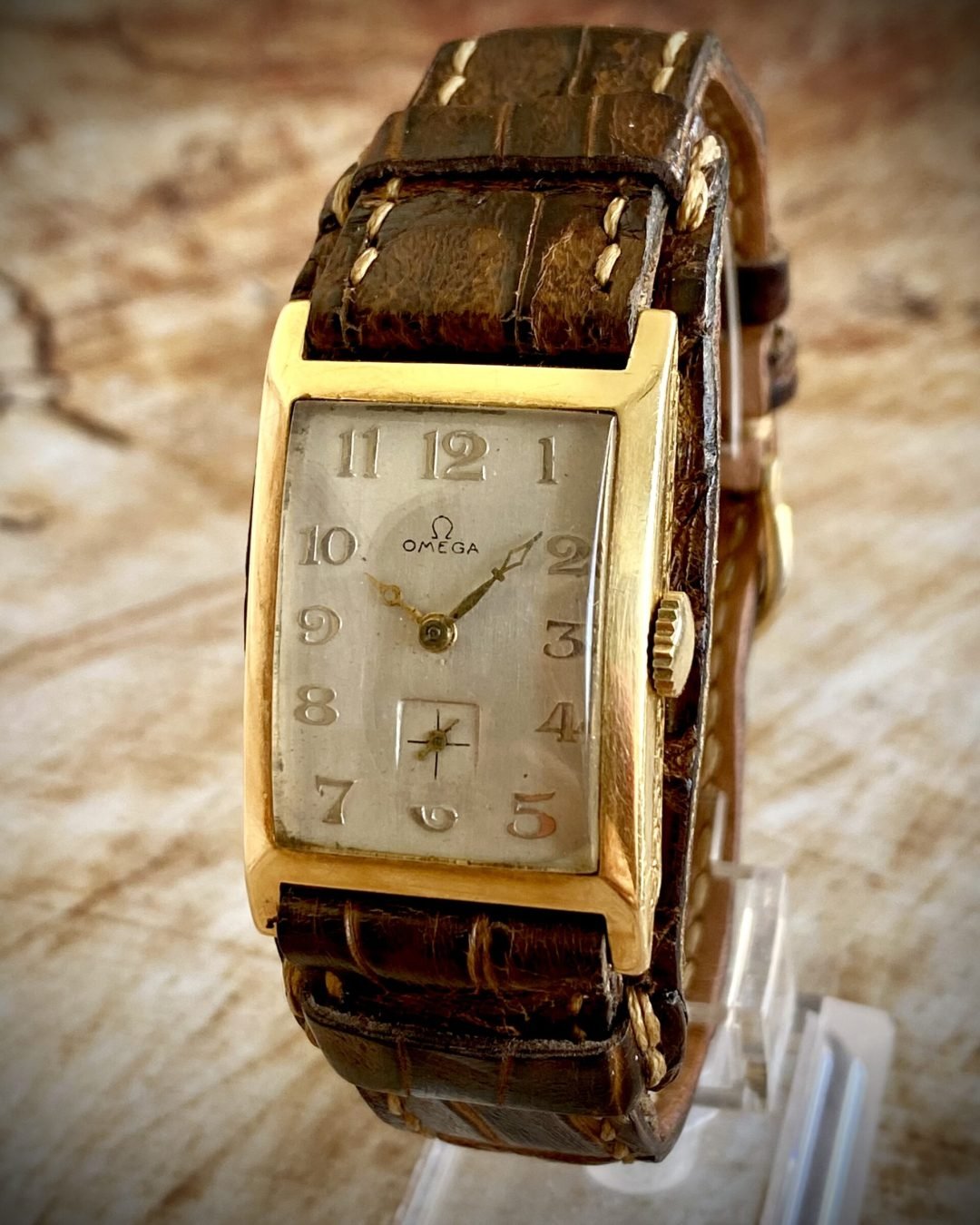
OMEGA ART DECÒ 18K GOLD, 1927, MANUAL WIND
INFORMACIÓN
| Marca | Omega |
|---|---|
| Modelo | Art Decò ORO 18K |
| Género | Man |
| País de origen | Switzerland |
| Década | 1920s |
| Año de fabricación | 1927 |
| Nº de serie | 6915434 |
| Código de caja | 6539108 |
| Movimiento | Manual winding |
| Cristal | Origin plexiglass |
| Esfera | Champagne color with Arabic numerals, impeccable |
| Bisel | 18-carat gold |
| Material de la caja | 18K Gold |
| Diámetro sin corona | 25 mm |
| Diámetro con corona | 26.5 mm |
| Longitud entre asas | 38.5 mm |
| Grosor | 10 mm |
| Anchura de la correa | 20 mm |
| Material de la correa | Genuine crocodile leather. |
| Color de la correa | Brown |
| Cierre/hebilla | Type squirrel |
| Estado del reloj | Very good, with slight signs of aging. |
| Caja/Estuche | Yes, generic. |
| Documentación | Free Certificate of Authenticity available on request |
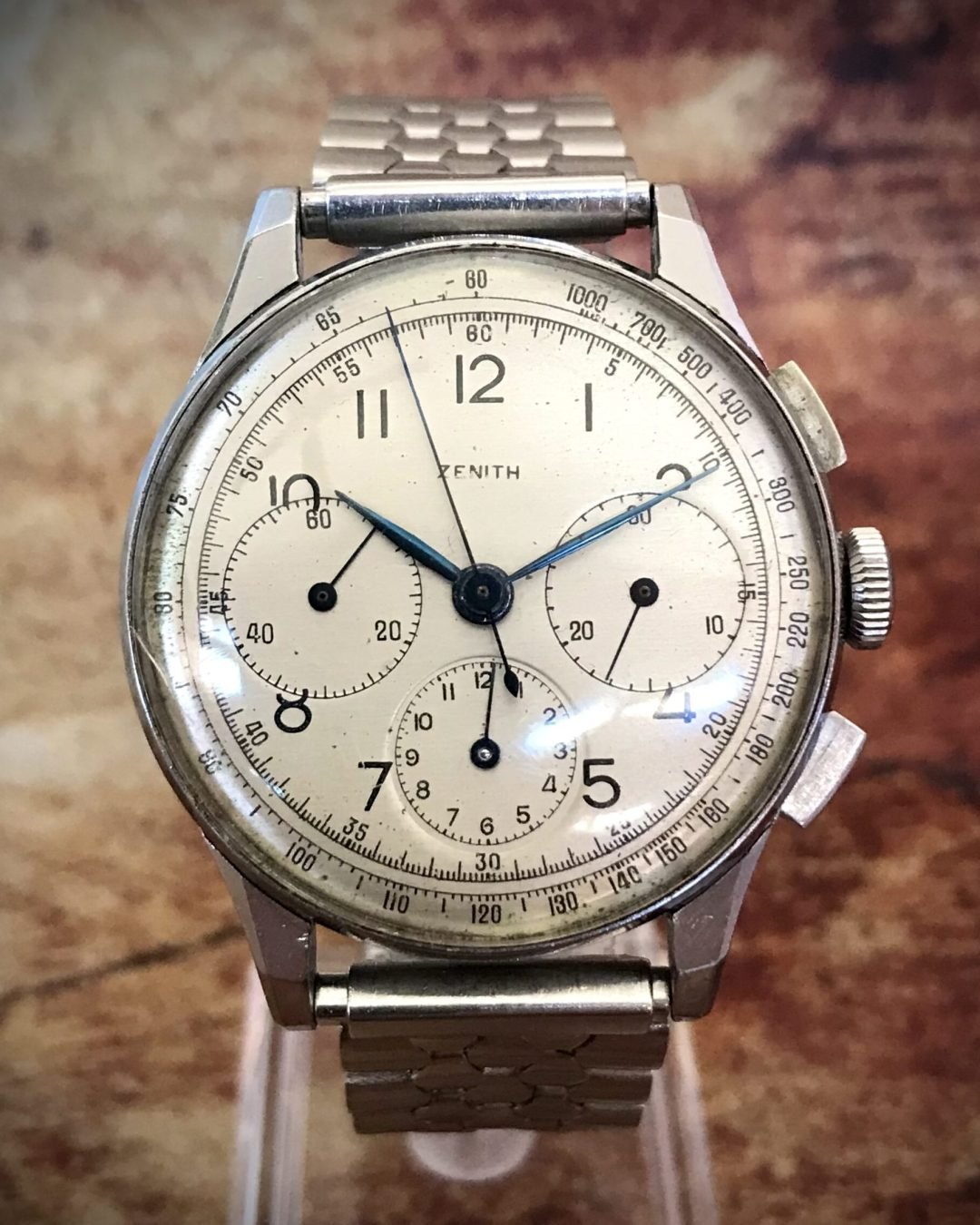
ZENITH TRICOMPAX CHRONOGRAPH, 1940s
INFORMACIÓN
| Marca | Zenith |
|---|---|
| Modelo | Cronógrafo Tricompax |
| Género | Man |
| País de origen | Switzerland |
| Década | 1940s |
| Nº de serie | 869108 |
| Código de caja | 22506 |
| Movimiento | Manual winding |
| Calibre | Tricompax 136 |
| Cristal | Origin plexiglass |
| Esfera | Silver, with three sub-dials and tempered blue steel hands. |
| Corona | Steel, at 3. |
| Material de la caja | Stainless steel |
| Diámetro sin corona | 36.5 mm |
| Diámetro con corona | 39 mm |
| Longitud entre asas | 43.5 mm |
| Grosor | 12 mm |
| Anchura de la correa | 18 mm |
| Material de la correa | Stainless steel |
| Color de la correa | Steel |
| Cierre/hebilla | Stainless steel folding clasp |
| Estado del reloj | Very good, with slight signs of aging. |
| Caja/Estuche | Yes, generic. |
| Documentación | Free Certificate of Authenticity available on request |
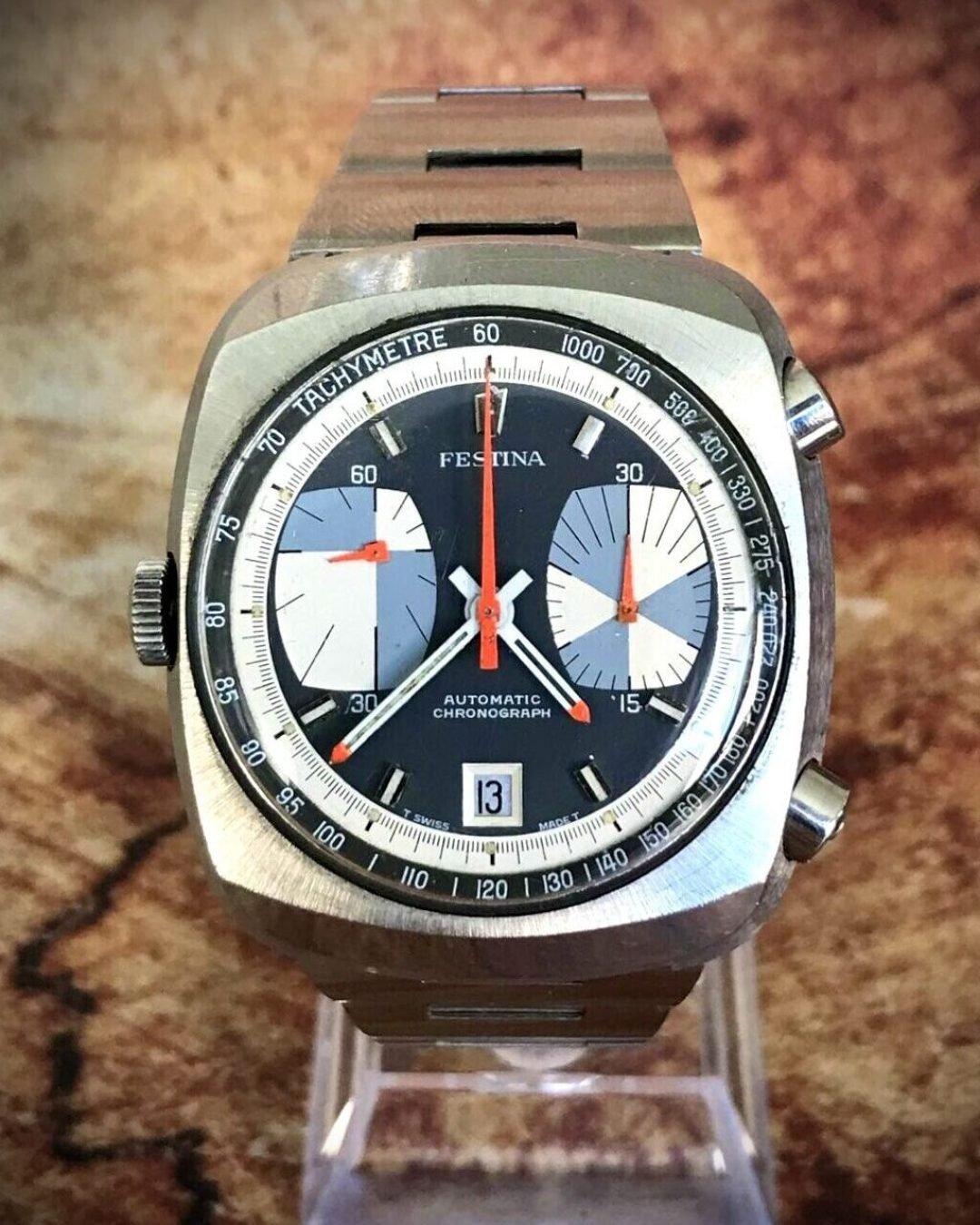
FESTINA CHRONOGRAPF, BUREN 15, VINTAGE 1970
3890,00 €
INFORMACIÓN
| Marca | Festina |
|---|---|
| Modelo | Chronograph |
| Género | Man |
| Década | 1970s |
| Año de fabricación | 1970 |
| Movimiento | Automatic |
| Calibre | Buren 15 |
| Cristal | Original Plexiglass, flawless |
| Esfera | Blue with asymmetrical subdials, date display at 6 o'clock. |
| Bisel | Interior con taquímetro |
| Corona | Original, al lado izquierdo |
| Material de la caja | Steel |
| Diámetro sin corona | 39 mm |
| Diámetro con corona | 40 mm |
| Longitud entre asas | 43 mm |
| Grosor | 13 mm |
| Anchura de la correa | 24 mm |
| Material de la correa | Steel |
| Color de la correa | Steel |
| Cierre/hebilla | Steel |
| Estado del reloj | Very good, with slight signs of aging. |
| Caja/Estuche | Yes, generic. |
| Documentación | Free Certificate of Authenticity available on request |
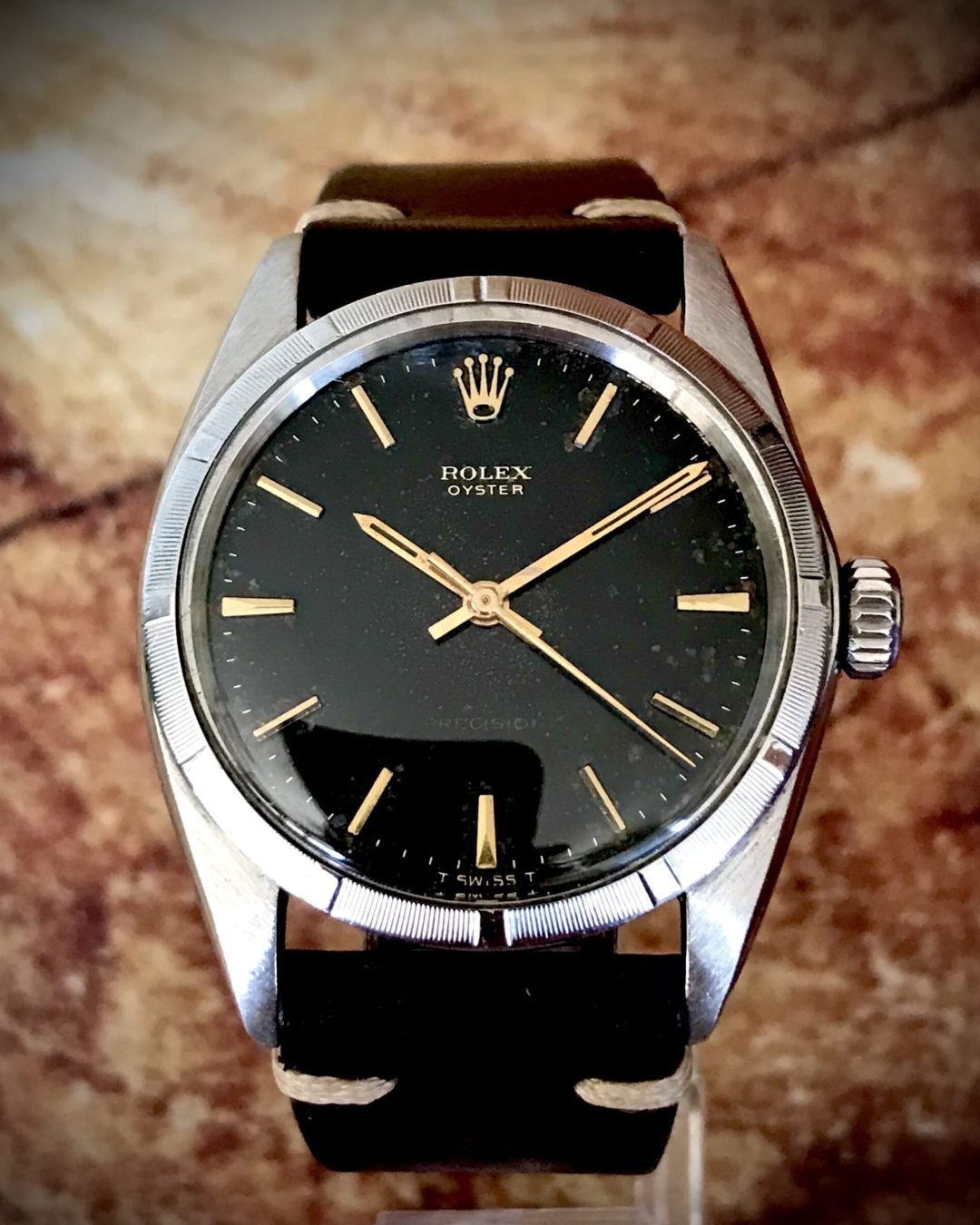
ROLEX OYSTER PRECISION 6426, MANUAL
4450,00 €
INFORMACIÓN
| Marca | Rolex |
|---|---|
| Modelo | Oyster Precision |
| Género | Man |
| Década | 1960s |
| Año de fabricación | 1966 |
| Movimiento | Manual winding |
| Cristal | Plexiglass, impeccable |
| Esfera | Black with gold indexes and hands |
| Bisel | Grooved |
| Corona | Original roscada, firmada ROLEX |
| Material de la caja | Stainless steel |
| Diámetro sin corona | 34 mm |
| Diámetro con corona | 36 mm |
| Longitud entre asas | 40 mm |
| Anchura de la correa | 19 mm |
| Material de la correa | Top quality genuine leather |
| Color de la correa | Brown |
| Cierre/hebilla | Steel, signed ROLEX. |
| Estado del reloj | Very good, with slight signs of aging. |
| Caja/Estuche | Yes, generic. |
| Documentación | Free Certificate of Authenticity available on request |
Garantía tEMPPUS
Para su total tranquilidad, protegemos todos nuestros RELOJES CON 1 AÑO DE GARANTÍA.