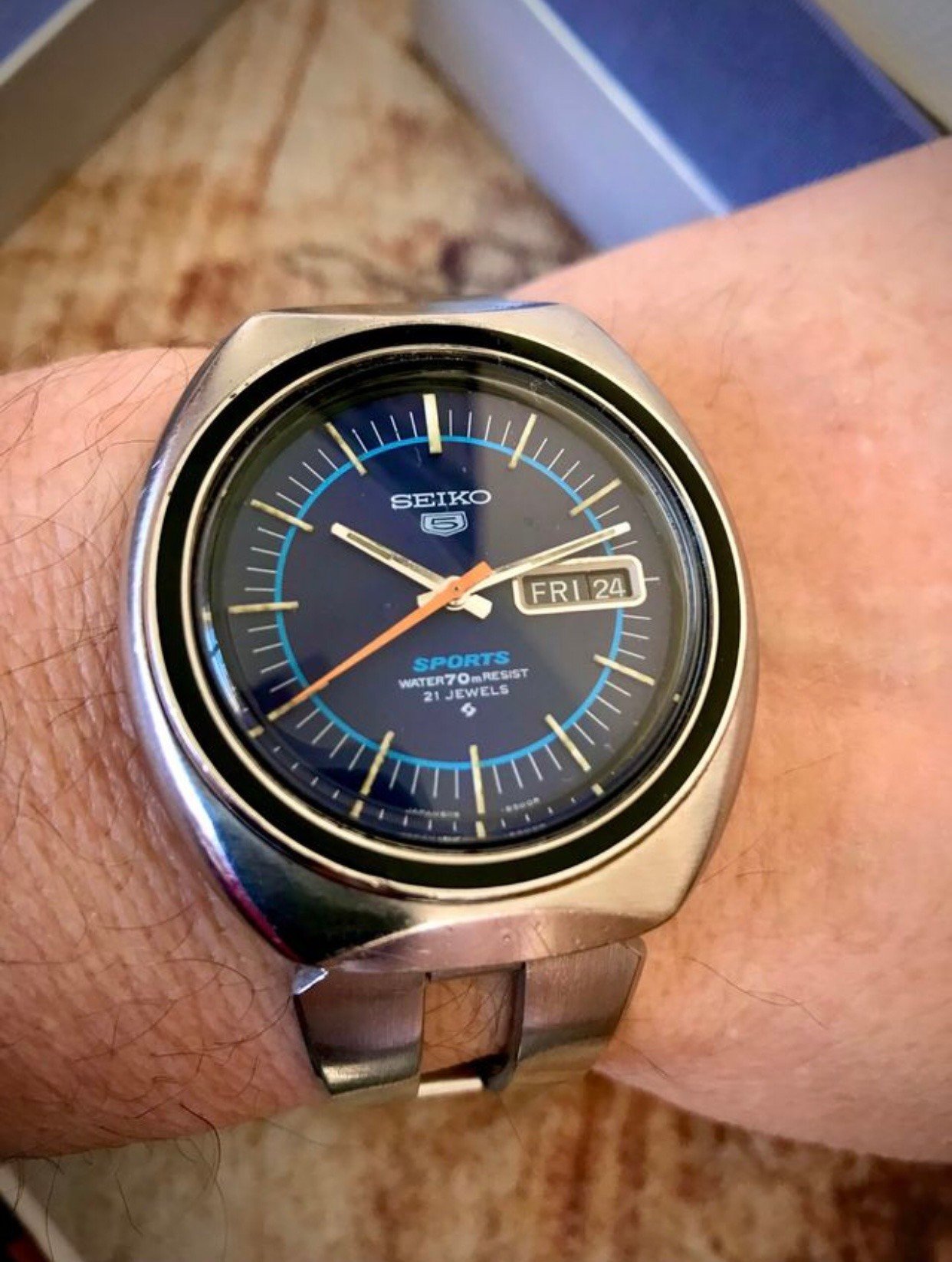
- Pieza única
- Envío Nacional Gratuito
- Entrega en 24/48 horas
- Aceptamos Bizum, Transferencia y Paypal
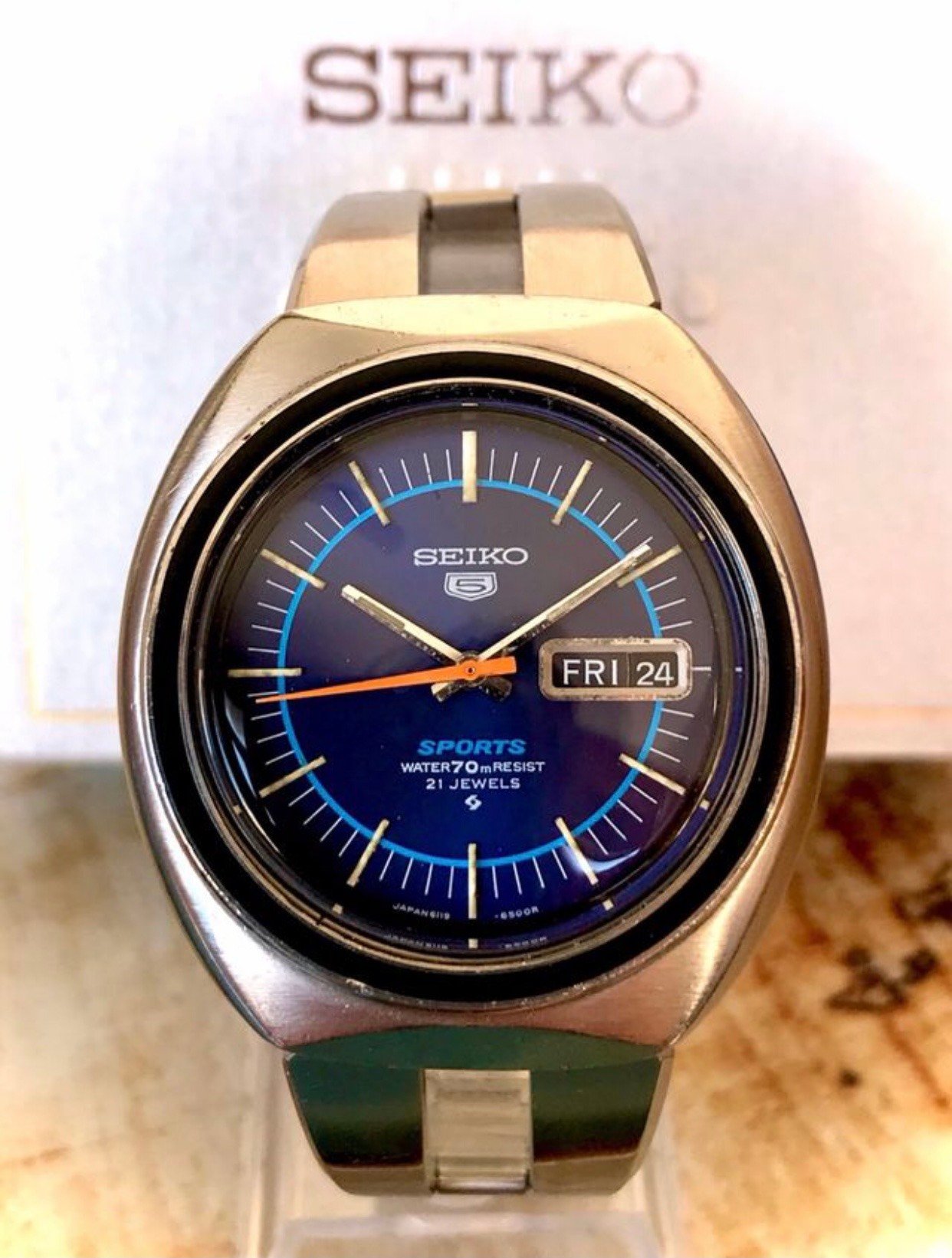
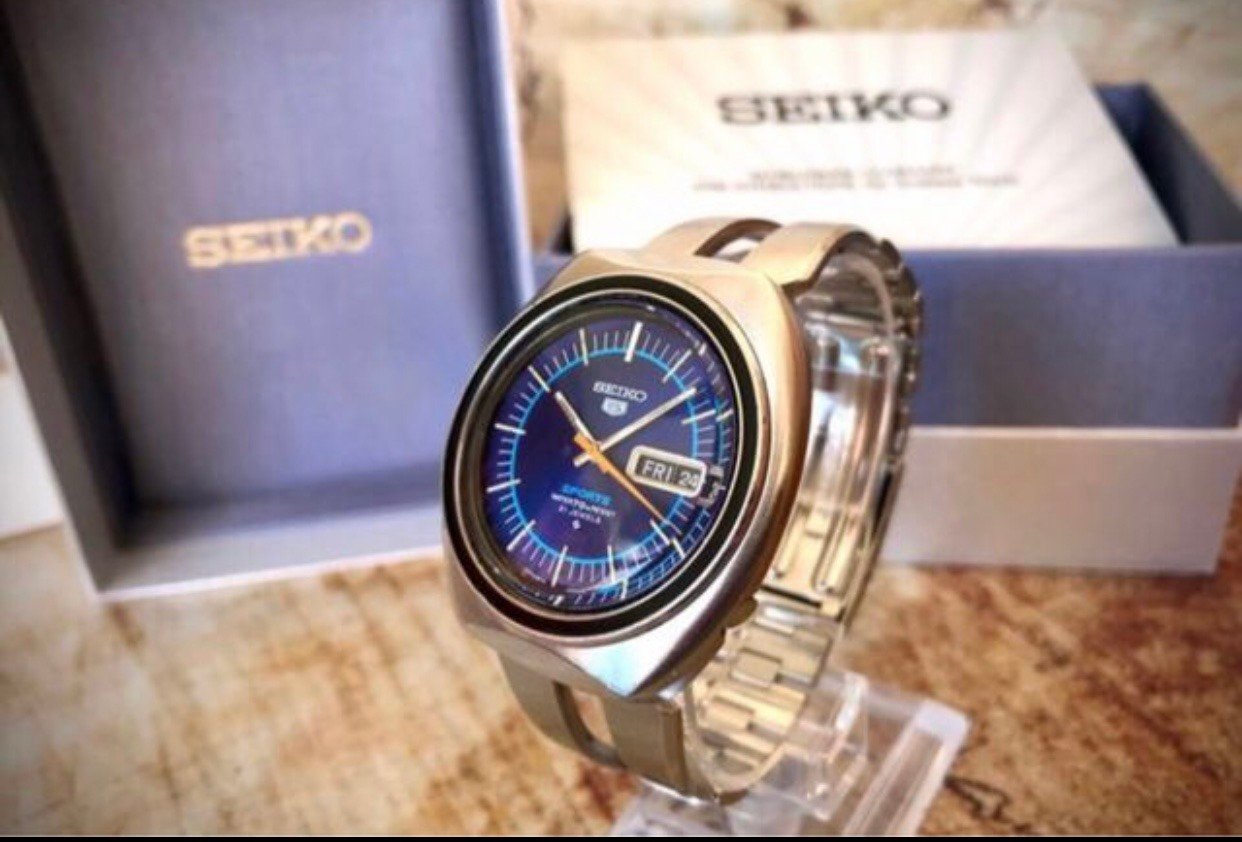
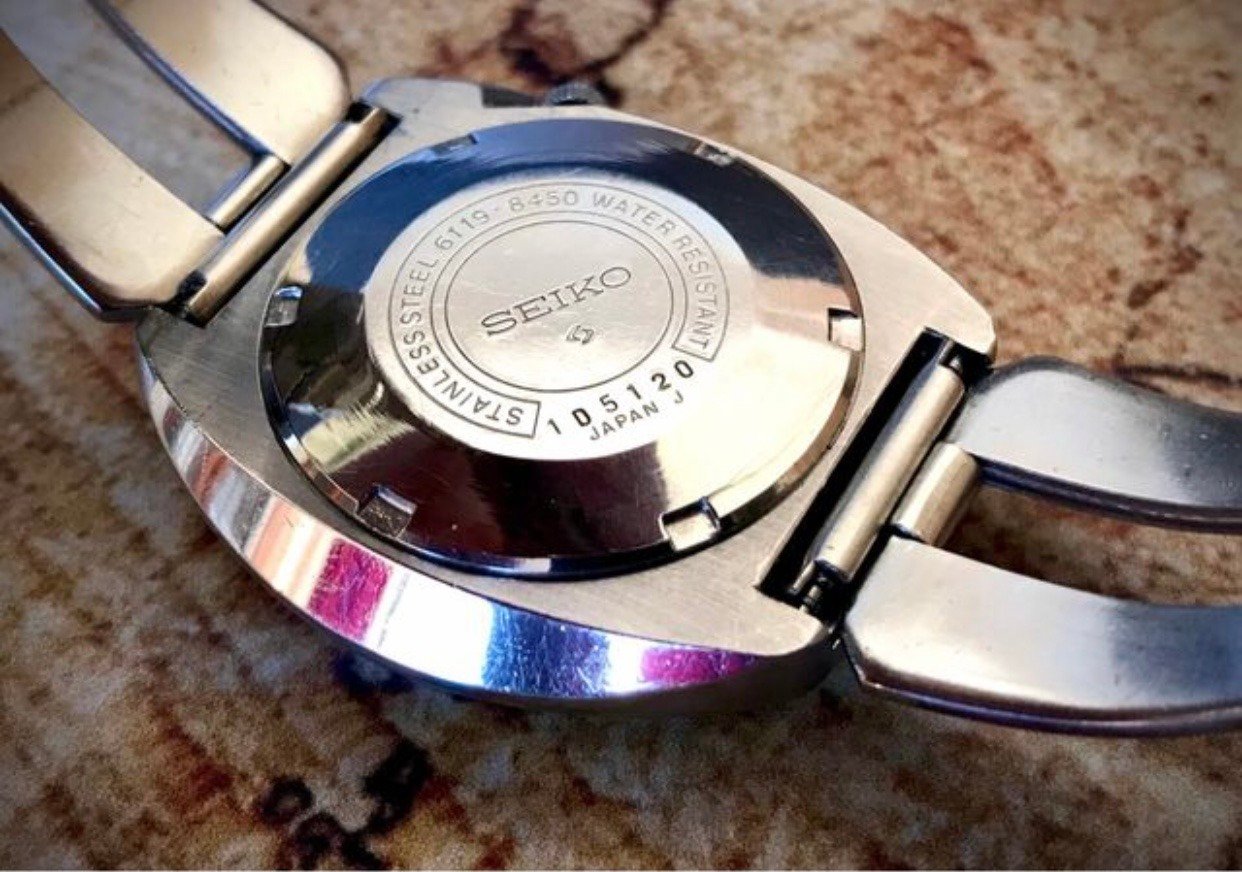
SEIKO 5, 6119-8450 AUTOMATIC, VINTAGE YEAR 1971
| Marca | Seiko |
|---|---|
| Modelo | 6119-8450 |
| Género | Man |
| Década | 1970s |
| Año de fabricación | 1971 |
| Nº de serie | 1D5120: Blue dial |
| Código de caja | 8450 |
| Movimiento | Automatic |
| Calibre | Seiko 6119 |
| Cristal | Original PLexiglás |
| Esfera | Blue bicolor with double date display at 3 o'clock. |
| Corona | Original Seiko, de acero |
| Material de la caja | Stainless steel |
| Diámetro sin corona | 40 mm |
| Diámetro con corona | 40 mm |
| Longitud entre asas | 44 mm |
| Grosor | 12 mm |
| Anchura de la correa | 18 mm |
| Material de la correa | Stainless steel |
| Color de la correa | Steel |
| Cierre/hebilla | Pin type, original signed Seiko |
| Estado del reloj | Very good, with slight signs of aging. |
| Caja/Estuche | Yes, your original. |
| Documentación | Free Certificate of Authenticity available on request |
The history of Seiko began in 1881 in Tokyo, Japan, when a young entrepreneur named Kintaro Hattori opened a watch repair and sales shop. His vision was to create high-quality watches, and in 1892 he founded the Seikosha factory (in Japanese, “Seiko” means “precision” or “success”, and “sha” means “house”). Initially, Seikosha produced wall clocks, but over time they shifted their focus to pocket and wristwatches.
First Japanese wristwatch
In 1913, Seikosha launched the Laurel, the first wristwatch made in Japan. This was a significant milestone as Japan had no watchmaking tradition at that time. The company became a pioneer in its country and laid the foundation for what would become a benchmark name in the global watch industry.
Technological innovation and quartz watches
In 1969, Seiko revolutionized the watchmaking world with the Seiko Astron, the world’s first quartz wristwatch. This breakthrough transformed the watch industry by introducing a much more precise and affordable technology than traditional mechanical movements. Quartz technology quickly became popular and remains a standard in watchmaking today.
Precision and reliability
Over time, Seiko has introduced multiple watchmaking innovations, such as the automatic chronograph and the Kinetic charging system (a combination of kinetic energy and quartz technology). It is also known for its dive watches, highly valued for their durability and resistance in extreme conditions.
Seiko has earned a special place in the watch industry, combining tradition and technology at affordable prices, offering everything from simple models to high-end pieces with its Grand Seiko line.
TEMPPUS. All rights reserved.
Información adicional
Reloj completamente revisado. Garantizado para su uso diario.
- Pieza única
- Envío Nacional Gratuito
- Entrega en 24/48 horas
- Aceptamos Bizum, Transferencia y Paypal
Relojes relacionados
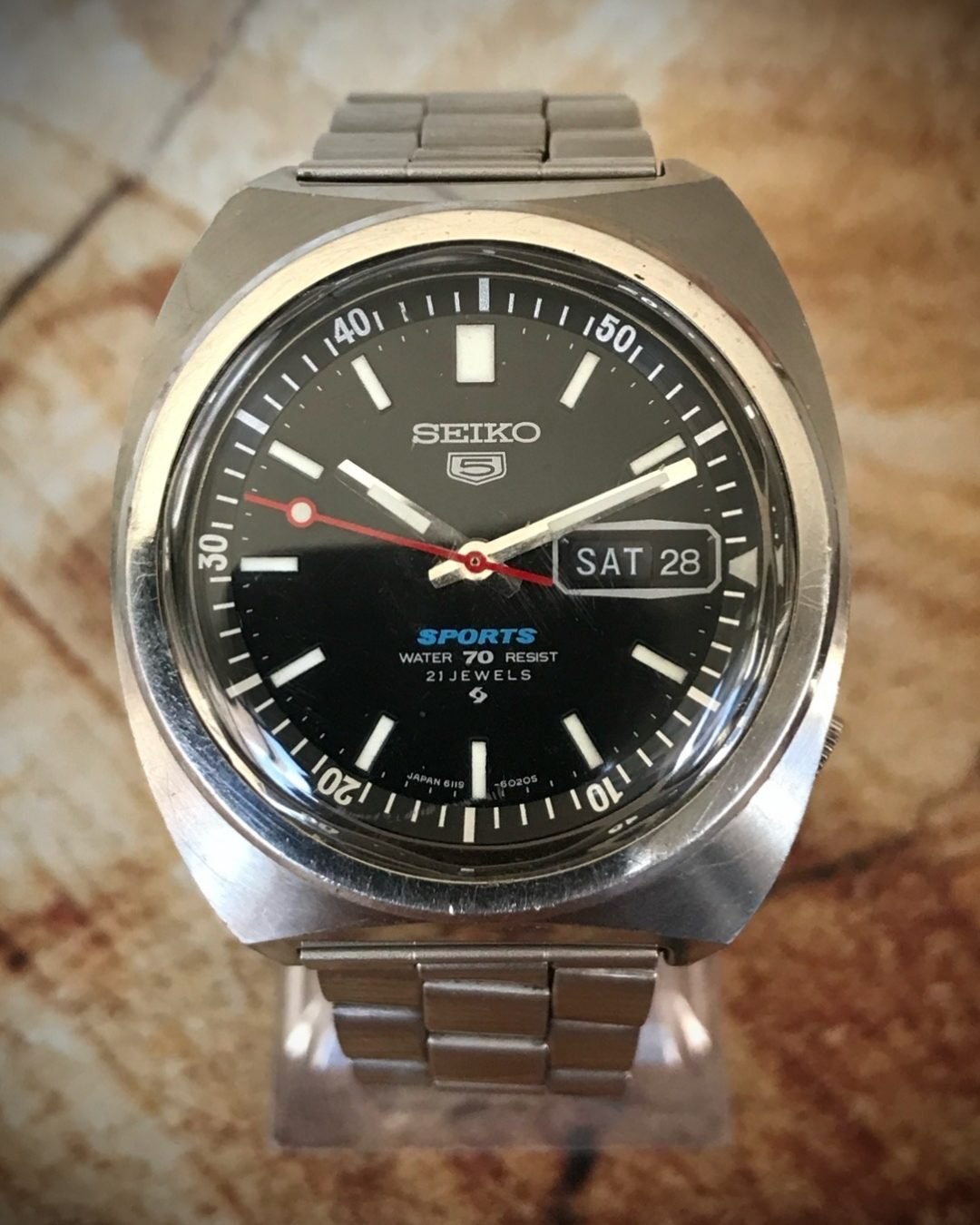
SEIKO 5 SPORTS 6119/6023 AUTOMATIC, VINTAGE YEAR 1972
INFORMACIÓN
| Marca | Seiko |
|---|---|
| Modelo | 5 Sports 6119-6023 |
| Género | Man |
| País de origen | Japan |
| Década | 1970s |
| Año de fabricación | 1972 |
| Nº de serie | 211321 |
| Código de caja | 6023: Stainless Steel |
| Movimiento | Automatic |
| Cristal | Original PLexiglás |
| Esfera | Black, with double date function at 3 o'clock. |
| Corona | Original SEIKO Steel, at 4時 |
| Material de la caja | Stainless steel |
| Diámetro sin corona | 37.2 mm |
| Diámetro con corona | 37,2 mm |
| Longitud entre asas | 40 mm |
| Grosor | 12 mm |
| Anchura de la correa | 19 mm |
| Material de la correa | Stainless steel |
| Color de la correa | Steel |
| Cierre/hebilla | Steel type clasp, original signed SEIKO. |
| Estado del reloj | Very good, with slight signs of aging. |
| Caja/Estuche | Yes, generic. |
| Documentación | Free Certificate of Authenticity available on request |
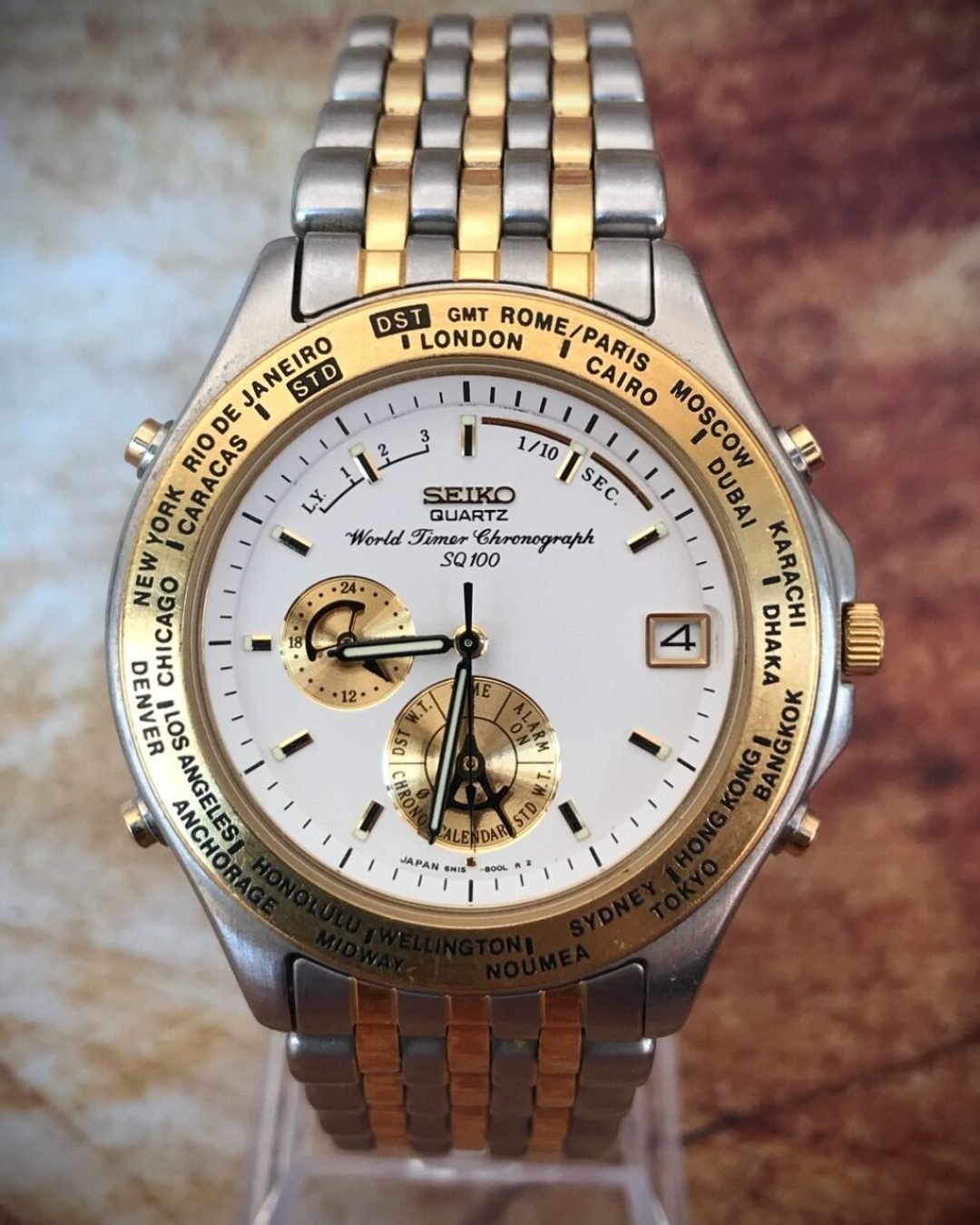
SEIKO QUARTZ “WORLD TIMER CHRONOGRAPF” SQ 100
INFORMACIÓN
| Marca | Seiko |
|---|---|
| Modelo | WORLD TIMER CHRONOGRAPF SQ 100 |
| Género | Man |
| País de origen | Japan |
| Década | 1990s |
| Año de fabricación | 1992 |
| Nº de serie | 200620 |
| Movimiento | Quartz |
| Cristal | Mineral |
| Esfera | White with golden subdials, date display at 3 o'clock. |
| Bisel | World, 20-micron gold-plated |
| Corona | Original, firmada Seiko |
| Material de la caja | Stainless steel |
| Diámetro sin corona | 40.5 mm |
| Diámetro con corona | 42 mm |
| Longitud entre asas | 44 mm |
| Grosor | 9 mm |
| Anchura de la correa | 20 mm |
| Material de la correa | Steel and gold-plated steel 20-micron coating |
| Color de la correa | Steel and Gold |
| Cierre/hebilla | Clasp type, original Seiko |
| Estado del reloj | Excellent, like new! |
| Caja/Estuche | Yes, generic. |
| Documentación | Free Certificate of Authenticity available on request |
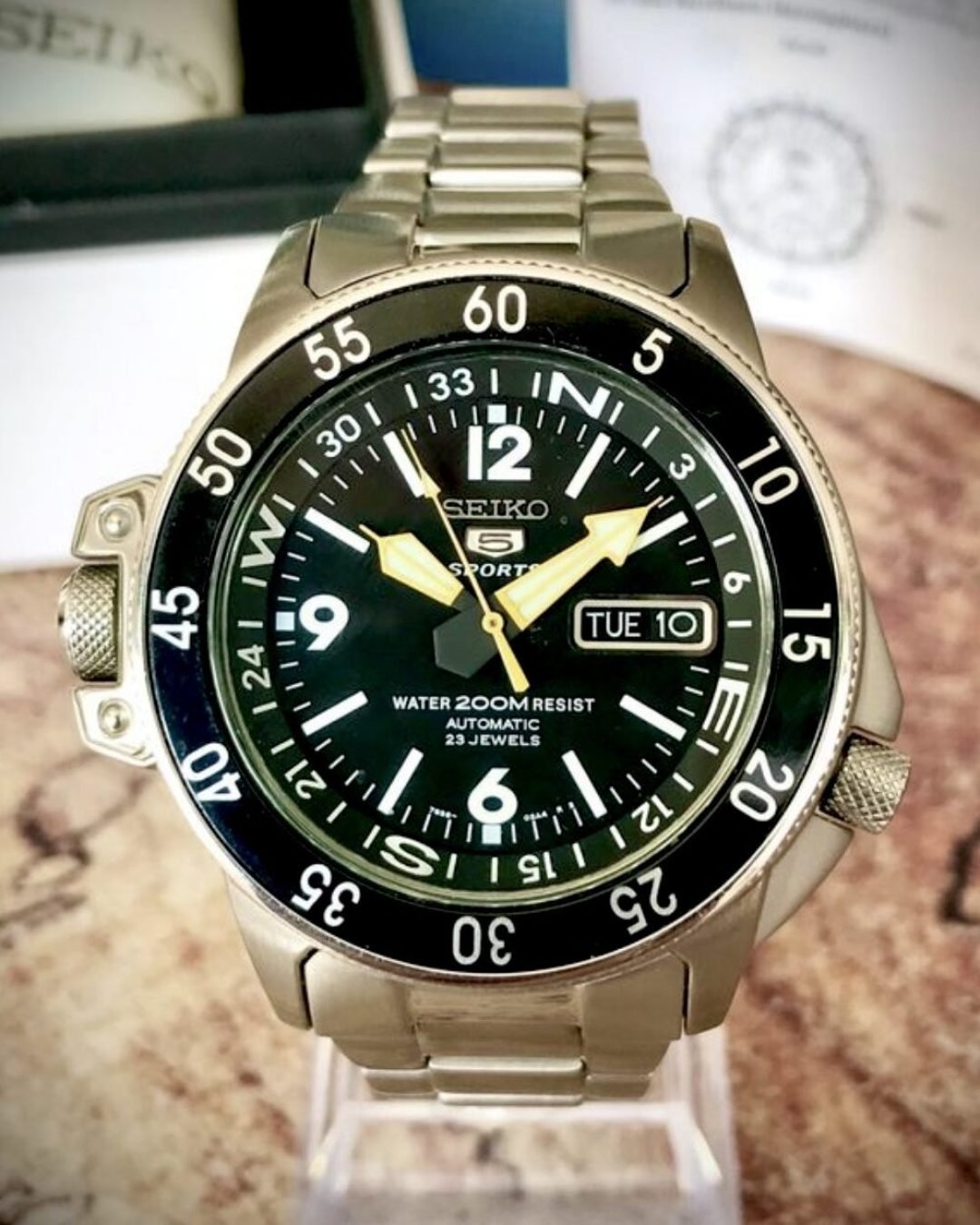
SEIKO SKZ211J1 “ATLAS”, AUTOMATIC
INFORMACIÓN
| Marca | Seiko |
|---|---|
| Modelo | SKZ211J1 |
| Género | Man |
| Década | Current. |
| Año de fabricación | 2020 |
| Movimiento | Automatic |
| Calibre | Seiko 7S36 |
| Cristal | Sapphire |
| Esfera | Black with double date display at 3 o'clock. |
| Bisel | Aluminum, bidirectional rotating |
| Corona | Double crown, at 4 and at 9. |
| Material de la caja | Stainless steel |
| Diámetro sin corona | 42 mm |
| Diámetro con corona | 44.5 mm |
| Longitud entre asas | 46 mm |
| Grosor | 13 mm |
| Anchura de la correa | 19 mm |
| Material de la correa | Stainless steel |
| Color de la correa | Steel |
| Cierre/hebilla | Steel, signed Seiko. |
| Estado del reloj | |
| Caja/Estuche | Yes, your original. |
| Documentación | Yes |
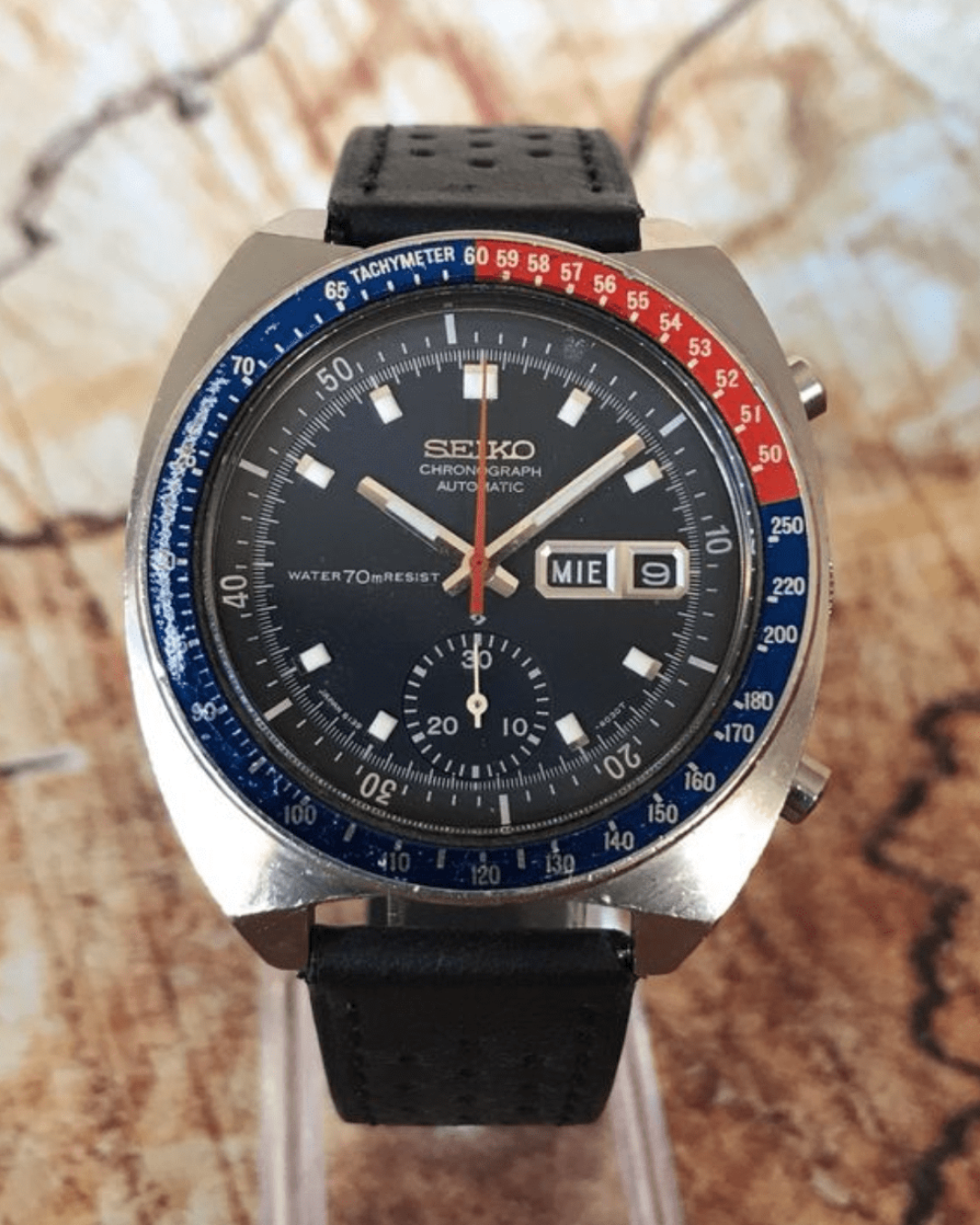
SEIKO 6139-6002 “POGUE”, AUTOMATIC CHRONOGRAPH
INFORMACIÓN
| Marca | Seiko |
|---|---|
| Modelo | |
| Género | Man |
| Década | 1970s |
| Año de fabricación | 1971 |
| Nº de serie | |
| Código de caja | 6002 |
| Movimiento | Automatic |
| Calibre | Seiko 6139 |
| Cristal | Mineral |
| Esfera | Black, with double date function at 3 o'clock. |
| Bisel | Interior con taquímetro |
| Corona | Seiko Corona |
| Material de la caja | Stainless steel |
| Diámetro sin corona | 43 mm |
| Diámetro con corona | |
| Longitud entre asas | 46 mm |
| Grosor | 12.2 mm |
| Anchura de la correa | 18 mm |
| Material de la correa | Genuine leather, Racing type brand new |
| Color de la correa | Black |
| Cierre/hebilla | Stainless steel |
| Estado del reloj | Very good, with slight signs of aging. |
| Caja/Estuche | Yes, your original. |
| Documentación | Free Certificate of Authenticity available on request |
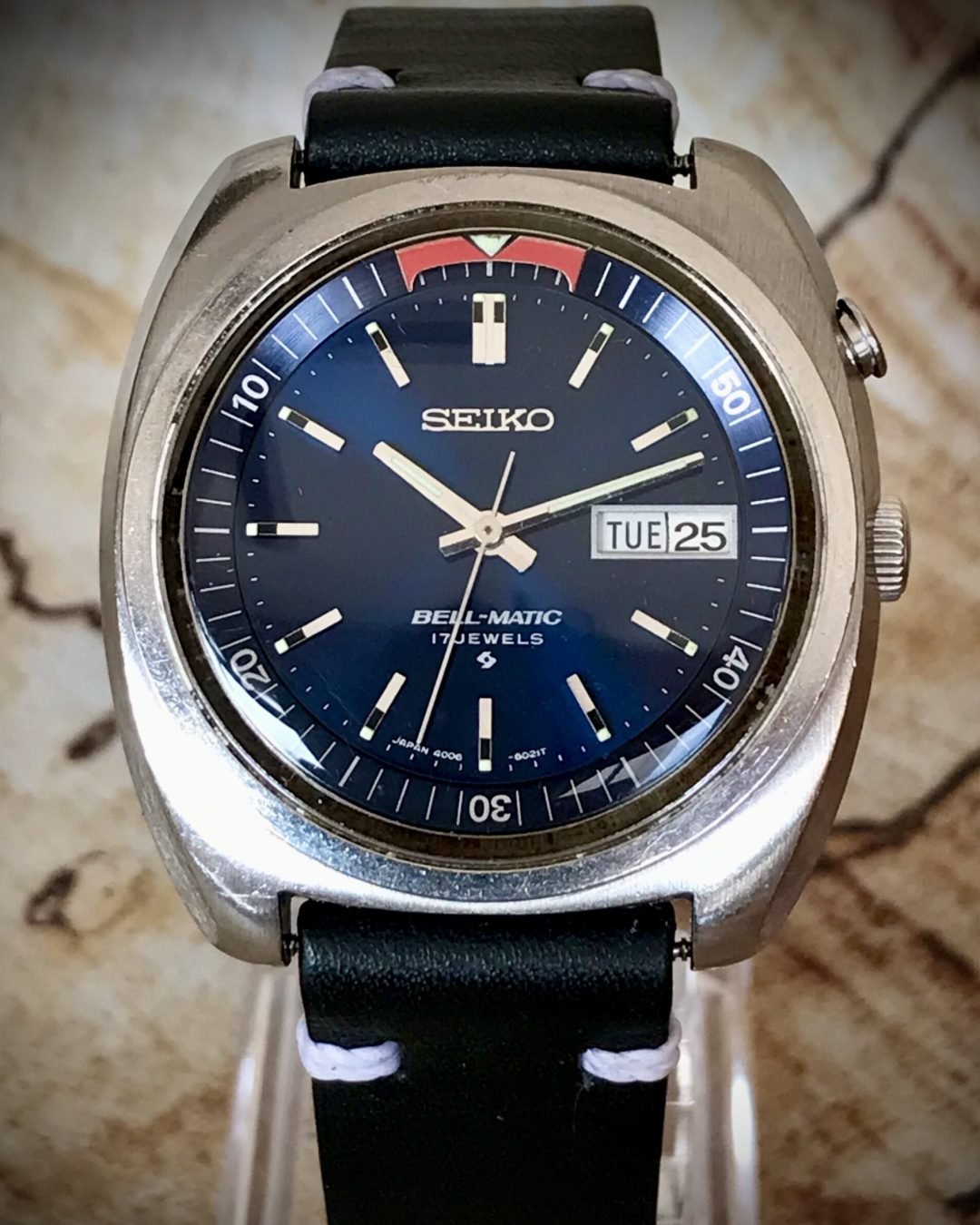
SEIKO BELL-MATIC AUTOMATIC, VINTAGE YEAR 1974
INFORMACIÓN
| Marca | Seiko |
|---|---|
| Modelo | BELL-MATIC |
| Género | Man |
| Década | 1970s |
| Año de fabricación | 1974 |
| Nº de serie | 423607 |
| Código de caja | 6031 |
| Movimiento | Automatic |
| Calibre | 4006 A |
| Cristal | Original Plexiglass, flawless |
| Esfera | Blue, with double date indicator at 3 o'clock. |
| Bisel | Interior, bidirectional rotating |
| Corona | Original Seiko, de acero |
| Material de la caja | Steel |
| Diámetro sin corona | 39.4 mm |
| Diámetro con corona | 40.6 mm |
| Longitud entre asas | 42 mm |
| Grosor | 11 mm |
| Anchura de la correa | 18 mm |
| Material de la correa | Genuine leather vaccine |
| Color de la correa | Black |
| Cierre/hebilla | Snap-type, steel |
| Estado del reloj | Very good, with slight signs of aging. |
| Caja/Estuche | Yes, generic. |
| Documentación | Free Certificate of Authenticity available on request |
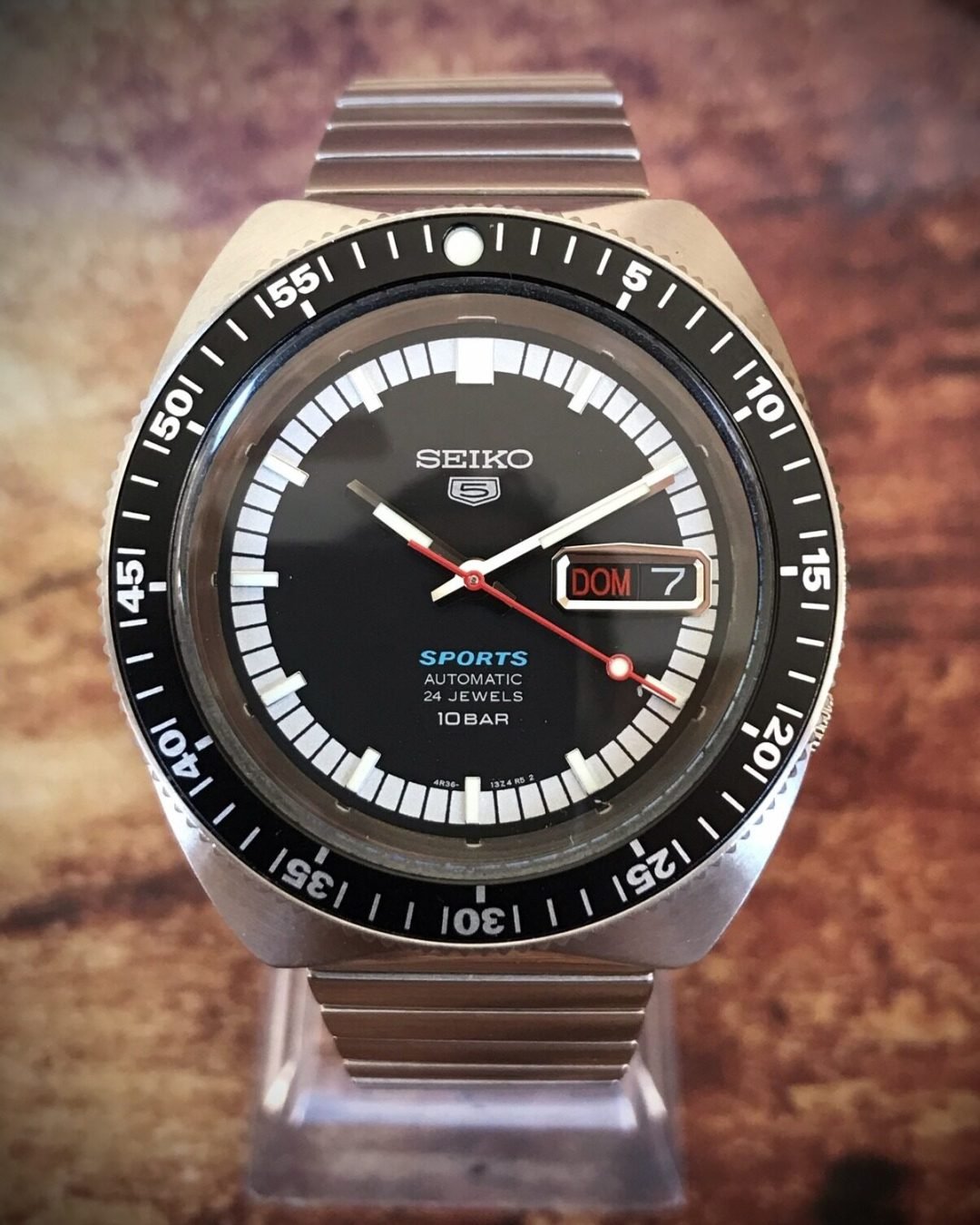
SEIKO 5 SPORTS 55TH ANNIVERSARY, LIMITED EDITION 15,555 UNITS
INFORMACIÓN
| Marca | Seiko |
|---|---|
| Modelo | 5 SPORTS 55 ANIVERSARIO, EDICIÓN LIMITADA Y NUMERADA |
| Género | Man |
| Década | Current. |
| Año de fabricación | 2023: 2023 |
| Movimiento | Automatic |
| Cristal | Brand new, flawless. |
| Esfera | Black, with double date function at 3 o'clock. |
| Bisel | Unidirectional swivel. |
| Material de la caja | Steel |
| Diámetro sin corona | 42.5 mm |
| Diámetro con corona | 42.5 mm |
| Longitud entre asas | 42,8 mm |
| Grosor | 13,4 mm |
| Anchura de la correa | 20 mm |
| Material de la correa | Stainless steel |
| Color de la correa | Steel |
| Cierre/hebilla | Signed Seiko Clasp Type |
| Estado del reloj | Excellent, like new! |
| Caja/Estuche | Yes, your original. |
| Documentación | Yes |
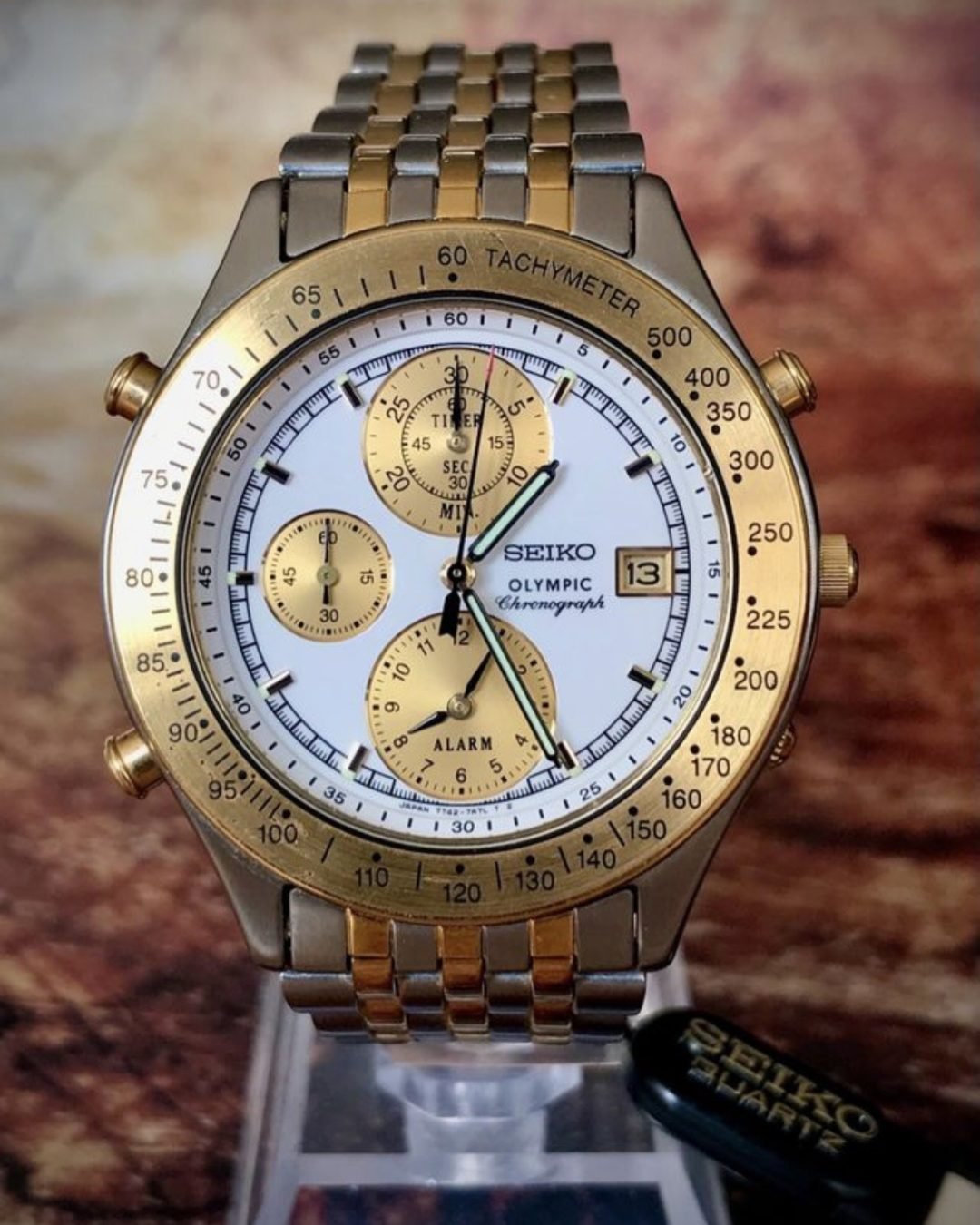
SEIKO OLYMPIC 92, N.O.S. (NEW OLD STOCK)
INFORMACIÓN
| Marca | Seiko |
|---|---|
| Modelo | Olympic 92 (Olimpiadas Barcelona 92) |
| Género | Man |
| Década | 1990s |
| Año de fabricación | 1991 |
| Nº de serie | 171122 |
| Código de caja | 7A50 |
| Movimiento | Quartz |
| Calibre | Seiko 7T42 |
| Cristal | Hardlex |
| Esfera | White with golden subdials, date display at 3 o'clock. |
| Bisel | Gold-plated with tachymeter |
| Corona | Original, firmada Seiko |
| Material de la caja | Stainless steel |
| Diámetro sin corona | 39 mm |
| Diámetro con corona | 41 mm |
| Longitud entre asas | 43 mm |
| Grosor | 8.5 mm |
| Anchura de la correa | 18 mm |
| Material de la correa | Gold-plated steel |
| Color de la correa | Steel and Gold |
| Cierre/hebilla | Pin type, original signed Seiko |
| Estado del reloj | N.O.S. (New Old Stock) |
| Caja/Estuche | Yes, your original. |
| Documentación | Free Certificate of Authenticity available on request |
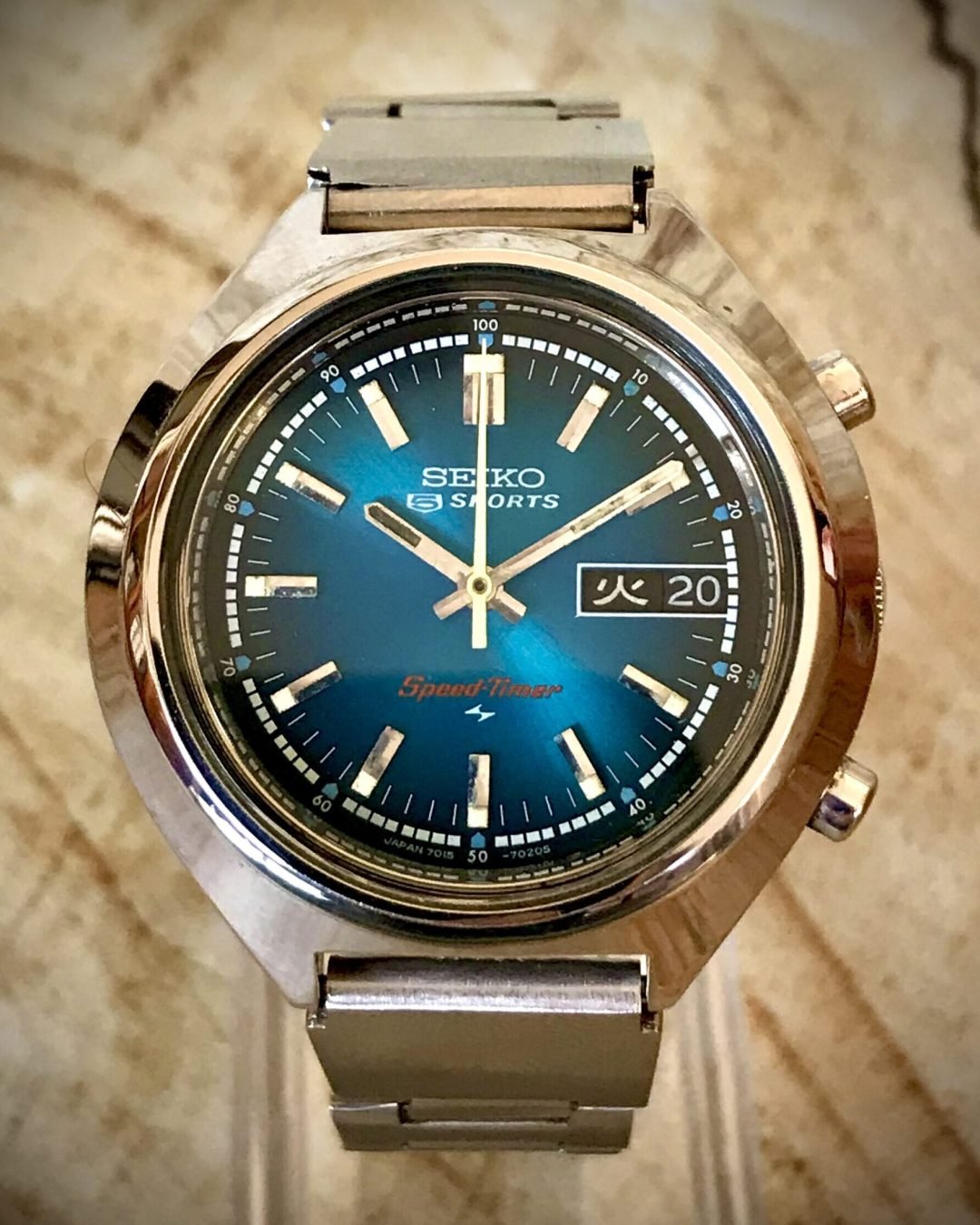
SEIKO CHRONO FLYBACK SPEED TIMER 7015-7000
INFORMACIÓN
| Marca | Seiko |
|---|---|
| Modelo | Crono Flyback Speed Timer 7015-7000 |
| Género | Man |
| Década | 1970s |
| Año de fabricación | 1973 |
| Nº de serie | Serial Number: 361505 |
| Código de caja | 7000 |
| Movimiento | Automatic |
| Calibre | 7015 A (21 jewels) |
| Cristal | Hardlex |
| Esfera | Blue Fumé with Japanese and English calendar at 3 o'clock |
| Bisel | Steel |
| Corona | Seiko Corona |
| Material de la caja | Stainless steel |
| Diámetro sin corona | 39 mm |
| Diámetro con corona | 39 mm |
| Longitud entre asas | 41 mm |
| Grosor | 12 mm |
| Anchura de la correa | 17 mm |
| Material de la correa | Stainless steel |
| Color de la correa | Steel |
| Cierre/hebilla | Stainless steel, signed Seiko 5 Sports. |
| Estado del reloj | Excellent, like new! |
| Caja/Estuche | Yes, generic. |
| Documentación | Free Certificate of Authenticity available on request |
Garantía tEMPPUS
Para su total tranquilidad, protegemos todos nuestros RELOJES CON 1 AÑO DE GARANTÍA.