
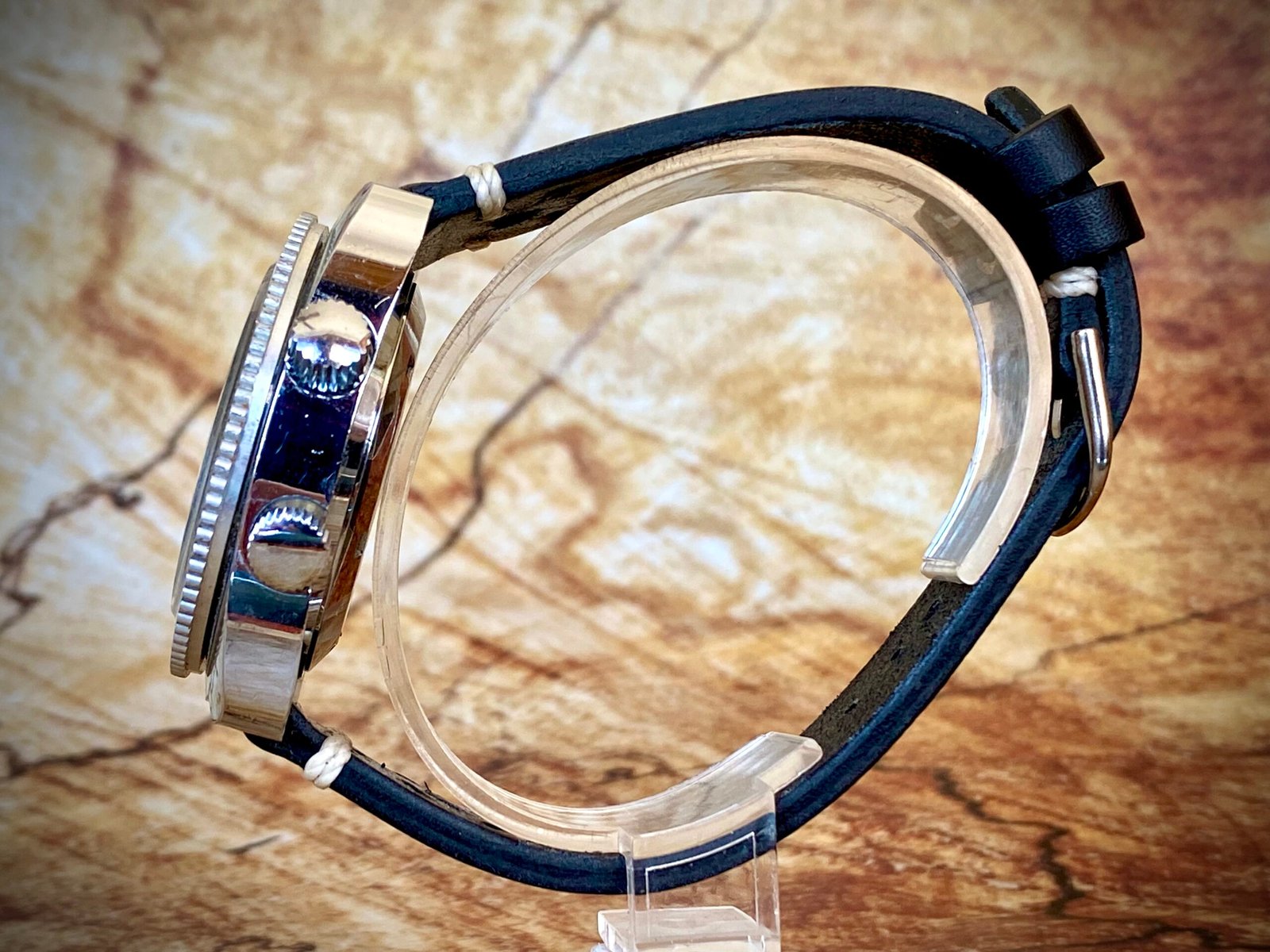
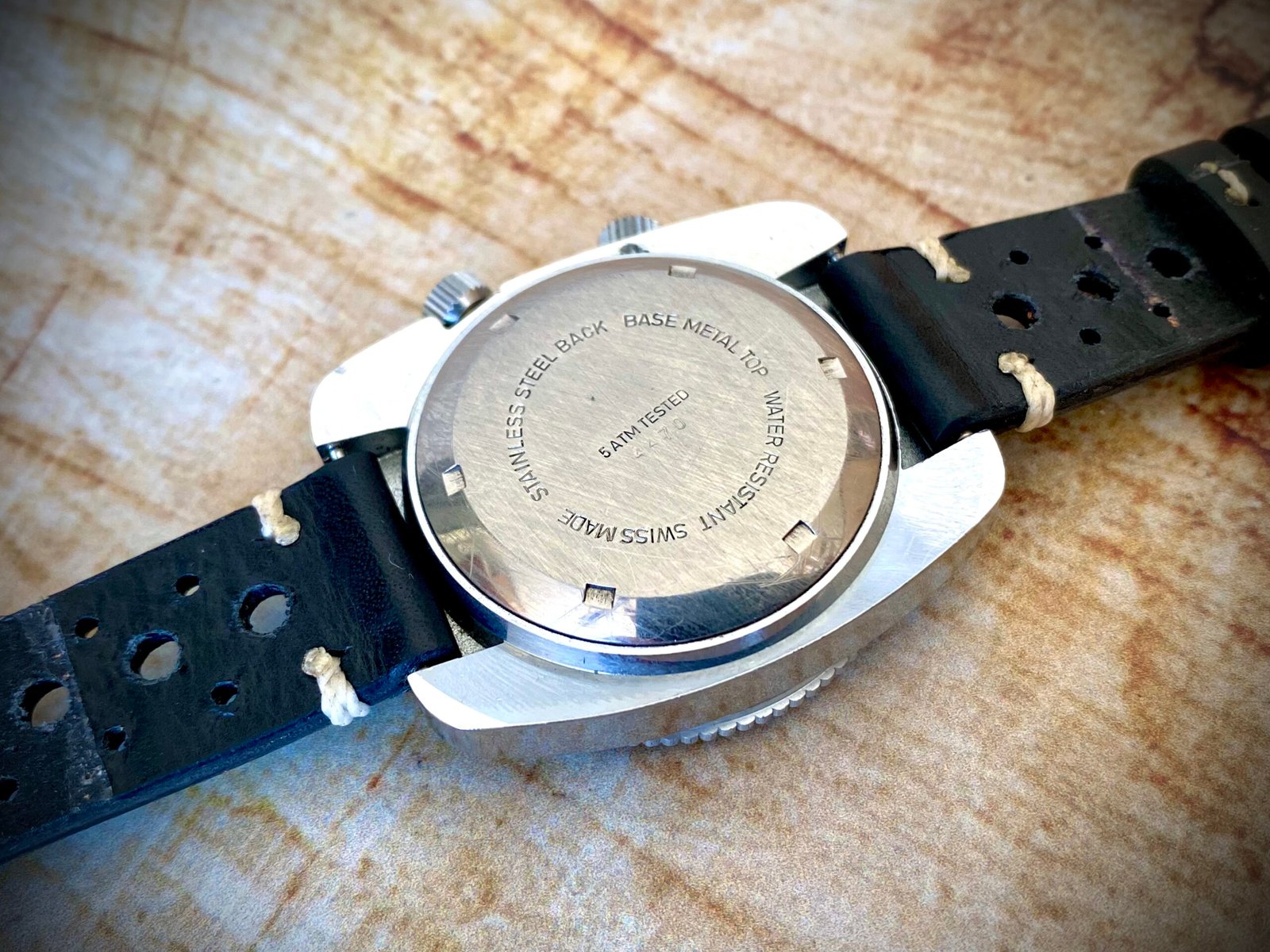
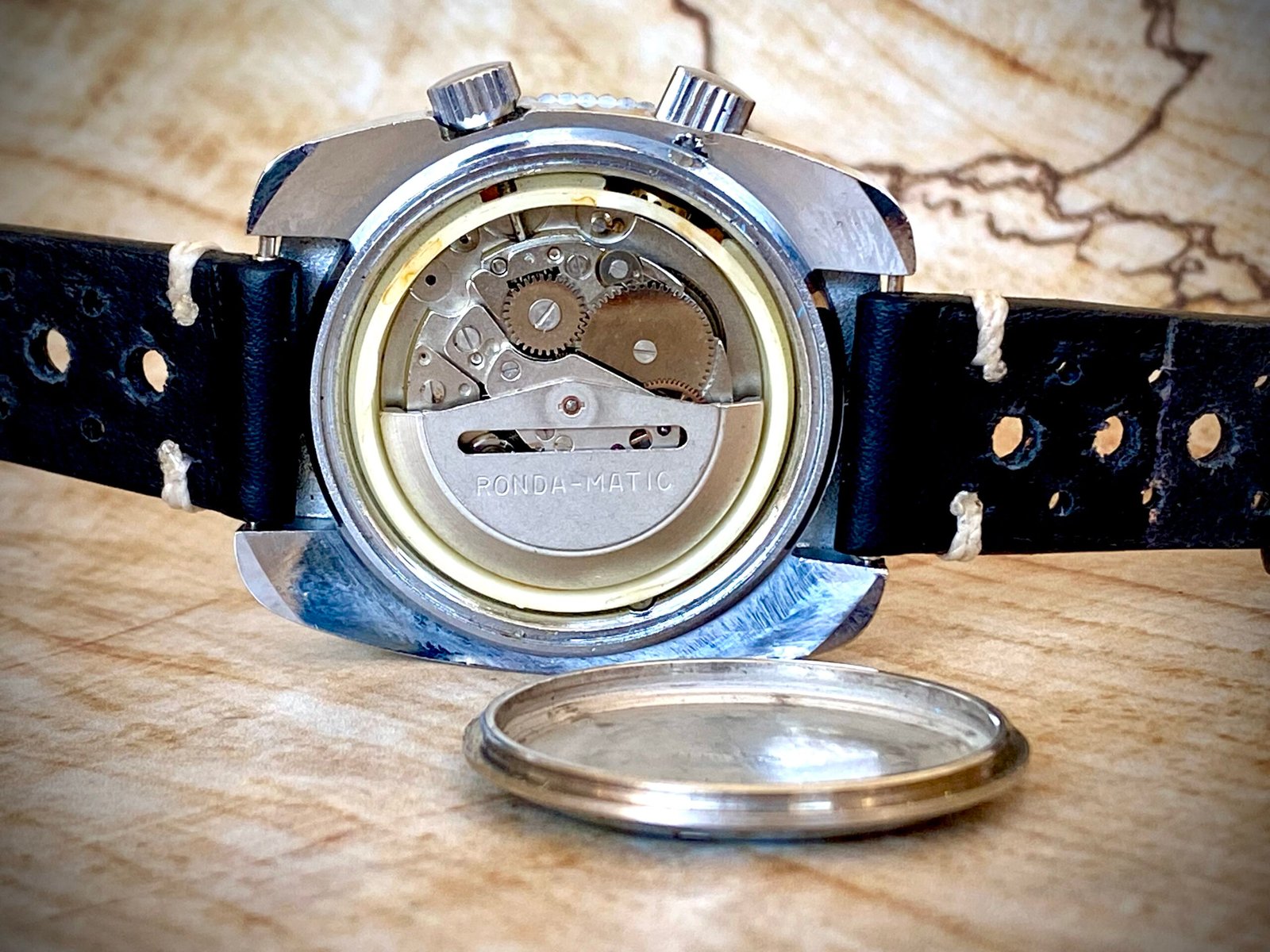
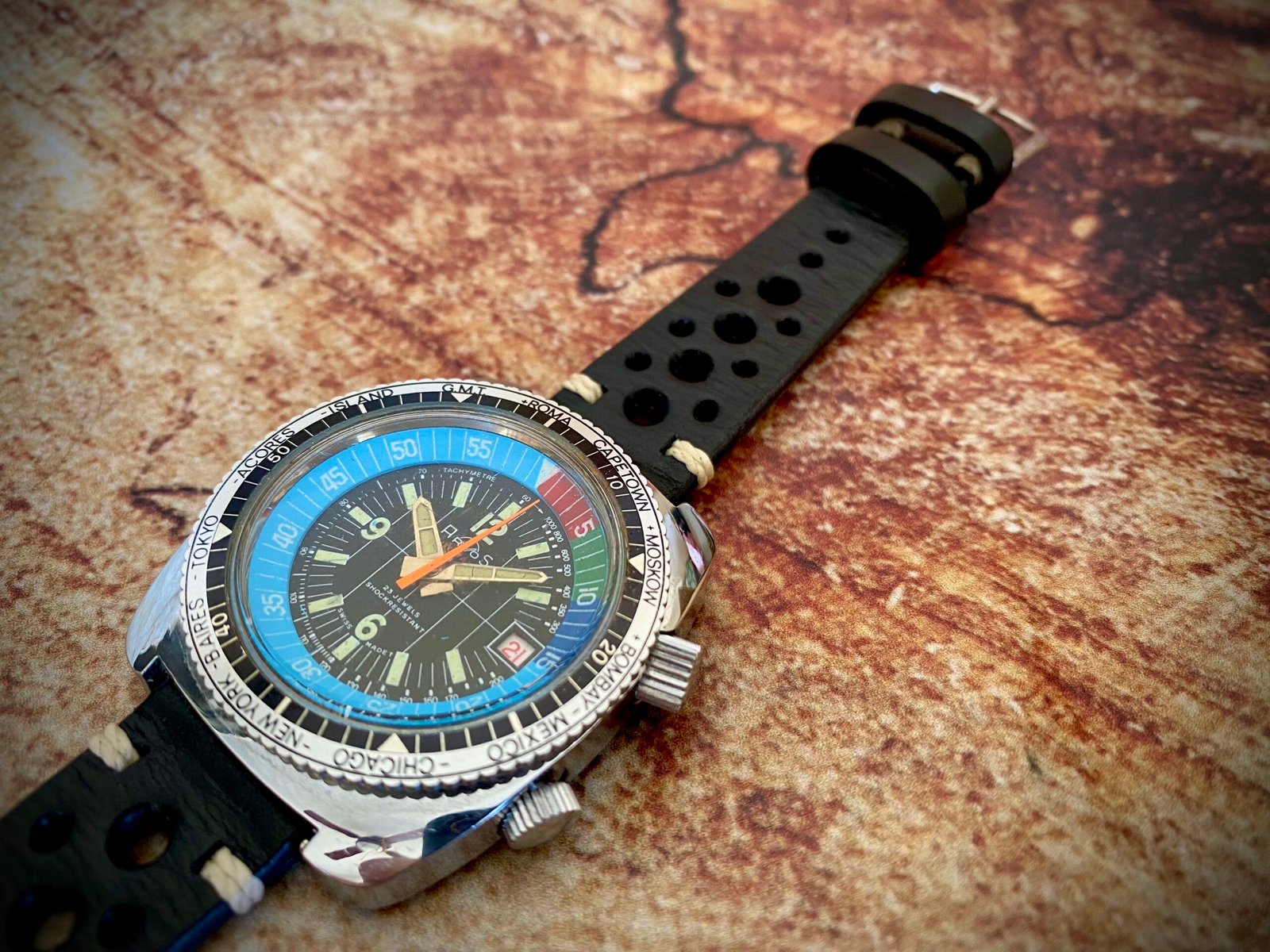
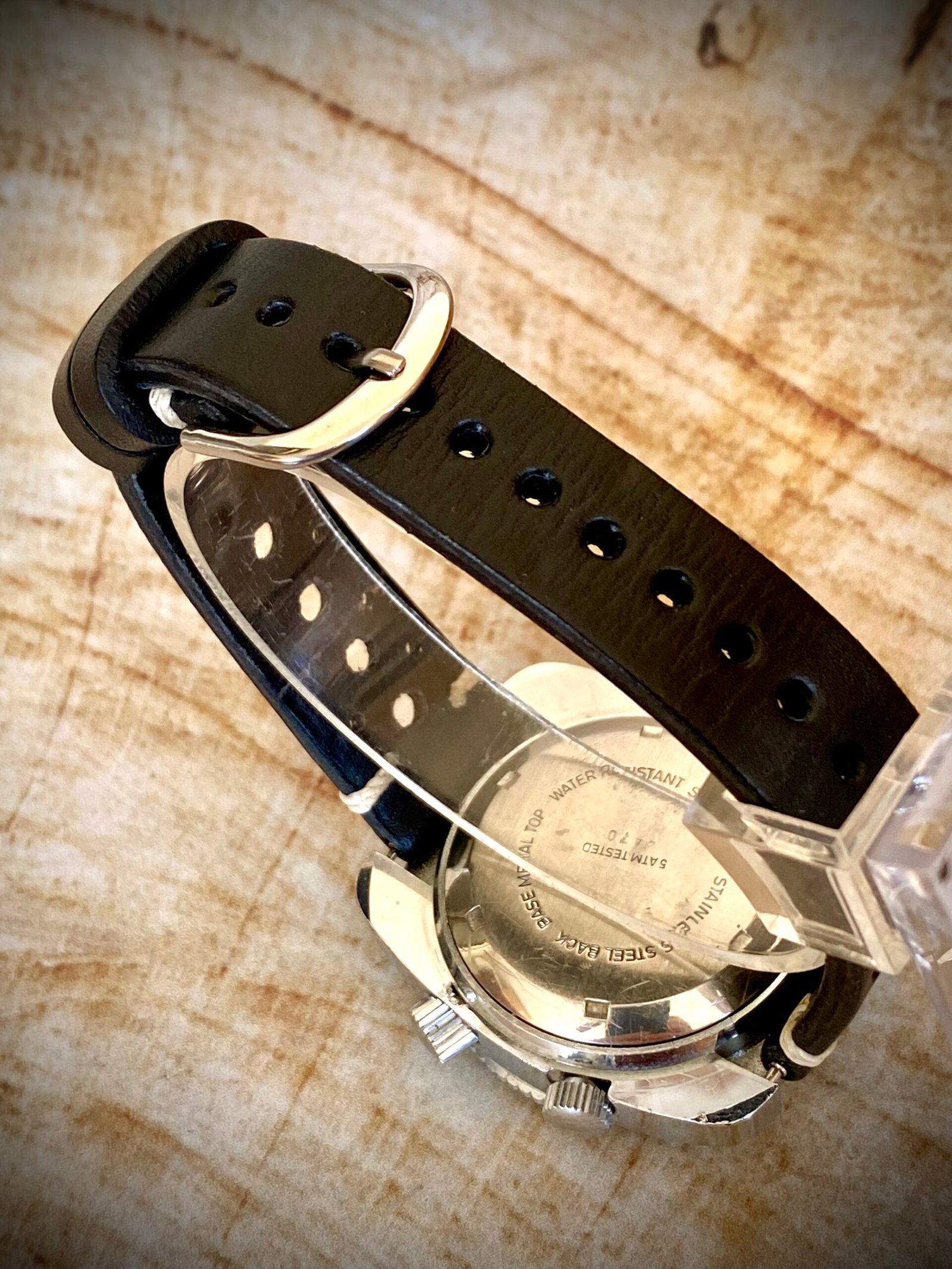
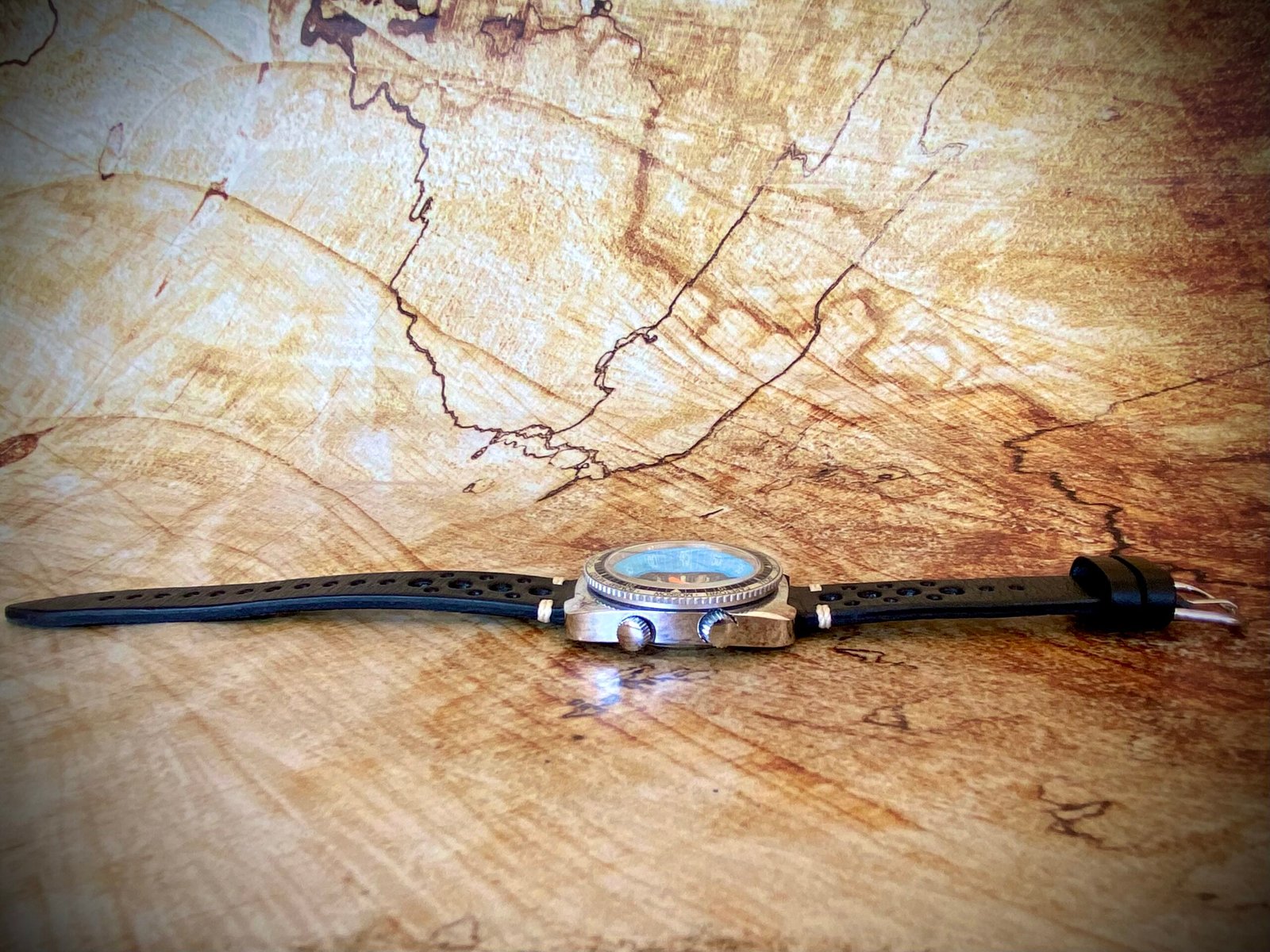
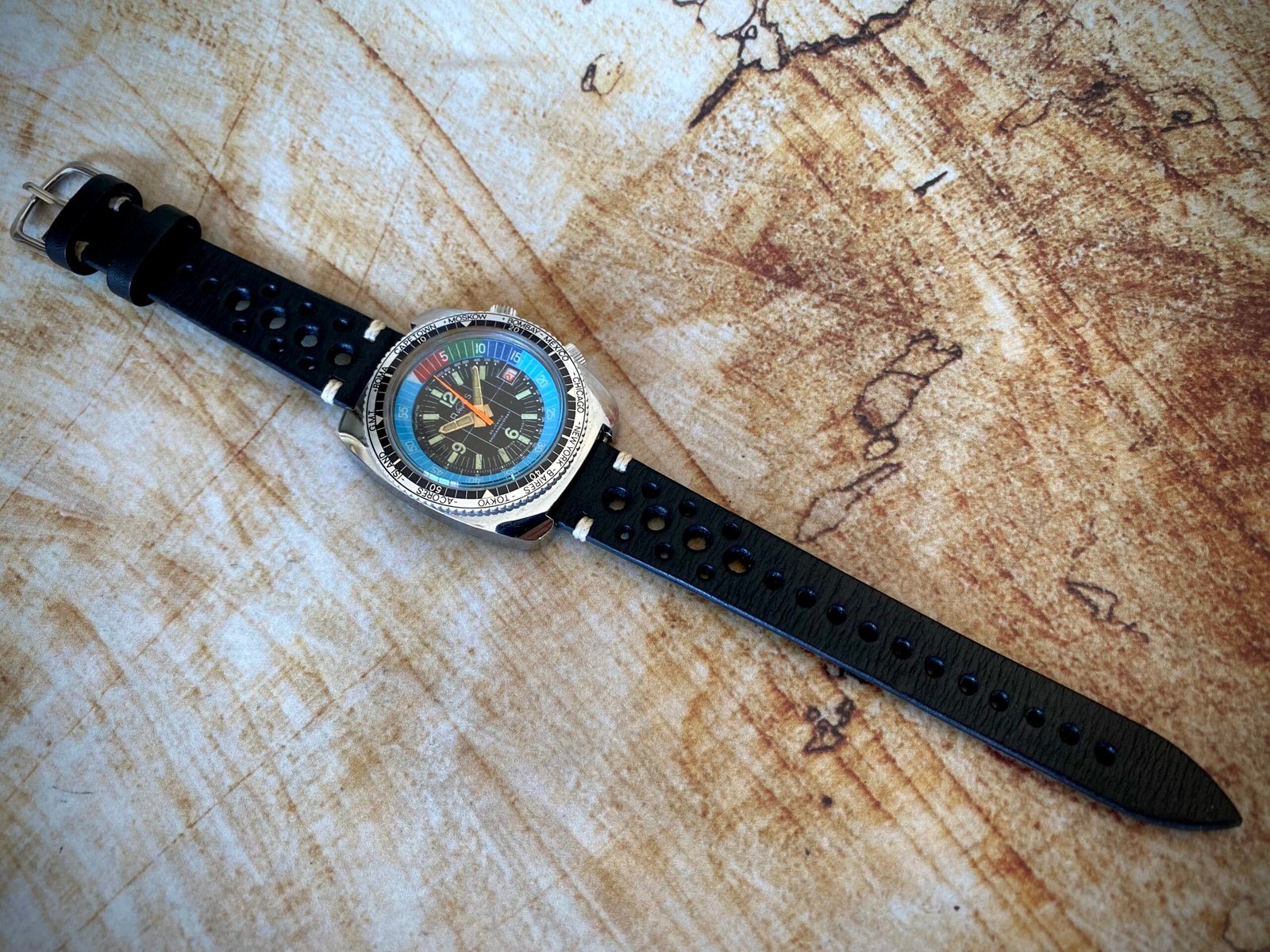
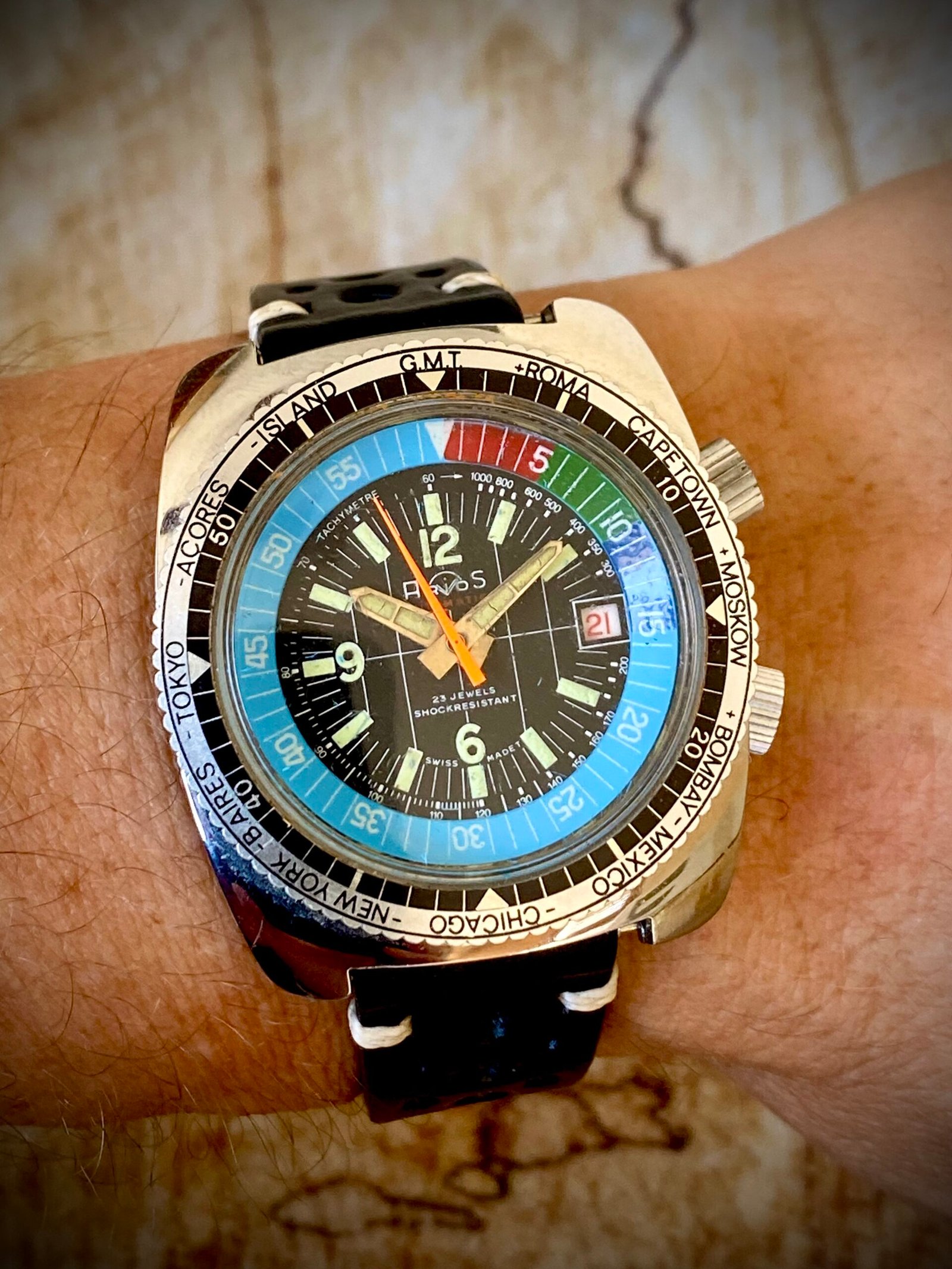
- Pieza única
- Envío Nacional Gratuito
- Entrega en 24/48 horas
- Aceptamos Bizum, Transferencia y Paypal
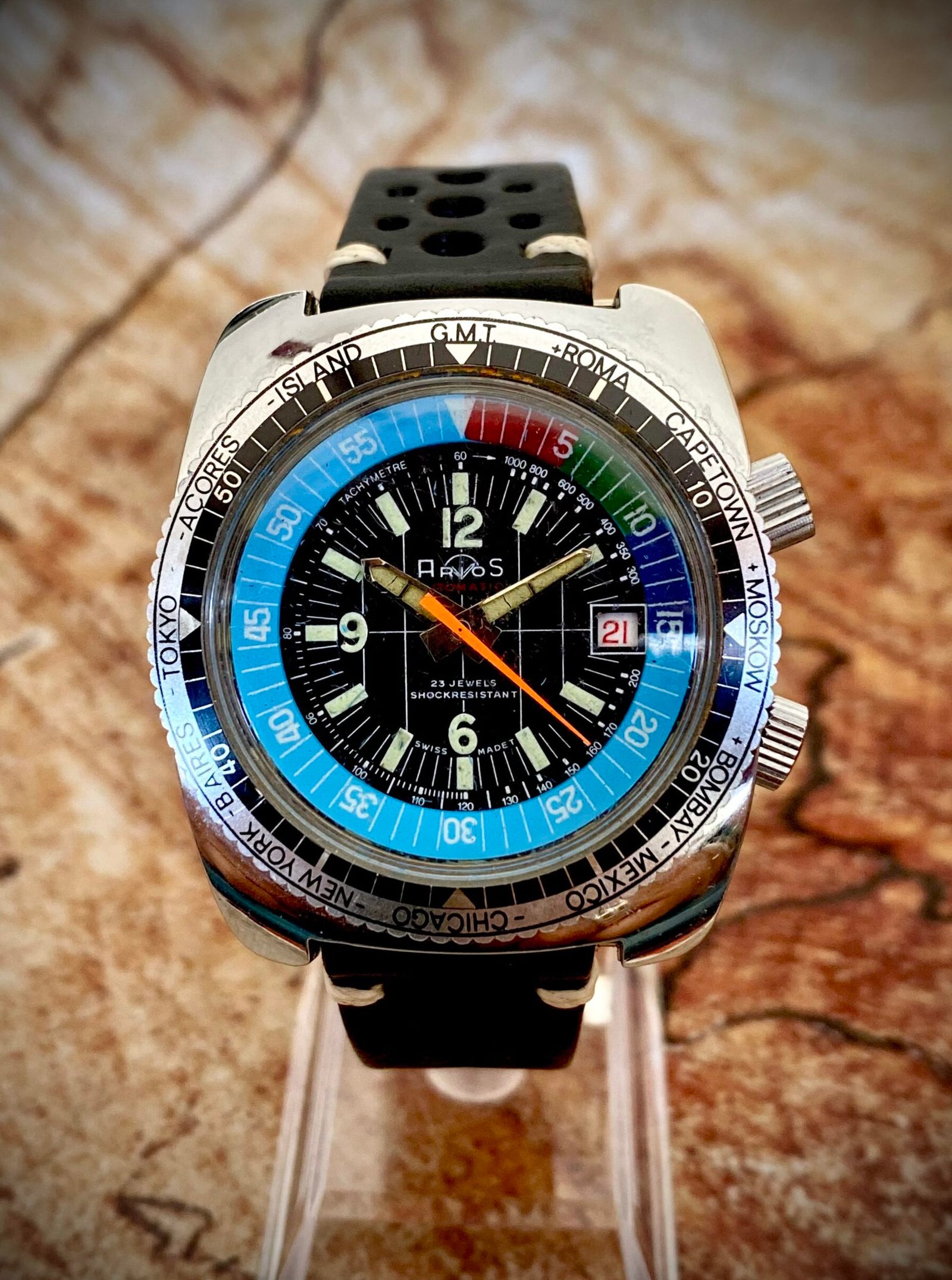
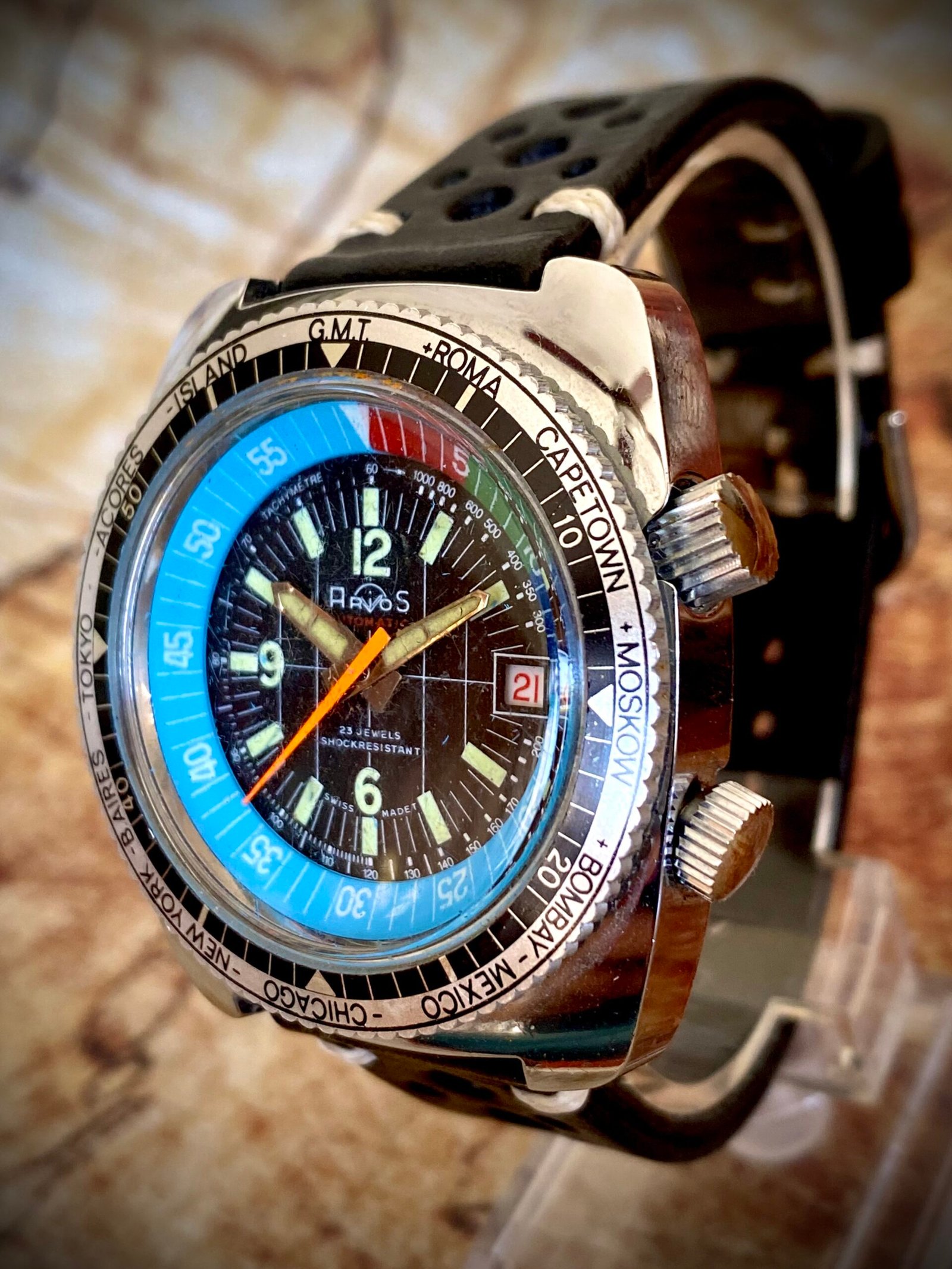
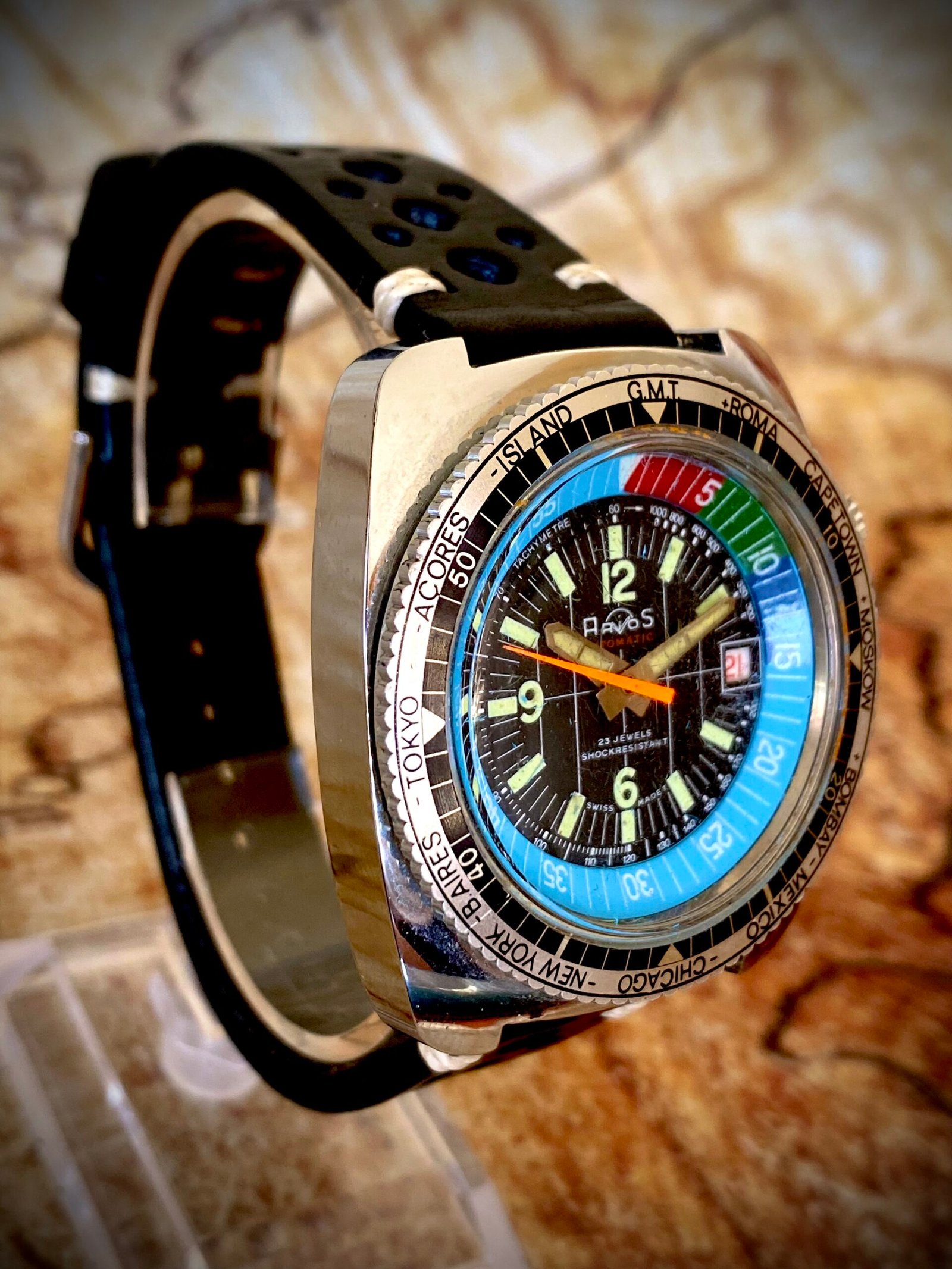
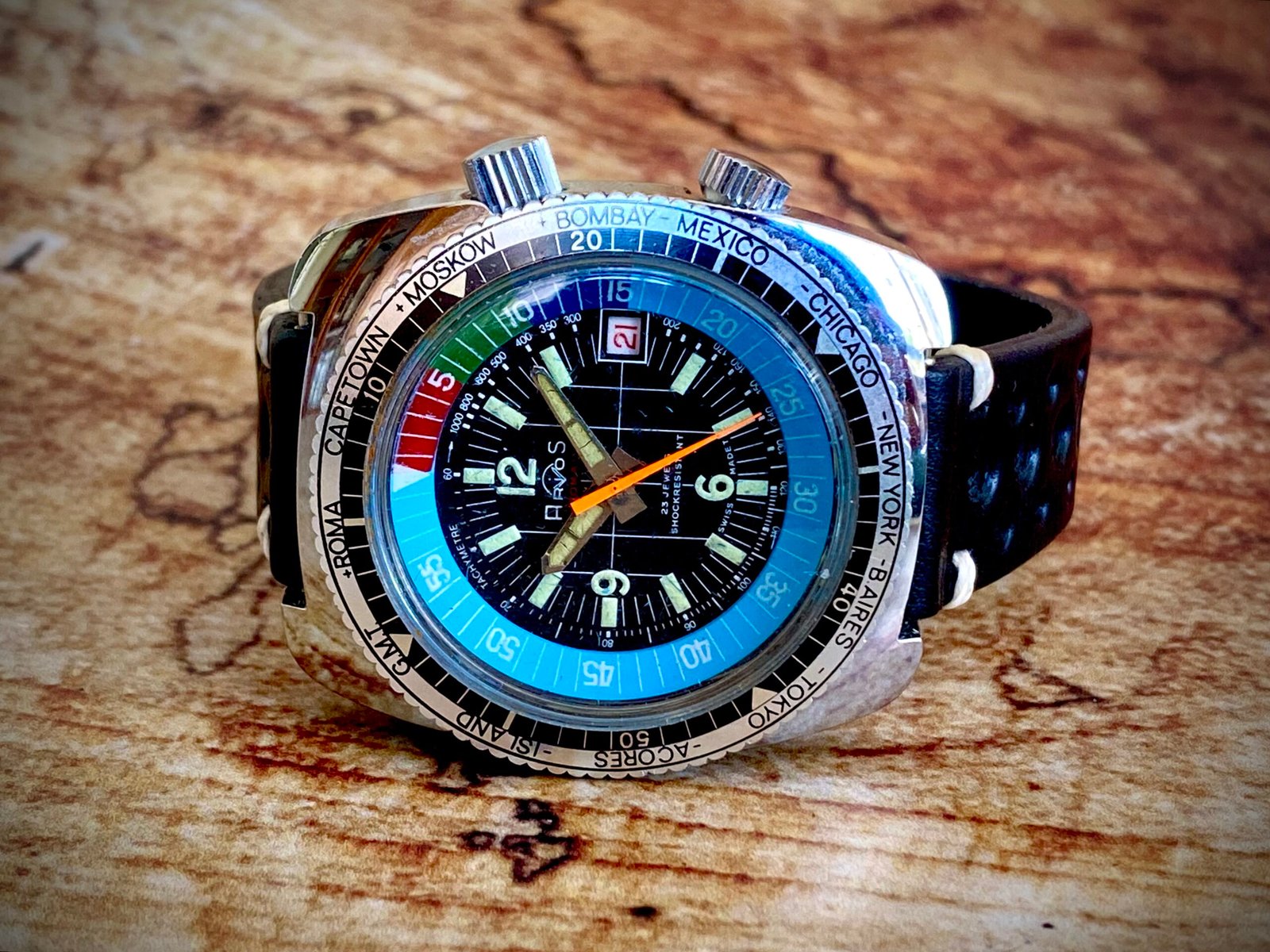
ARIOS GMT MANUAL WINDING, VINTAGE 1970s
| Marca | Arios |
|---|---|
| Modelo | GMT Mundial |
| Género | Man |
| País de origen | Switzerland |
| Década | 1970s |
| Movimiento | Manual winding |
| Cristal | Original Plexiglass, flawless |
| Esfera | Black with multicolor |
| Bisel | Double rotating inner and outer. |
| Corona | Double crown |
| Material de la caja | Metallic, chrome plated. |
| Diámetro sin corona | 40 mm |
| Diámetro con corona | |
| Longitud entre asas | 44 mm |
| Grosor | 14 mm |
| Anchura de la correa | 18 mm |
| Material de la correa | First quality cowhide leather (Racing retro type), brand new. |
| Color de la correa | Black |
| Cierre/hebilla | Stainless Steel, Clasp Type. |
| Estado del reloj | Very good, with slight signs of aging. |
| Caja/Estuche | Yes, generic. |
| Documentación | Free Certificate of Authenticity available on request |
Arios: Swiss Ingenuity in Niche Watchmaking
Foundation and Collaborative Model
The brand Arios emerged in 1952 as part of the Fabrique d’Horlogerie Muros, founded by Erwin Triebold in Mumpf, Switzerland. Initially, it operated within a “micro-brand” system alongside others like Chronorex or Radax, sharing movements from Swiss suppliers like FHF (Fabrique d’Horlogerie de Fontainemelon). Its philosophy focused on offering affordable watches without compromising Swiss technical standards, using standardized components and versatile designs ranging from classic pieces to thematic models for markets like the American one.
Reinvention under the Schulthess Era
In 1970, after financial crises, the factory was acquired by the Schulthess family (linked to the luxury distributor Desco von Schulthess). This milestone radically transformed Arios:
-
The company was rebranded as Arios Uhrenfabrik AG, abandoning other sub-brands to focus exclusively on Arios.
-
They adopted a bold and technological aesthetic, aligned with the avant-garde trends of the 1970s.
-
The brand was redefined at fairs like the Foire de Bâle, where innovations were presented such as mechanical digital-analog watches (1973) and unisex models with textured surfaces (1974).
Iconic Models and Technical Advances
Arios stood out for pieces that merged complex functionality and disruptive design:
-
Tauchkalkulator (1977): Diver’s watch with 5 interchangeable bezels for underwater calculations, water resistance of 50 meters, and a case of 44 mm. It included tachymetric scales, world time, and day/date indicators, using manual or automatic movements from Ronda.
-
Jump Hour: Rectangular designs with jumping hour discs and minute hand, equipped with calibers like the RL 1217-21.
-
Hybrid Chronographs: Combined mechanical numerical displays with traditional hands, anticipating contemporary trends.
Decline and Legacy
Production ceased between 1990 and 1993, impacted by Swiss industrial concentration. However, in 2005, the domain arios.ch was registered, suggesting an attempt at a relaunch that maintained the historical logo but with limited impact.
Historical Significance
More than a brand, Arios embodied the adaptability of Swiss niche watchmaking:
-
Collaborative Phase (1952-1970): Showed how independent workshops could compete using shared resources.
-
Technological Era (1970-1990): Innovated with complex functions at contained prices, like the Tauchkalkulator, a horological “Swiss Army knife”.
-
Vintage Cult: Its pieces, especially those from the 70s, are now treasures due to their rarity and ingenious solutions, such as dials with “tropical” degradation or well-preserved mechanisms.
Its history reflects an essential chapter of the Swiss industry: the struggle to maintain identity in a globalized market.
TEMPPUS. All rights reserved.
Información adicional
Reloj completamente revisado. Garantizado para su uso diario.
- Pieza única
- Envío Nacional Gratuito
- Entrega en 24/48 horas
- Aceptamos Bizum, Transferencia y Paypal
Relojes relacionados
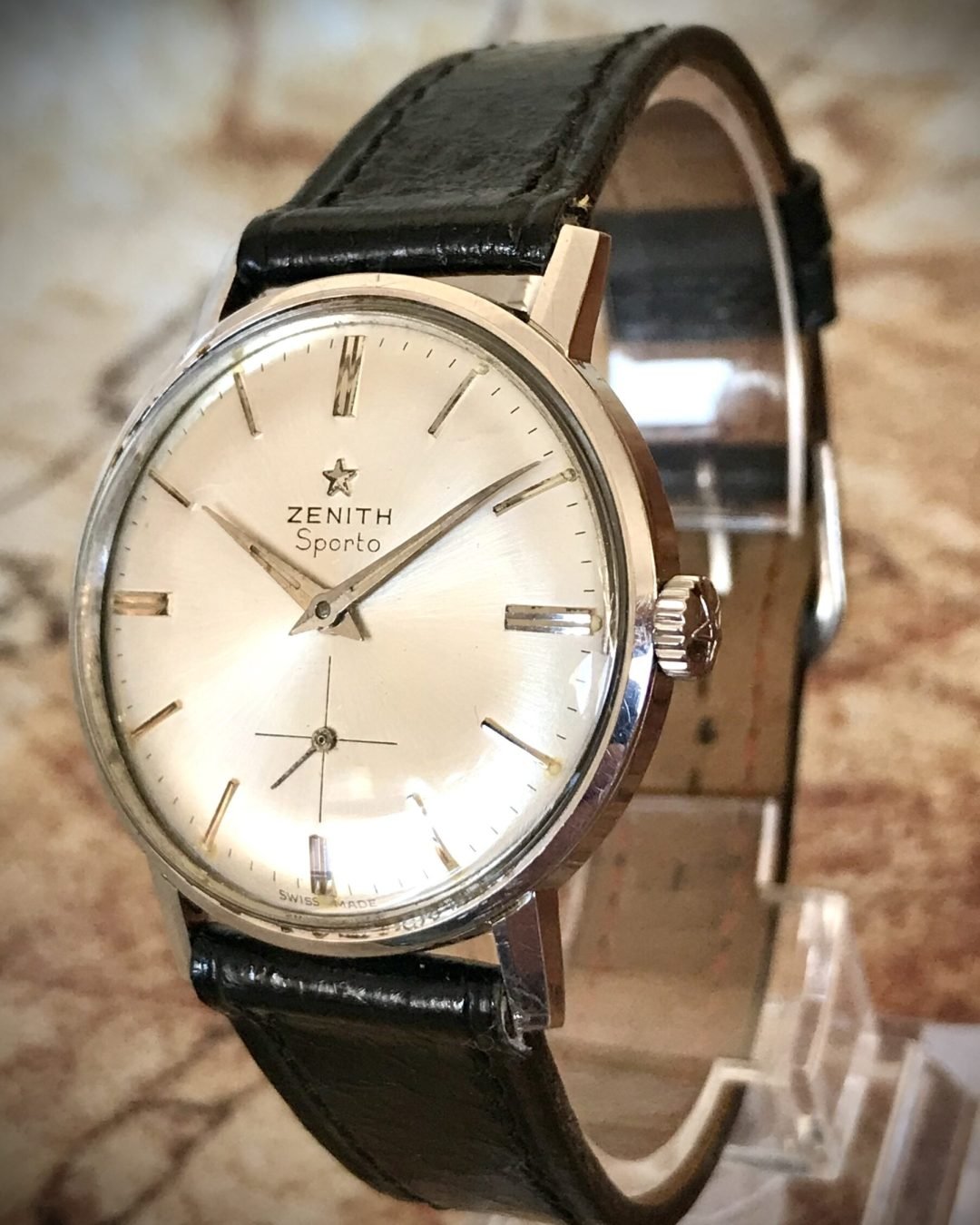
ZENITH SPORTO YEAR 1956, MANUAL WIND
INFORMACIÓN
| Modelo | Sporto |
|---|---|
| Género | Man |
| País de origen | Switzerland |
| Década | 1950s |
| Año de fabricación | 1956 |
| Nº de serie | 5257474 |
| Movimiento | Manual winding |
| Calibre | Zenith 251 |
| Cristal | Plexiglass, impeccable |
| Esfera | Mother-of-pearl |
| Corona | Steel, signed ZENITH |
| Material de la caja | Stainless steel |
| Diámetro sin corona | 33,2 mm |
| Diámetro con corona | 35 mm |
| Longitud entre asas | 39 mm |
| Grosor | 9 mm |
| Anchura de la correa | 18 mm |
| Material de la correa | Genuine leather |
| Color de la correa | Black |
| Cierre/hebilla | Stainless Steel, Clasp Type. |
| Estado del reloj | Very good, with slight signs of aging. |
| Caja/Estuche | Yes, generic. |
| Documentación | Free Certificate of Authenticity available on request |
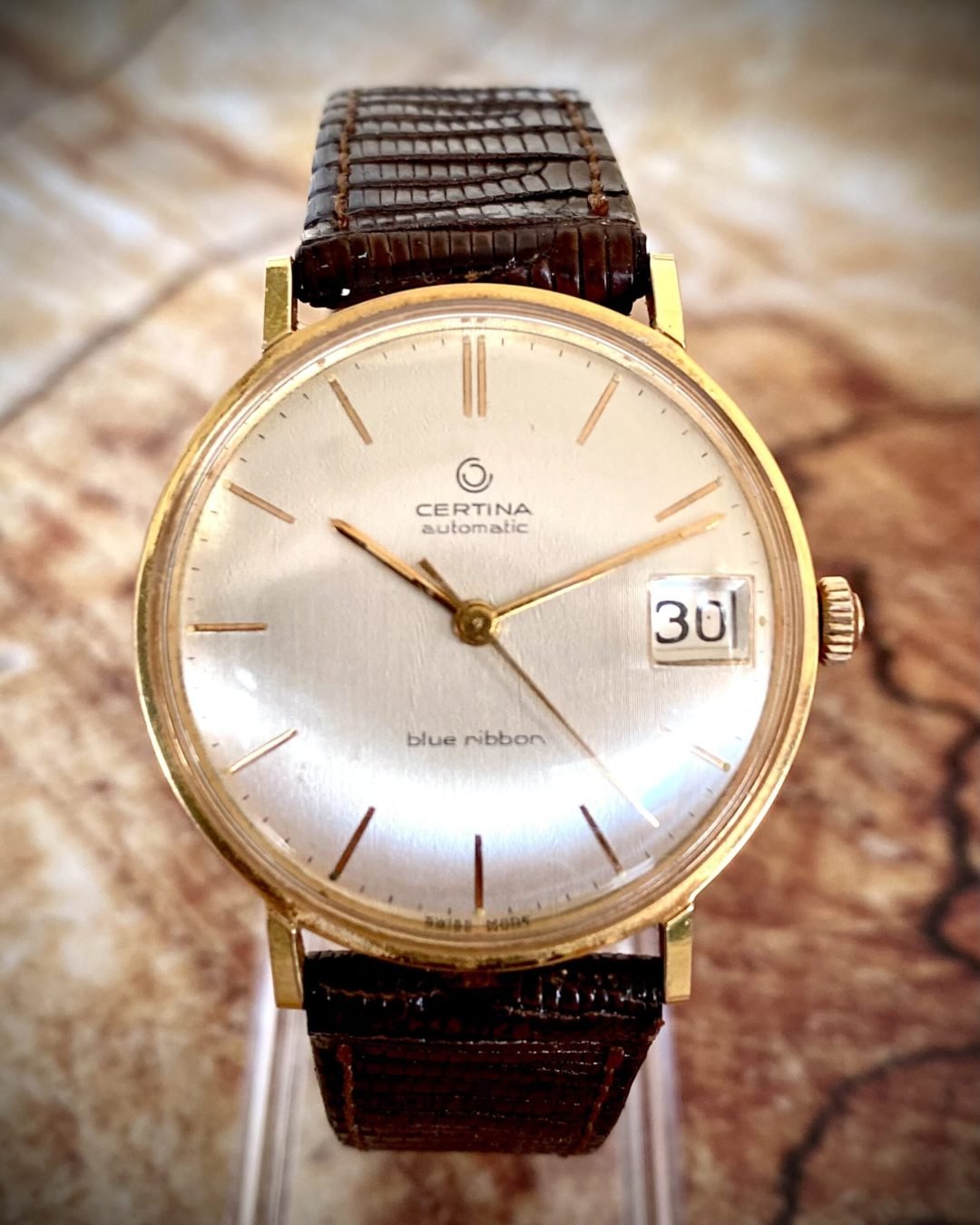
CERTINA BLUE RIBBON N.O.S. (New Old Stock), MANUAL
INFORMACIÓN
| Marca | Certina |
|---|---|
| Modelo | Blue Ribbon |
| Género | Man |
| País de origen | Switzerland |
| Década | 1950s |
| Nº de serie | 5096059 |
| Código de caja | 5804102 |
| Movimiento | Automatic |
| Calibre | Certina 25-651 |
| Cristal | Origin plexiglass |
| Esfera | Silver, linen fabric, impeccable |
| Corona | Original signed CERTINA attribute |
| Material de la caja | Gold-plated steel, 20 microns. |
| Diámetro sin corona | 34 mm |
| Diámetro con corona | 36 mm |
| Longitud entre asas | 37.7 mm |
| Grosor | 9,5 mm |
| Anchura de la correa | 18 mm |
| Material de la correa | Lizard skin, brand new |
| Color de la correa | Brown |
| Cierre/hebilla | Type squirrel |
| Estado del reloj | N.O.S. (New Old Stock) |
| Caja/Estuche | Yes, generic. |
| Documentación | Free Certificate of Authenticity available on request |
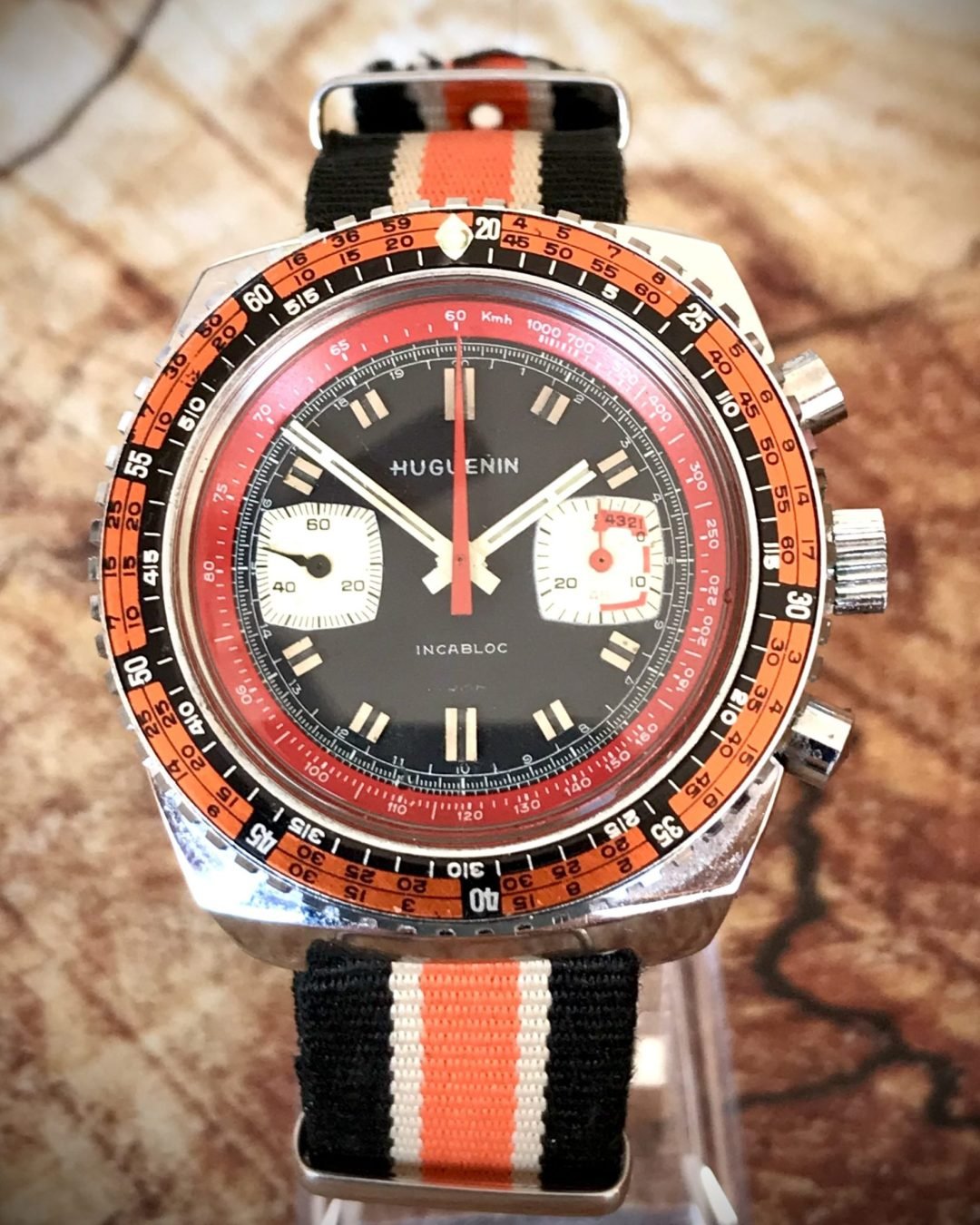
HUGUENIN VINTAGE CHRONOGRAPH, VALJOUX 7733 MOVEMENT
INFORMACIÓN
| Marca | Huguenin |
|---|---|
| Modelo | Chronograph |
| Género | Man |
| Década | 1960s |
| Movimiento | Manual winding |
| Calibre | VALJOUX 7733 |
| Cristal | Original Plexiglass, flawless |
| Esfera | Black, with two subdials |
| Bisel | Double bevel, interior and exterior with tachymeters. |
| Material de la caja | Steel |
| Diámetro sin corona | 40.5 mm |
| Diámetro con corona | 42 mm |
| Longitud entre asas | 44 mm |
| Grosor | 14.5 mm |
| Anchura de la correa | 20 mm |
| Material de la correa | Textil, type Nato |
| Color de la correa | White, black and orange tricolor. |
| Cierre/hebilla | Stainless steel |
| Estado del reloj | Excellent, like new! |
| Caja/Estuche | Yes, generic. |
| Documentación | Free Certificate of Authenticity available on request |
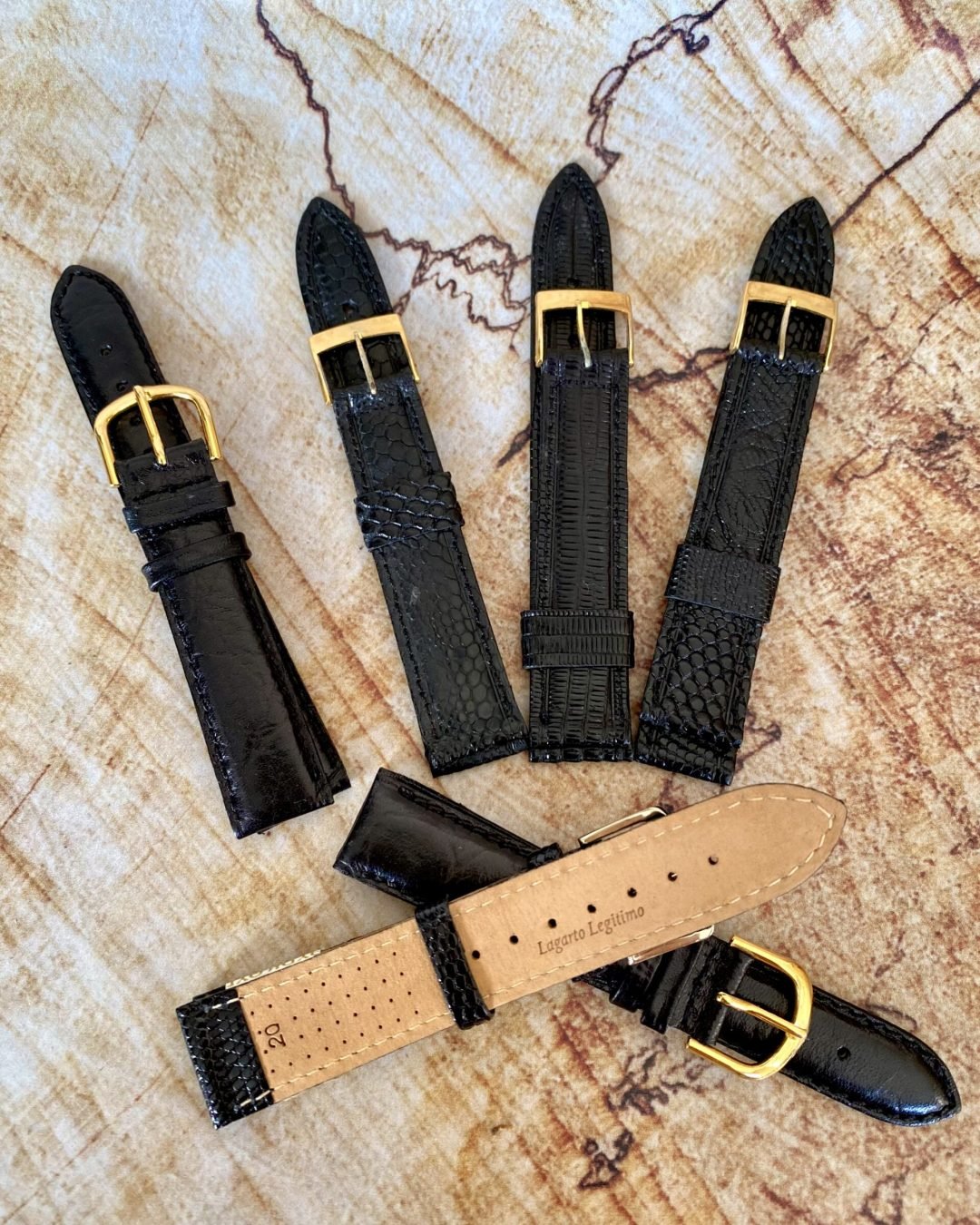
GENUINE LIZARD AND COWHIDE LEATHER STRAP, BLACK, 18 mm
15,00 €
INFORMACIÓN
| Material de la correa | Authentic lizard or cowhide leather (your choice) |
|---|---|
| Anchura de la correa | 18 mm x 7 cm (+ buckle) and 18 mm x 11.5 cm |
| Color de la correa | Black |
| Cierre/hebilla | Squirrel-type, gold-plated steel. |
| Estado | Brand new |
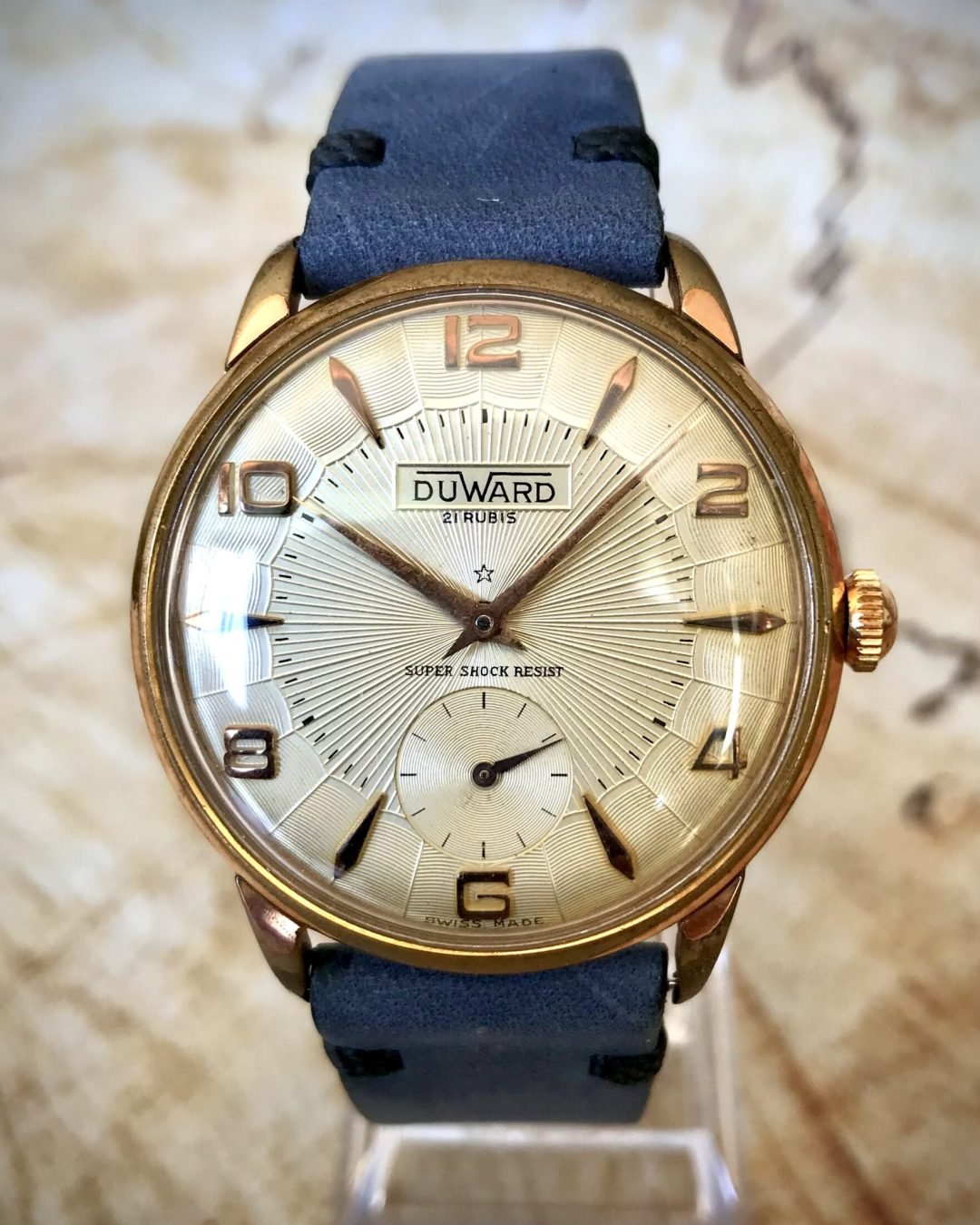
DUWARD 50’S, MANUAL WINDING
INFORMACIÓN
| Marca | Duward |
|---|---|
| Modelo | Classic, 21 rubís |
| Género | Man |
| Década | 1950s |
| Código de caja | 7555 |
| Movimiento | Manual winding |
| Cristal | Original Plexiglass, flawless |
| Esfera | Texturized Gold with Arabic Numerals |
| Material de la caja | Gold-plated |
| Diámetro sin corona | 38 mm |
| Diámetro con corona | |
| Longitud entre asas | 43 mm |
| Grosor | 9 mm |
| Anchura de la correa | 19 mm |
| Material de la correa | Genuine leather vaccine |
| Color de la correa | Blue |
| Cierre/hebilla | Squirrel-type, gold-plated steel. |
| Estado del reloj | Very good, with slight signs of aging. |
| Caja/Estuche | Yes, generic. |
| Documentación | Free Certificate of Authenticity available on request |
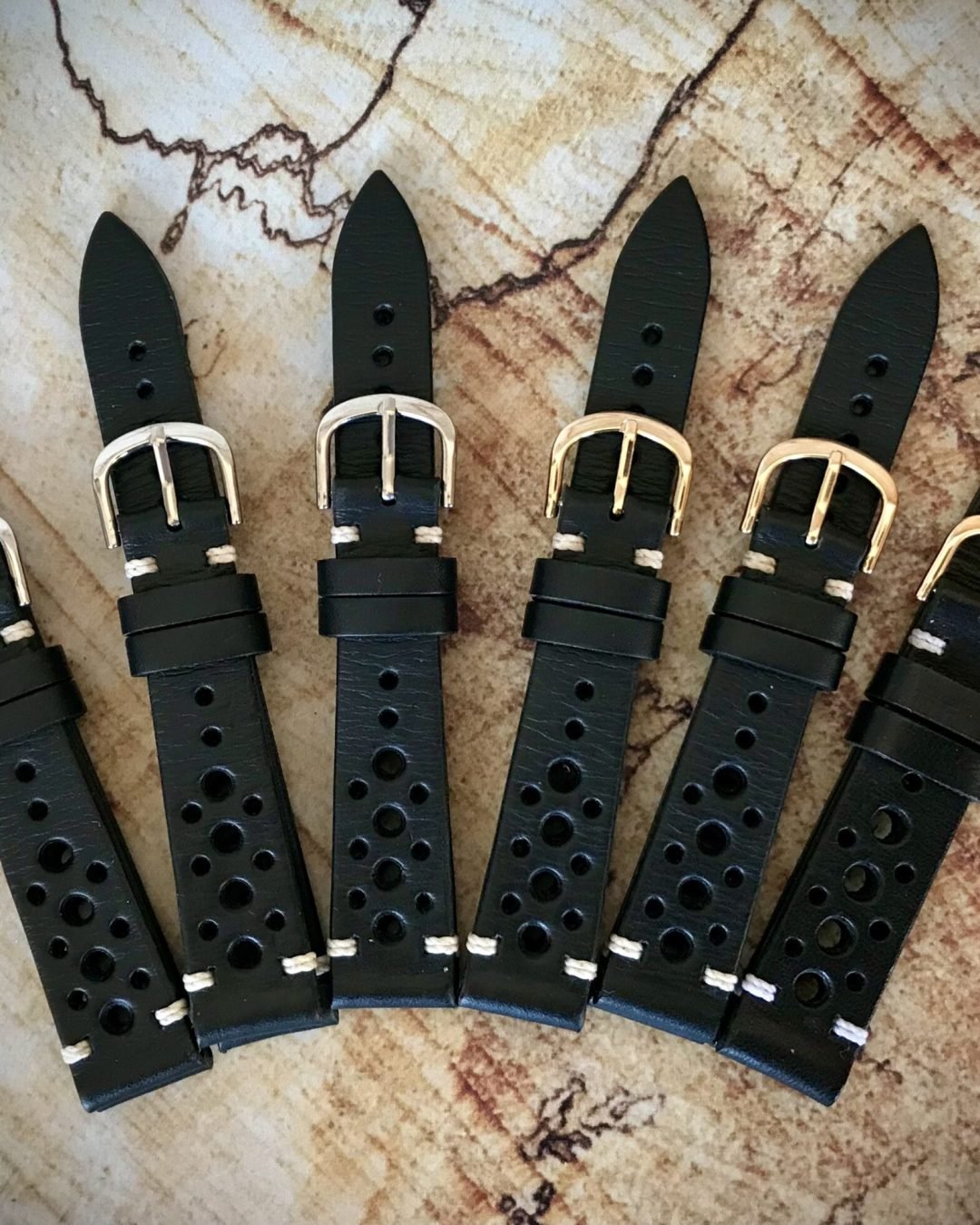
GENUINE VACCINE BLACK LEATHER RACING STRAP, 18 mm
35,00 €
INFORMACIÓN
| Material de la correa | Genuine leather vaccine |
|---|---|
| Anchura de la correa | 18 mm x 7.5 cm (+ buckle) and 18 mm x 12.5 cm. |
| Color de la correa | Black |
| Cierre/hebilla | Ardillon buckle, stainless steel |
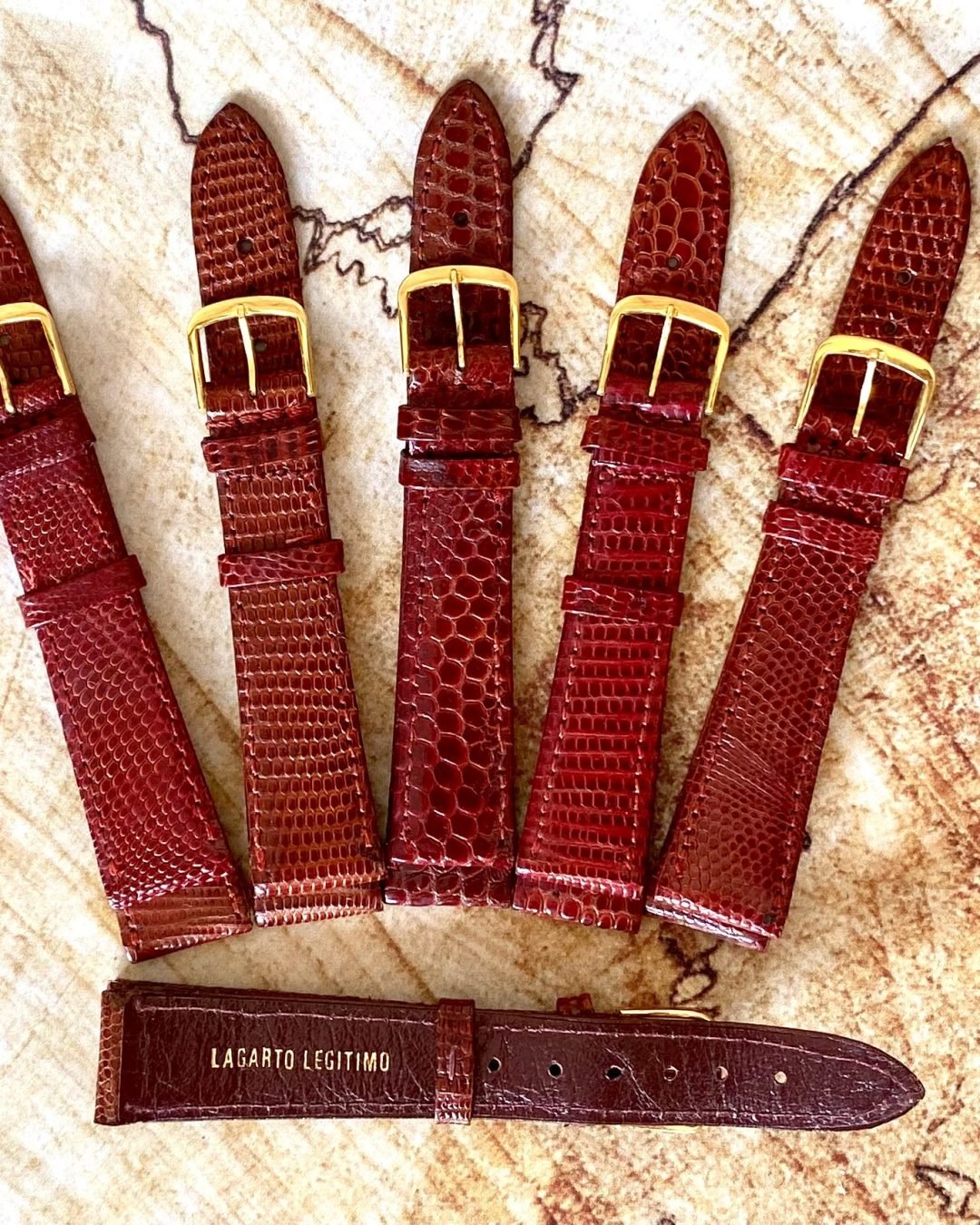
GENUINE LIZARD LEATHER WATCH STRAP, BROWN COLOR, 18 mm
15,00 €
INFORMACIÓN
| Material de la correa | Genuine lizard skin |
|---|---|
| Anchura de la correa | 18 mm x 7 cm (+ buckle) and 18 mm x 11.5 cm |
| Color de la correa | Bordeaux |
| Cierre/hebilla | Squirrel-type, gold-plated steel. |
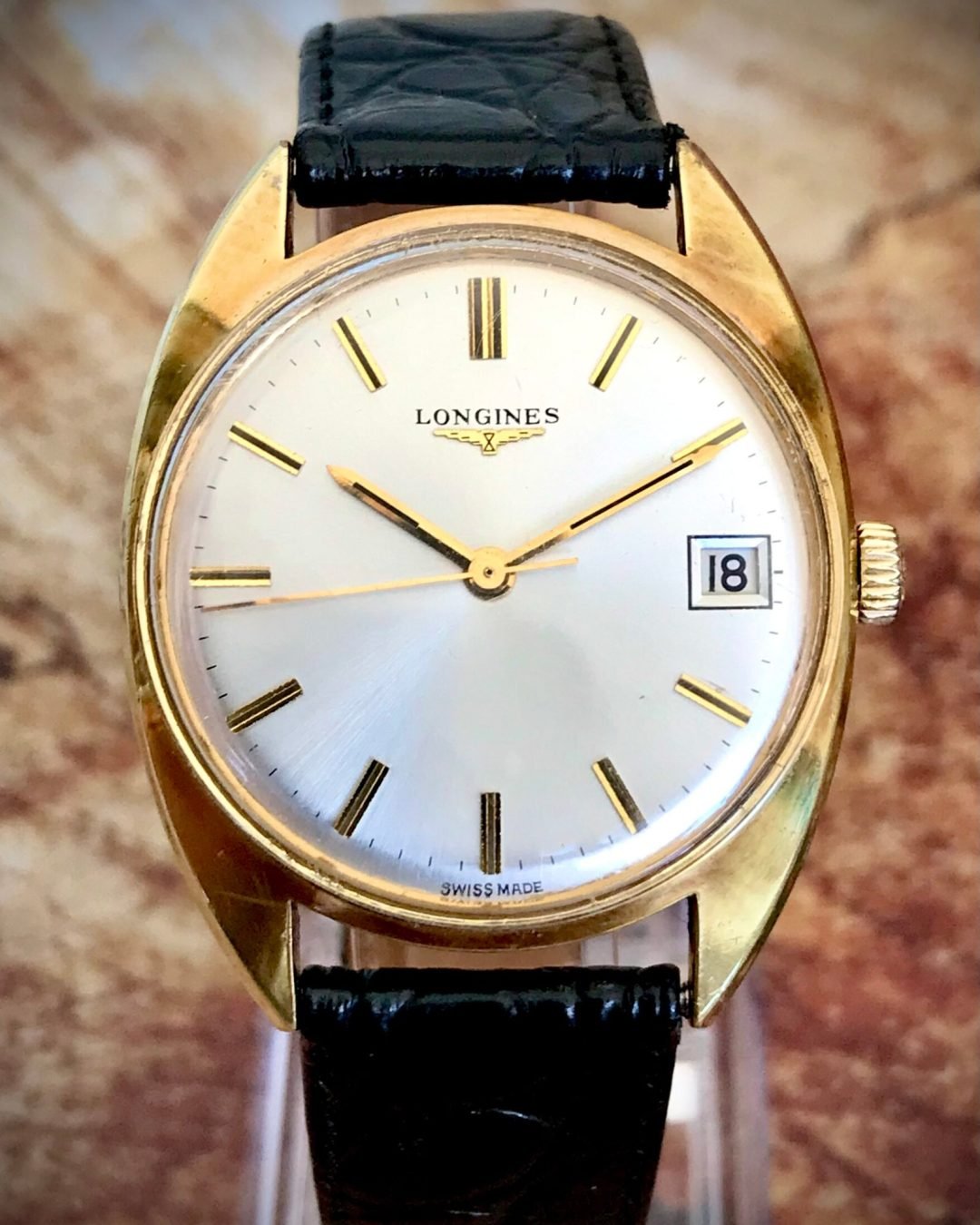
LONGINES 1954, MANUAL WINDING
INFORMACIÓN
| Marca | Longines |
|---|---|
| Modelo | Classic |
| Género | Man |
| Década | 1950s |
| Año de fabricación | 1954 |
| Código de caja | 8307-5 |
| Calibre | Longines 285 |
| Cristal | Plexiglass |
| Esfera | Mother-of-pearl |
| Material de la caja | Gold-plated with 20 microns |
| Diámetro sin corona | 35.1 mm |
| Diámetro con corona | 36.2 mm |
| Longitud entre asas | 46 mm |
| Grosor | 9 mm |
| Material de la correa | Cowhide |
| Anchura de la correa | 17 mm |
| Color de la correa | Black |
| Cierre/hebilla | Steel |
| Estado del reloj | Very good, with slight signs of aging. |
| Caja/Estuche | Yes, generic. |
| Documentación | Free Certificate of Authenticity available on request |
Garantía tEMPPUS
Para su total tranquilidad, protegemos todos nuestros RELOJES CON 1 AÑO DE GARANTÍA.