


- Pieza única
- Envío Nacional Gratuito
- Entrega en 24/48 horas
- Aceptamos Bizum, Transferencia y Paypal
OMEGA YEAR 1961, MANUAL WIND
| Marca | Omega |
|---|---|
| Modelo | Classic |
| Género | Man |
| País de origen | Switzerland |
| Década | 1960s |
| Año de fabricación | 1961 |
| Nº de serie | 1843475 |
| Código de caja | 14391-61 |
| Movimiento | Manual rope |
| Calibre | Omega 268 |
| Cristal | Plexiglass |
| Esfera | Cream dial with golden indexes |
| Corona | Steel, at 3. |
| Material de la caja | Stainless steel |
| Diámetro sin corona | 34 mm |
| Diámetro con corona | 35.7 mm |
| Longitud entre asas | 40 mm |
| Grosor | 11 mm |
| Anchura de la correa | 18 mm |
| Material de la correa | Genuine leather, Racing type brand new |
| Color de la correa | Brown |
| Cierre/hebilla | Stainless Steel, Clasp Type. |
| Estado del reloj | Very good, with slight signs of aging. |
| Caja/Estuche | Yes, your original. |
| Documentación | Free Certificate of Authenticity available on request |
Omega watches were born in 1848 in La Chaux-de-Fonds, Switzerland, when young watchmaker Louis Brandt opened a small workshop. Initially, Brandt assembled pocket watches with parts from local suppliers and sold his products mainly in European countries. After his death, his sons, Louis-Paul and César Brandt, expanded the business and introduced important innovations in watchmaking.
Birth of the Omega brand
In 1894, the Brandt brothers created a production system with interchangeable parts, which was a major innovation at that time. They developed the movement called Omega caliber, which became so popular and representative that in 1903, they renamed the company Omega Watch Co.. Since then, the Omega brand has become synonymous with precision and high quality.
Achievements and international fame
Omega quickly gained worldwide fame:
- In 1932, it was the first brand chosen as the official timekeeper of the Olympic Games, a role it has maintained in numerous editions of the games.
- In 1969, the Omega Speedmaster became the first watch on the Moon, worn by the Apollo 11 astronauts, giving it a unique prestige and a place in the history of space exploration.
Innovation and luxury watchmaking
Over the years, Omega has continued to innovate, developing technologies such as the Co-Axial movement in 1999, which improved precision and reduced maintenance. Its iconic collections, such as the Speedmaster, Seamaster, and Constellation, have solidified its reputation in high watchmaking and luxury.
Today, Omega is one of the most recognized and respected watch brands worldwide, famous for its precision, quality, and historical legacy.
TEMPPUS. All rights reserved.
Información adicional
Reloj completamente revisado. Garantizado para su uso diario.
- Pieza única
- Envío Nacional Gratuito
- Entrega en 24/48 horas
- Aceptamos Bizum, Transferencia y Paypal
Relojes relacionados
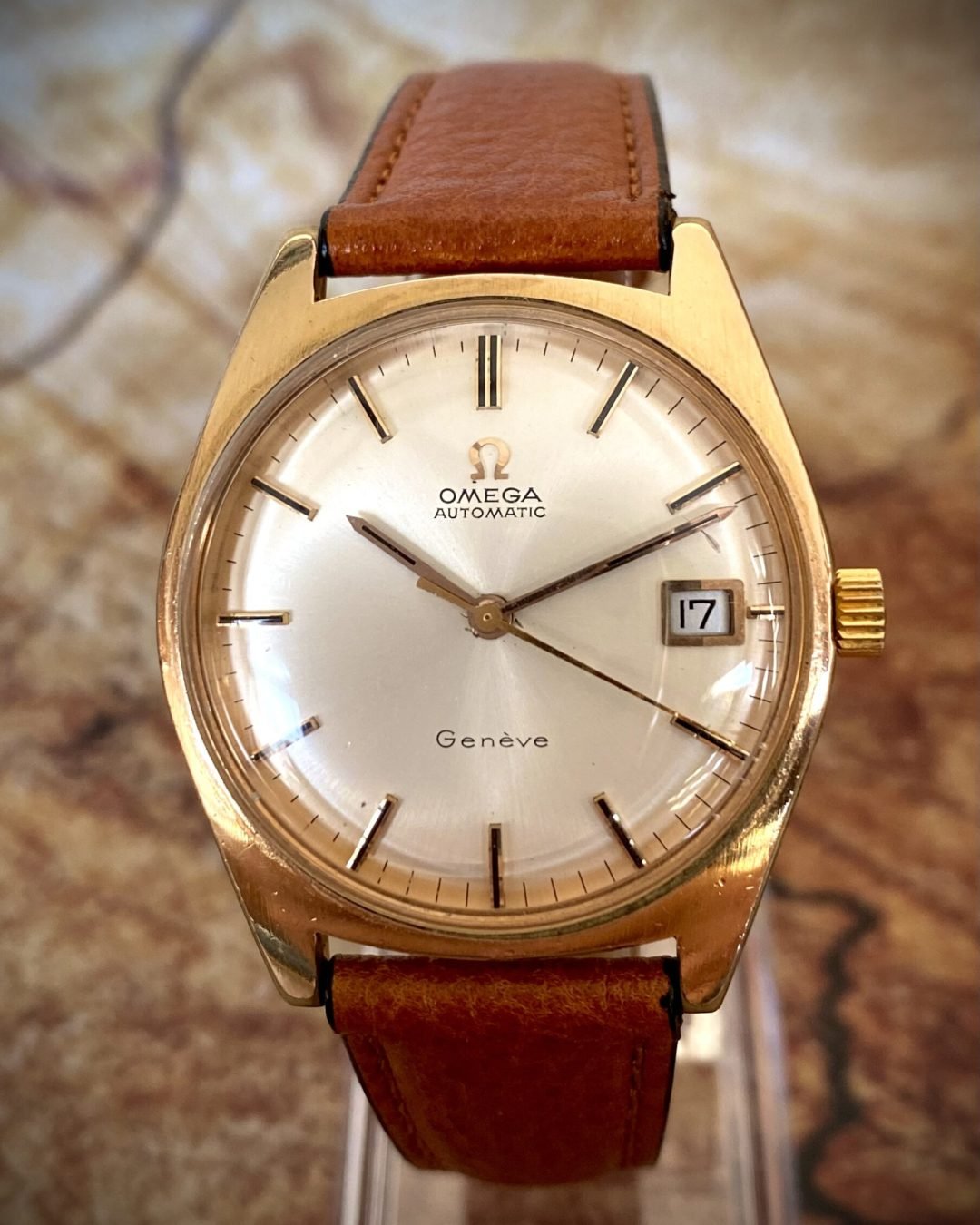
OMEGA GENEVE AUTOMATIC, VINTAGE YEAR 1969
INFORMACIÓN
| Marca | Omega |
|---|---|
| Modelo | Geneva |
| Género | Man |
| Década | 1960s |
| Año de fabricación | 1969 |
| Nº de serie | 29438988 |
| Código de caja | 166.041 |
| Movimiento | Automatic |
| Calibre | Omega 565 |
| Esfera | Mother-of-pearl dial with date window at 3 o'clock. |
| Material de la caja | Gold-plated steel, 20 microns. |
| Diámetro sin corona | 35 mm |
| Diámetro con corona | 36.2 mm |
| Longitud entre asas | 40 mm |
| Grosor | 10 mm |
| Anchura de la correa | 18 mm |
| Material de la correa | Genuine leather |
| Color de la correa | Brown |
| Cierre/hebilla | Type squirrel |
| Estado del reloj | Very good, with slight signs of aging. |
| Caja/Estuche | Yes, generic. |
| Documentación | Free Certificate of Authenticity available on request |
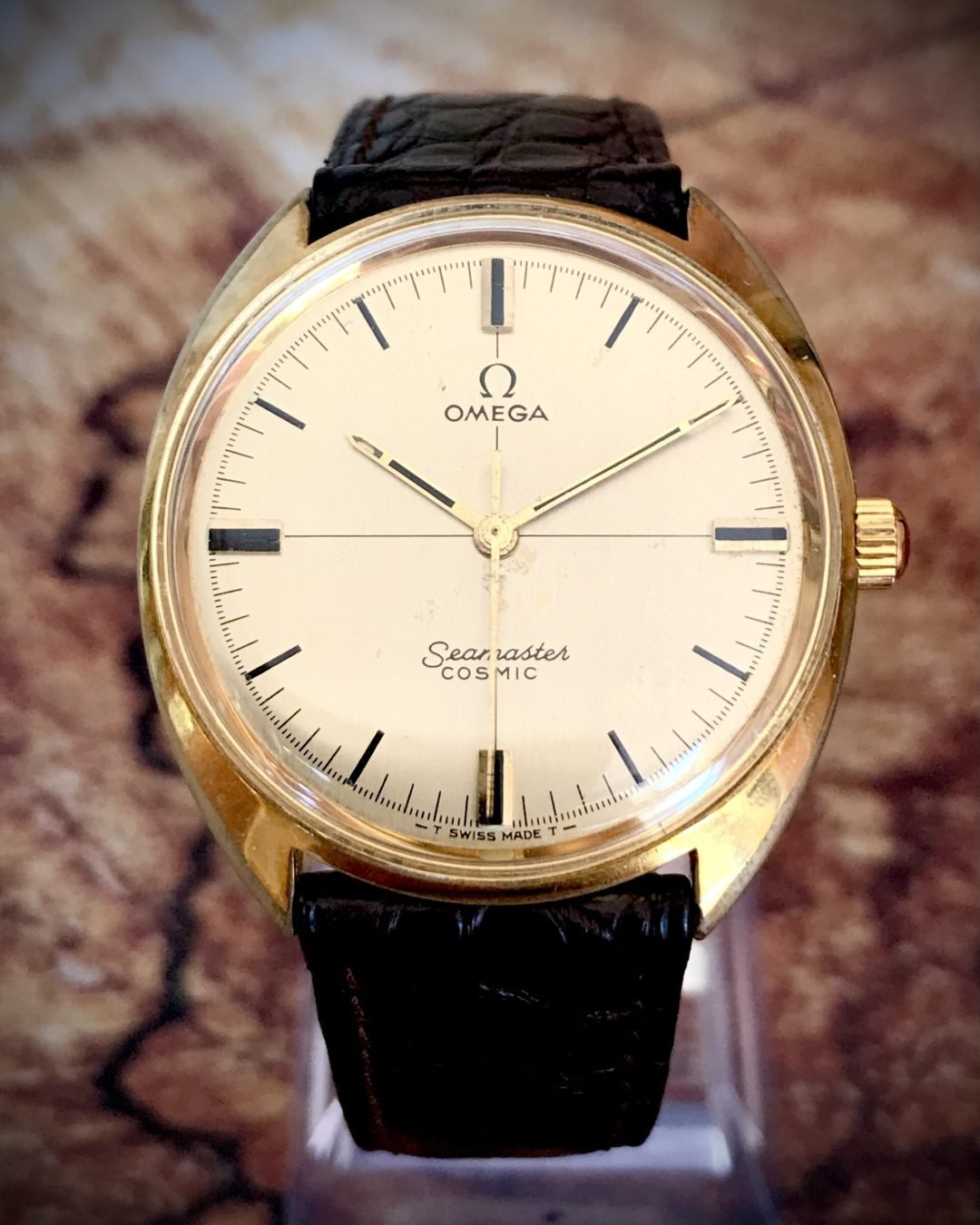
OMEGA SEAMASTER COSMIC, AUTOMATIC, 1967
INFORMACIÓN
| Marca | Omega |
|---|---|
| Modelo | Seamaster Cosmic |
| Género | Man |
| Década | 1960s |
| Año de fabricación | 1967 |
| Movimiento | Manual rope |
| Calibre | Omega 565 |
| Cristal | Plexiglass, impeccable |
| Esfera | Golden, flawless |
| Corona | Original, signed Omega |
| Material de la caja | Gold-plated with 20 microns |
| Diámetro sin corona | 35.5 mm |
| Diámetro con corona | 36.2 mm |
| Longitud entre asas | 42 mm |
| Anchura de la correa | 18 mm |
| Material de la correa | Genuine leather vaccine |
| Color de la correa | Black |
| Cierre/hebilla | Type squirrel |
| Estado del reloj | Very good, with slight signs of aging. |
| Caja/Estuche | Yes, generic. |
| Documentación | Free Certificate of Authenticity available on request |
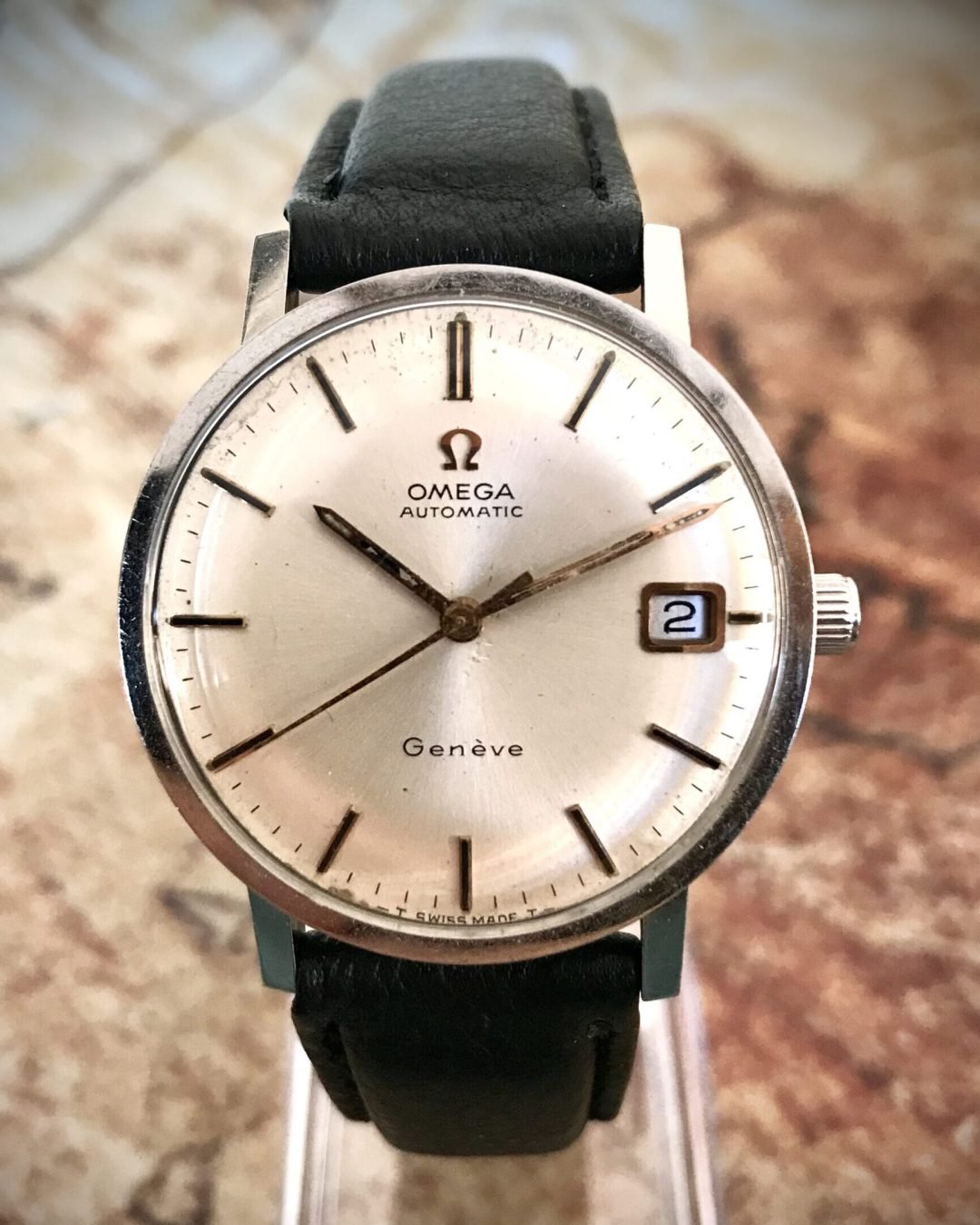
OMEGA GENEVE, AUTOMATIC CALIBER 565, YEAR 1967
INFORMACIÓN
| Marca | Omega |
|---|---|
| Modelo | Geneva |
| Género | Man |
| Década | 1960s |
| Año de fabricación | 1967 |
| Nº de serie | 26870330 |
| Código de caja | 162.009 SP |
| Movimiento | Automatic |
| Calibre | Omega 565 |
| Cristal | Plexiglass, impeccable |
| Esfera | Mother-of-pearl dial with date window at 3 o'clock. |
| Corona | Original, signed Omega |
| Material de la caja | Steel |
| Diámetro sin corona | 33 mm |
| Diámetro con corona | 35 mm |
| Longitud entre asas | 38 mm |
| Grosor | 9 mm |
| Anchura de la correa | 18 mm |
| Material de la correa | Genuine leather |
| Color de la correa | Black |
| Cierre/hebilla | Ardillon buckle, stainless steel |
| Estado del reloj | Very good, with slight signs of aging. |
| Caja/Estuche | Yes, generic. |
| Documentación | Free Certificate of Authenticity available on request |
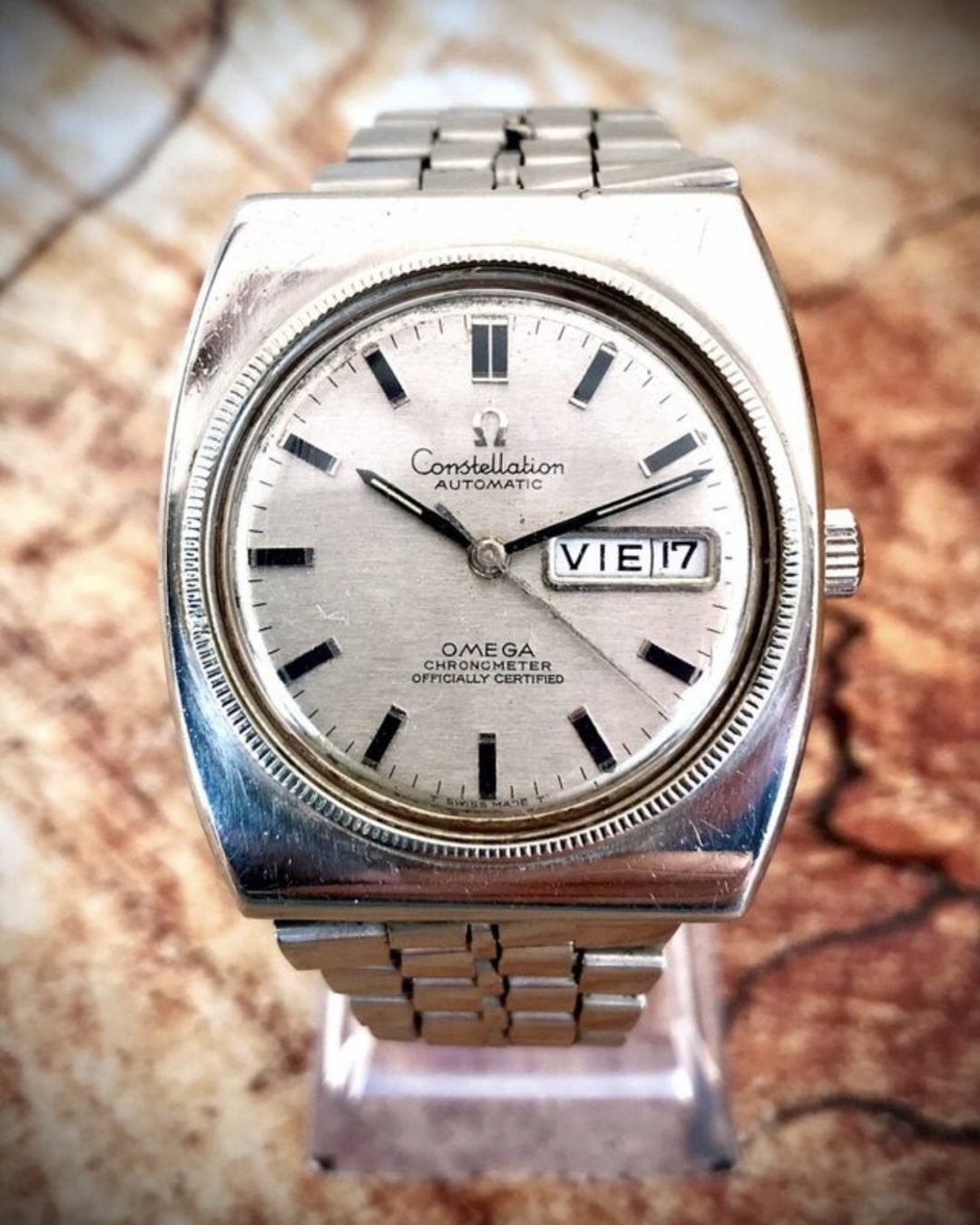
OMEGA CONSTELLATION AUTOM. WHITE GOLD BEZEL 18K
INFORMACIÓN
| Marca | Omega |
|---|---|
| Modelo | Constellation |
| Género | Man |
| Década | 1960s |
| Año de fabricación | 1969 |
| Nº de serie | 31930368 |
| Código de caja | 168.041 |
| Movimiento | Automatic |
| Calibre | OMEGA 751 |
| Cristal | Plexiglass, impeccable |
| Esfera | Silver, with double date display at 3 o'clock. |
| Bisel | 18-karat white gold |
| Corona | Original Omega sign |
| Material de la caja | Steel |
| Diámetro sin corona | 36.5 mm |
| Diámetro con corona | 37.5 mm |
| Longitud entre asas | 39.2 mm |
| Grosor | 12 mm |
| Anchura de la correa | 22 mm |
| Material de la correa | Steel |
| Color de la correa | Steel |
| Cierre/hebilla | Clasp type, original Omega |
| Estado del reloj | Well, with logical signs of the passage of time. |
| Caja/Estuche | Yes, generic. |
| Documentación | Free Certificate of Authenticity available on request |
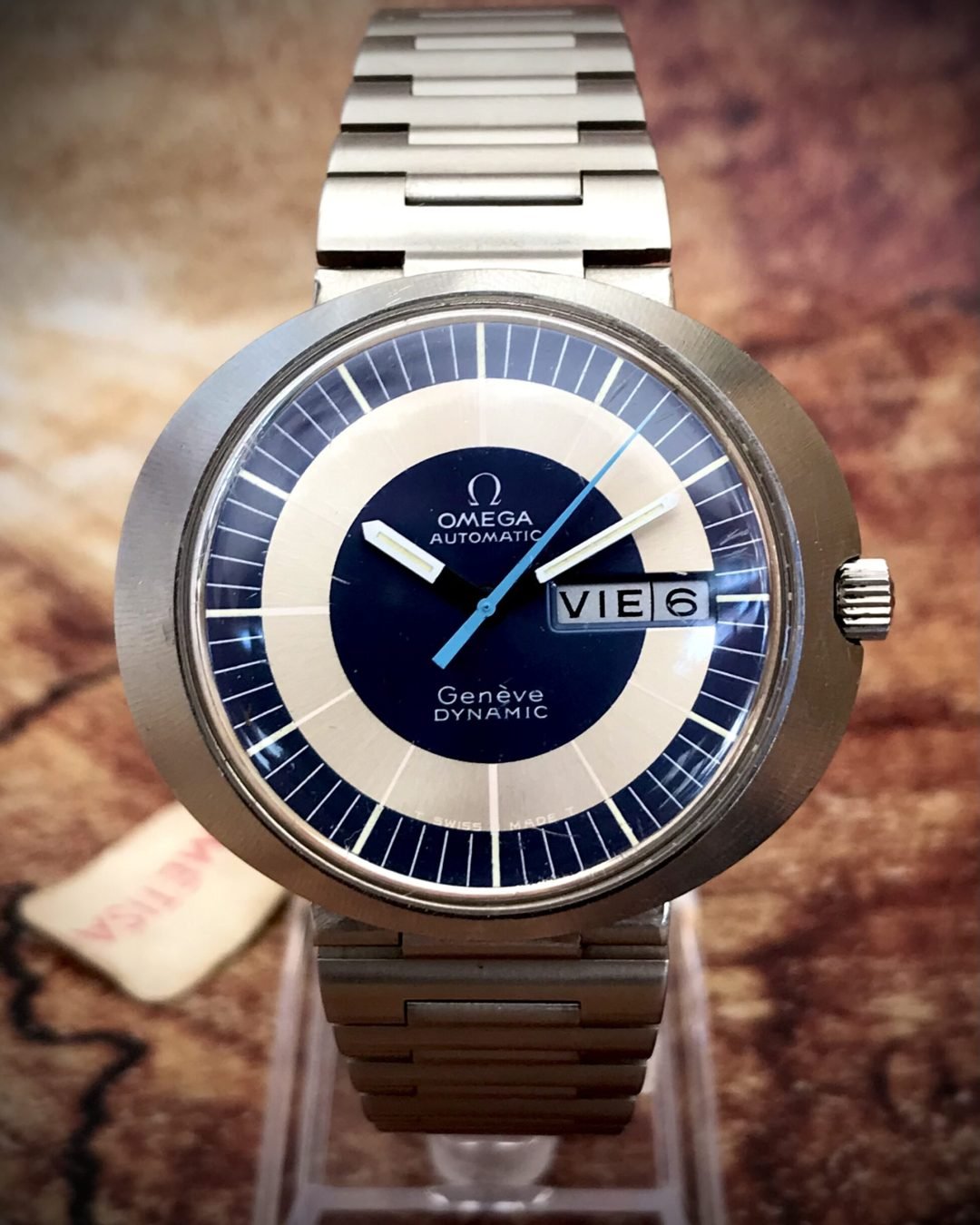
OMEGA DYNAMIC 1970, AUTOMATIC, N.O.S. (New Old Stock)
INFORMACIÓN
| Marca | Omega |
|---|---|
| Modelo | Dynamic |
| Género | Man |
| Década | 1970s |
| Año de fabricación | 1970 |
| Código de caja | 107 |
| Movimiento | Automatic |
| Cristal | Original Plexiglass, flawless |
| Esfera | Bitono, blue and white |
| Bisel | Steel |
| Corona | Original, signed Omega |
| Material de la caja | Steel |
| Diámetro sin corona | 41 mm |
| Diámetro con corona | 42.5 mm |
| Longitud entre asas | 38 mm |
| Grosor | 10.5 mm |
| Anchura de la correa | 22 mm |
| Material de la correa | Steel |
| Color de la correa | Steel |
| Cierre/hebilla | Clasp type, original Omega |
| Estado del reloj | N.O.S. (New Old Stock) |
| Caja/Estuche | Yes, your original. |
| Documentación | Yes |
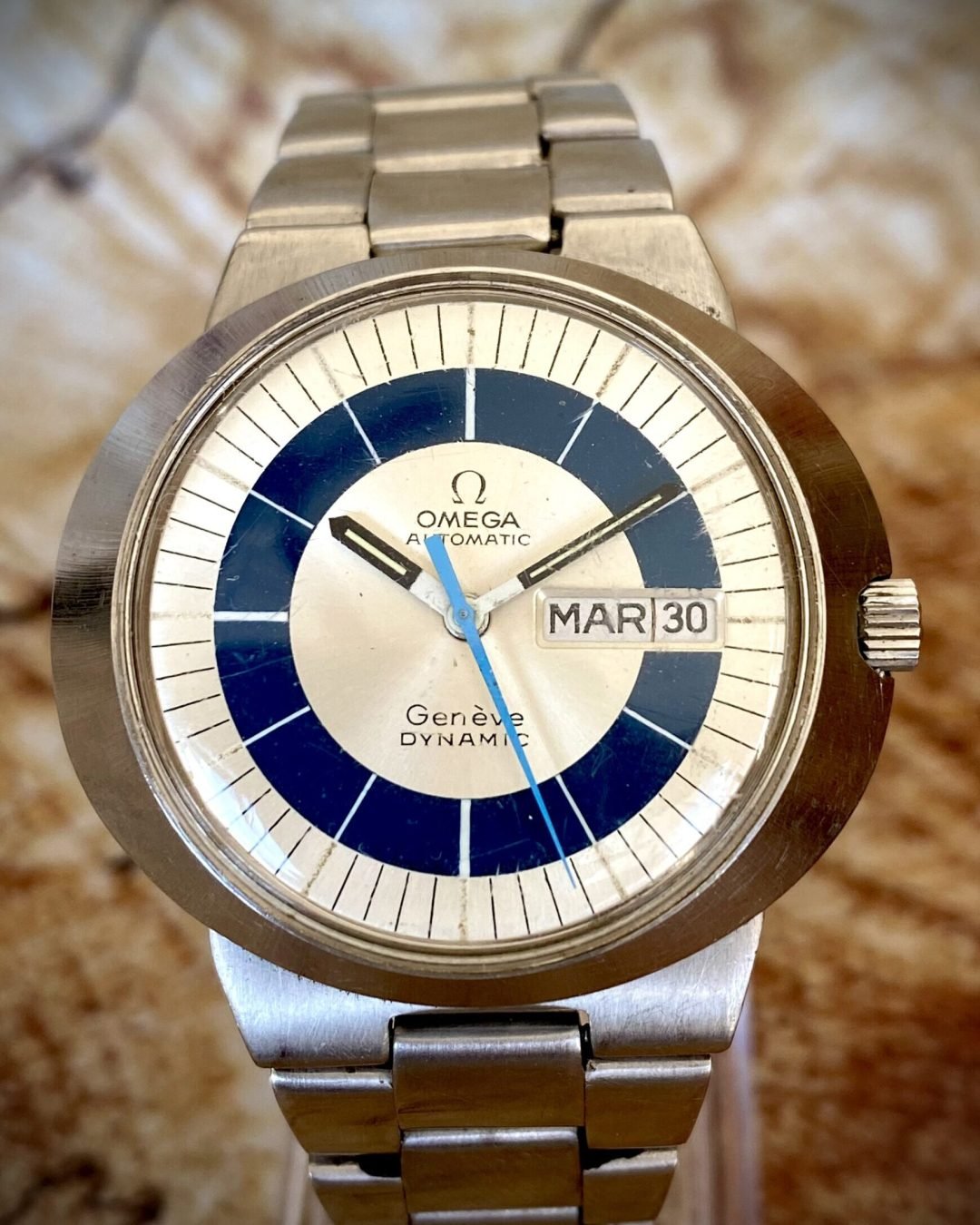
OMEGA DYNAMIC, VINTAGE YEAR 1970, AUTOMATIC
INFORMACIÓN
| Marca | Omega |
|---|---|
| Modelo | Dynamic |
| Género | Man |
| Década | 1970s |
| Año de fabricación | 1970 |
| Código de caja | 107 |
| Movimiento | Automatic |
| Cristal | Plexiglass |
| Esfera | Silver and blue two-tone with calendar at the 3 o'clock position. |
| Corona | Original, signed Omega |
| Material de la caja | Stainless steel |
| Diámetro sin corona | 41 mm |
| Diámetro con corona | 42 mm |
| Longitud entre asas | 41 mm |
| Grosor | 11 mm |
| Anchura de la correa | 22 mm |
| Material de la correa | Stainless steel |
| Color de la correa | Steel |
| Cierre/hebilla | Stainless steel, original Omega. |
| Estado del reloj | Very good, with slight signs of aging. |
| Caja/Estuche | Yes, generic. |
| Documentación | Free Certificate of Authenticity available on request |
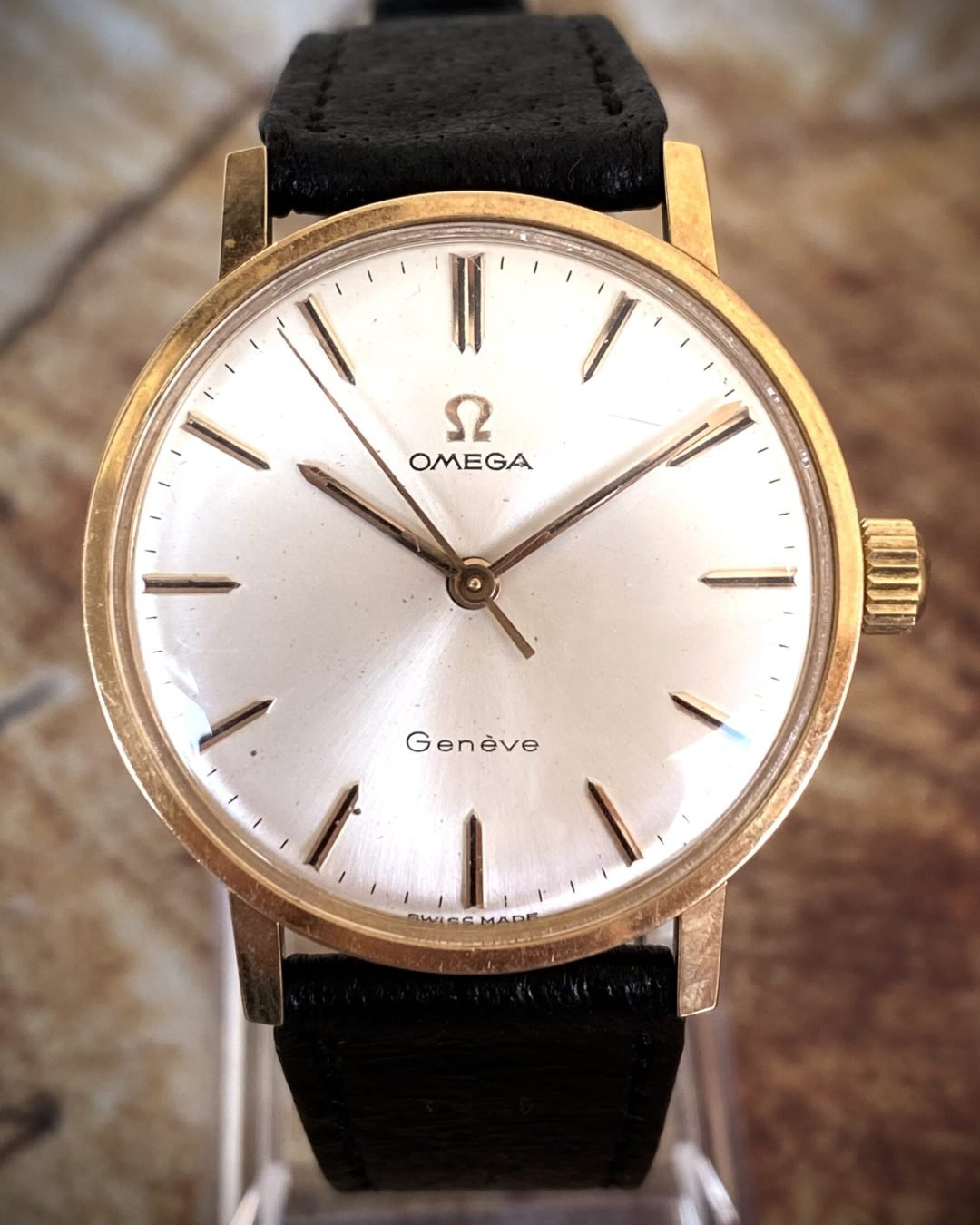
OMEGA GENEVE, 1950s, MANUAL WIND
INFORMACIÓN
| Marca | Omega |
|---|---|
| Modelo | Geneva |
| Género | Man |
| Década | 1960s |
| Año de fabricación | 1967 |
| Nº de serie | 26120356 |
| Código de caja | 161.009 |
| Movimiento | Manual rope |
| Calibre | Omega 601 |
| Cristal | Plexiglass |
| Esfera | Mother-of-pearl, with gold indexes and hands |
| Corona | Original, signed Omega |
| Material de la caja | Gold-plated with 20 microns |
| Diámetro sin corona | 33 mm |
| Diámetro con corona | 35 mm |
| Longitud entre asas | 37 mm |
| Grosor | 8 mm |
| Anchura de la correa | 18 mm |
| Material de la correa | Genuine leather vaccine |
| Color de la correa | Black |
| Cierre/hebilla | Squirrel-type, gold-plated steel. |
| Estado del reloj | Excellent, like new! |
| Caja/Estuche | Yes, generic. |
| Documentación | Free Certificate of Authenticity available on request |
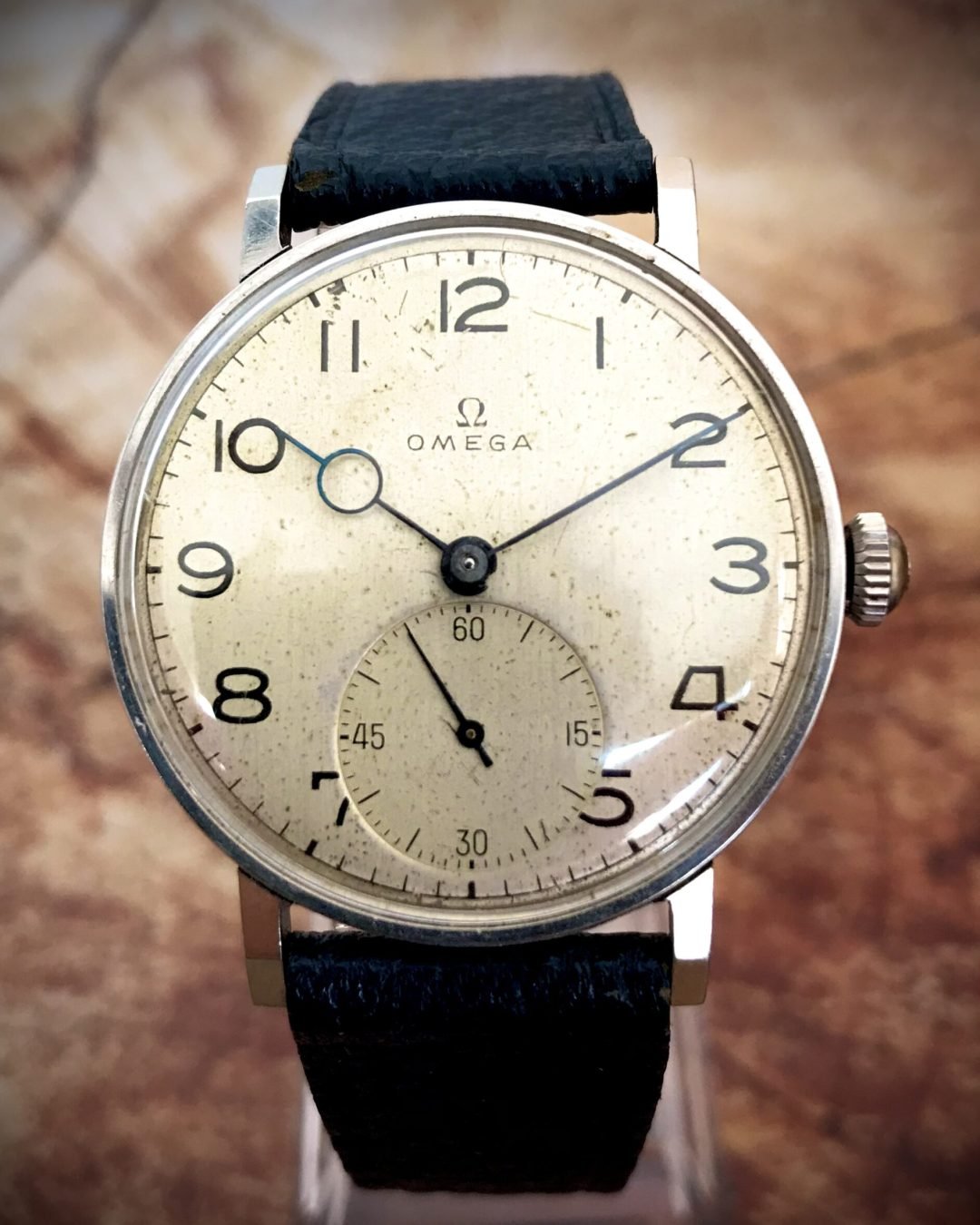
OMEGA CALIBER 30T2, VINTAGE YEAR 1939
INFORMACIÓN
| Marca | Omega |
|---|---|
| Modelo | Classic 30T2 |
| Género | Man |
| Década | 1930s |
| Año de fabricación | 1939 |
| Nº de serie | 9454590 |
| Código de caja | 1037B756 |
| Movimiento | Manual rope |
| Calibre | Omega 30T2 |
| Cristal | Plexiglass |
| Esfera | Beige with Arabic numerals, patinated |
| Corona | Original, signed Omega |
| Material de la caja | Steel |
| Diámetro sin corona | 36 mm |
| Diámetro con corona | 37.5 mm |
| Longitud entre asas | 41 mm |
| Grosor | 9 mm |
| Anchura de la correa | 18 mm |
| Material de la correa | Cowhide |
| Color de la correa | Black |
| Cierre/hebilla | Steel |
| Estado del reloj | Well, with logical signs of the passage of time. |
| Caja/Estuche | Yes, generic. |
| Documentación | Free Certificate of Authenticity available on request |
Garantía tEMPPUS
Para su total tranquilidad, protegemos todos nuestros RELOJES CON 1 AÑO DE GARANTÍA.
